

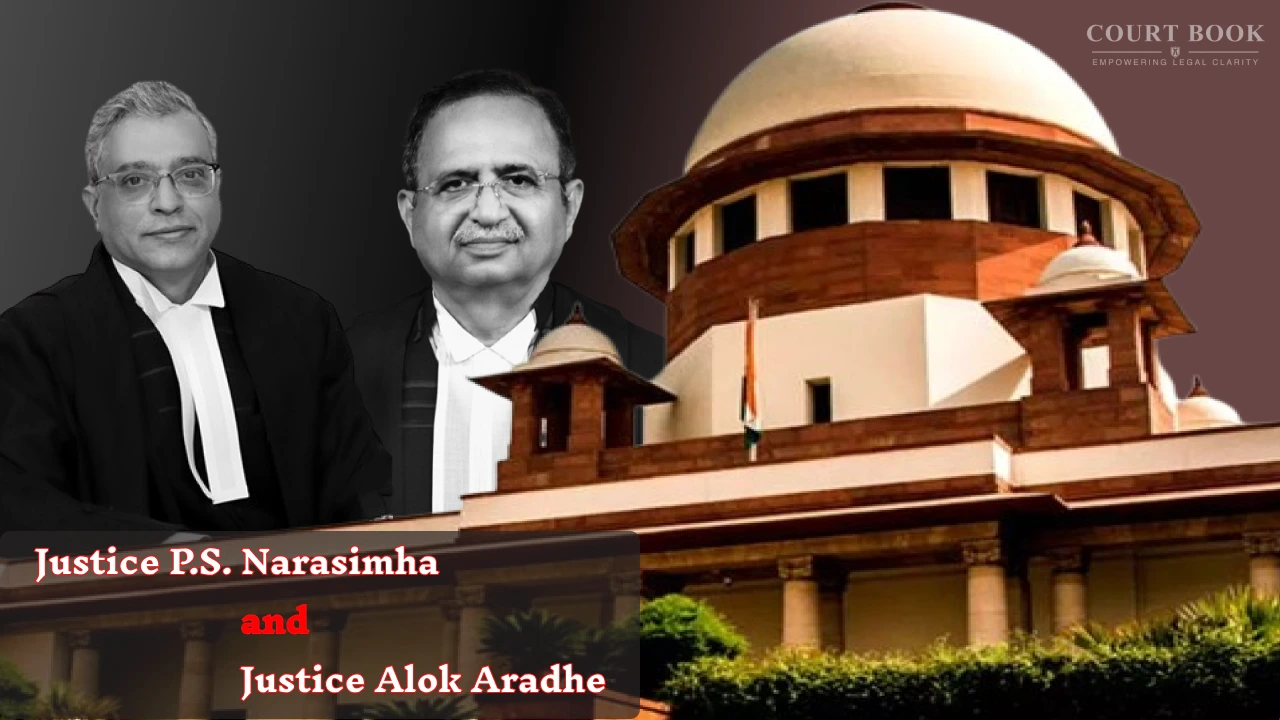
In a significant ruling on arbitration law, the Supreme Court has upheld the Bombay High Court’s decision setting aside an arbitral award involving Bharat Udyog Ltd. and the Ambernath Municipal Council. The Court made it clear that arbitration cannot be imposed without a valid agreement between parties.
Background of the Case
The dispute traces back to a 1994 octroi collection contract awarded by the Ambernath Municipal Council to M/s Bharat Udyog Ltd. after a successful bid slightly above the reserve price.
Soon after beginning work, the contractor sought a reduction in the minimum reserve price, arguing it had been wrongly fixed. The Municipal Council rejected this request, stating that the price was set as per government guidelines.
Read also:- Supreme Court Restores Conviction in Minor Assault Case, Rejects Acquittal Over Contradictions
The contractor initially approached the High Court but later withdrew the petition. It then requested the State Government to appoint an arbitrator to resolve the dispute.
Acting on this request, the State Government appointed an arbitrator, who eventually reduced the reserve price and passed an award in favour of the contractor.
The Municipal Council challenged the arbitral award, arguing that:
• There was no arbitration agreement between the parties
• The State Government had no authority to appoint an arbitrator
• The entire arbitration process was invalid
Despite these objections, a civil court upheld the award. However, the Bombay High Court later reversed this decision, setting aside both the award and the civil court’s ruling.
Read also:- Social Media Photos Can’t Prove Arms Act Violation: P&H High Court
The Supreme Court carefully examined whether a valid arbitration agreement existed and whether the State Government had the power to appoint an arbitrator.
The bench noted that arbitration requires mutual consent. It observed:
“The basic requirement of an arbitration agreement… of mutuality… is completely absent.”
The Court also clarified that Clause 22 of the contract did not amount to an arbitration clause. Instead, it provided for a departmental dispute resolution mechanism through government authorities.
On the State Government’s role, the Court firmly stated that statutory powers under the relevant municipal law did not extend to imposing arbitration on parties.
“Under no circumstances can such a power be extended to appoint an arbitrator unilaterally…”
Read also:- Elderly Mother Gets Lifetime Stay Rights, Gift Deed to Son Upheld by Calcutta High Court
The Court further rejected the argument that participation in arbitration proceedings amounts to consent. It emphasized that jurisdiction cannot be created merely by participation.
The Supreme Court highlighted several critical points:
• No written arbitration agreement existed between the parties
• The State Government lacked jurisdiction to appoint an arbitrator
• Arbitration requires clear and mutual consent
• Proceedings conducted without jurisdiction are void
• Participation in proceedings does not validate an invalid process
Concluding that the High Court had correctly applied the law, the Supreme Court dismissed the Special Leave Petition.
“There is no merit in the special leave petition… the same stands dismissed.”
The Court upheld the High Court’s decision to set aside the arbitral award and directed that parties bear their own costs.
Case Details
Case Title: M/S Bharat Udyog Ltd. vs Ambernath Municipal Council
Case Number: SLP (C) No. 1127 of 2017
Judges: Justice Pamidighantam Sri Narasimha, Justice Alok Aradhe
Decision Date: 24 March 2026
Download Judgment

