

In a significant ruling balancing recruitment rules with fairness to employees, the Supreme Court has held that procedural lapses committed by authorities during a recruitment process cannot automatically deprive employees of their jobs when they were selected through a public process and have served for years without any wrongdoing on their part.
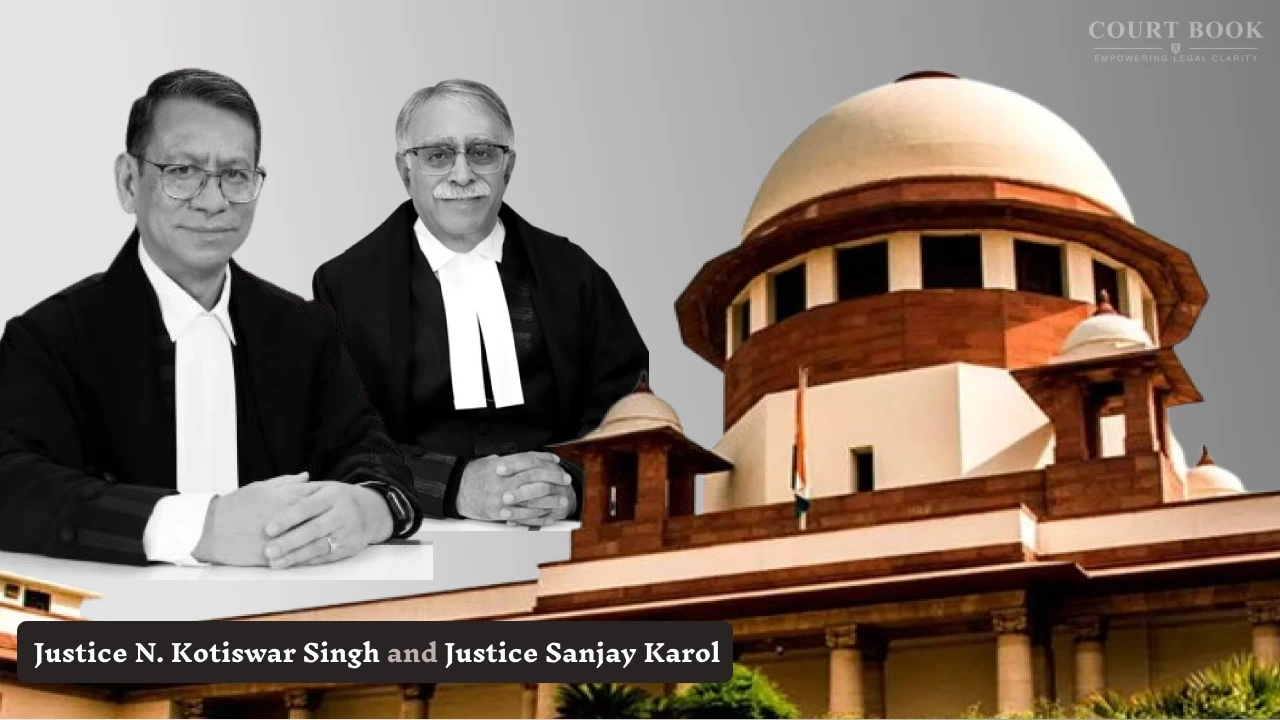
A Bench of Justice Sanjay Karol and Justice N. Kotiswar Singh set aside the Punjab and Haryana High Court's decision that had invalidated appointments made in a Haryana cooperative society in 2014.
Background of the Case
The dispute concerned appointments to the posts of Clerk-cum-Salesman and Peon-cum-Chowkidar in the Thanesar Cooperative Marketing-cum-Processing Society, Kurukshetra.
The recruitment process began in 2014 after approval from the Registrar of Cooperative Societies. Public advertisements were issued, applications were invited, interviews were conducted, and selected candidates joined service. They continued working for more than a decade.
However, members of the cooperative society challenged the appointments. Their main allegation was that the Board of Directors meeting approving the appointments did not include certain officials whose presence was required under the Service Rules. Authorities under the Haryana Cooperative Societies Act accepted the challenge, and the High Court later upheld the cancellation of the appointments.
The controversy revolved around Rule 3 of the Primary Cooperative Marketing-cum-Processing Societies Ltd. Staff Service Rules, 2003.
Under the amended rule, appointment decisions were required to be taken in the presence and with the concurrence of the Assistant Registrar Cooperative Societies, the Inspector Cooperative Societies, and the District Manager of HAFED.
These officials were absent from the Board meeting held on August 13, 2014, when the appointments were approved. The authorities and the High Court treated this lapse as a fatal defect that rendered the appointments invalid.
The Supreme Court carefully examined the entire recruitment process and noted that there were no allegations of fraud, manipulation, favoritism, or appointment of ineligible candidates.
The Bench found that the vacancies had been publicly advertised and interviews had been conducted. No unsuccessful candidate had challenged the fairness of the selection process.
Justice Nongmeikapam Kotiswar Singh, writing the judgment, observed:
“There was no fundamental defect which could go to the root of the recruitment process.”
The Court explained that public recruitment generally involves three stages—advertisement of vacancies, the selection process, and the final appointment decision.
According to the Bench, the first two stages in this case were not shown to be defective. The only issue arose at the final stage when the Board approved the appointments without the presence of certain officials.
The Court said the role of those officials was largely supervisory and intended to ensure compliance with recruitment rules. Their absence, though contrary to the rule, did not automatically invalidate the entire recruitment exercise.
“Their absence will not render the appointments illegal as their role is essentially supervisory in nature,” the Bench observed.
A major factor that weighed with the Court was that the employees had no role in any procedural lapse.
The Bench noted that the candidates had participated in a public recruitment process, were found suitable, and had served continuously for more than ten years.
The Court held that employees should not suffer for irregularities committed by authorities, particularly when no fault was attributable to the employees themselves.
Allowing the appeal, the Supreme Court set aside the Punjab and Haryana High Court's judgment dated July 29, 2025.
The Court directed the cooperative society to reconvene a meeting of its Board of Directors within one month. The meeting must include the Assistant Registrar Cooperative Societies, Inspector Cooperative Societies, and District Manager, HAFED.
The Board has been asked to reconsider only the final appointment stage and verify whether the employees fulfilled eligibility requirements and were validly recommended through the interview process. The Court specifically prohibited any reopening of issues relating to advertisement of vacancies or conduct of interviews.
The Bench further ordered that if the employees are found eligible upon reconsideration, they must be reappointed and their previous service will be counted for all purposes. However, they will not receive back wages for the period they remained out of service.
With these directions, the Supreme Court allowed the appeal and set aside the High Court's ruling.
Case Details
Case Title: Gaurav Mehla & Ors. v. State of Haryana & Ors.
Case Number: Civil Appeal arising out of SLP (Civil) No. 23061 of 2025
Judges: Justice Sanjay Karol and Justice Nongmeikapam Kotiswar Singh
Decision Date: June 11, 2026


