

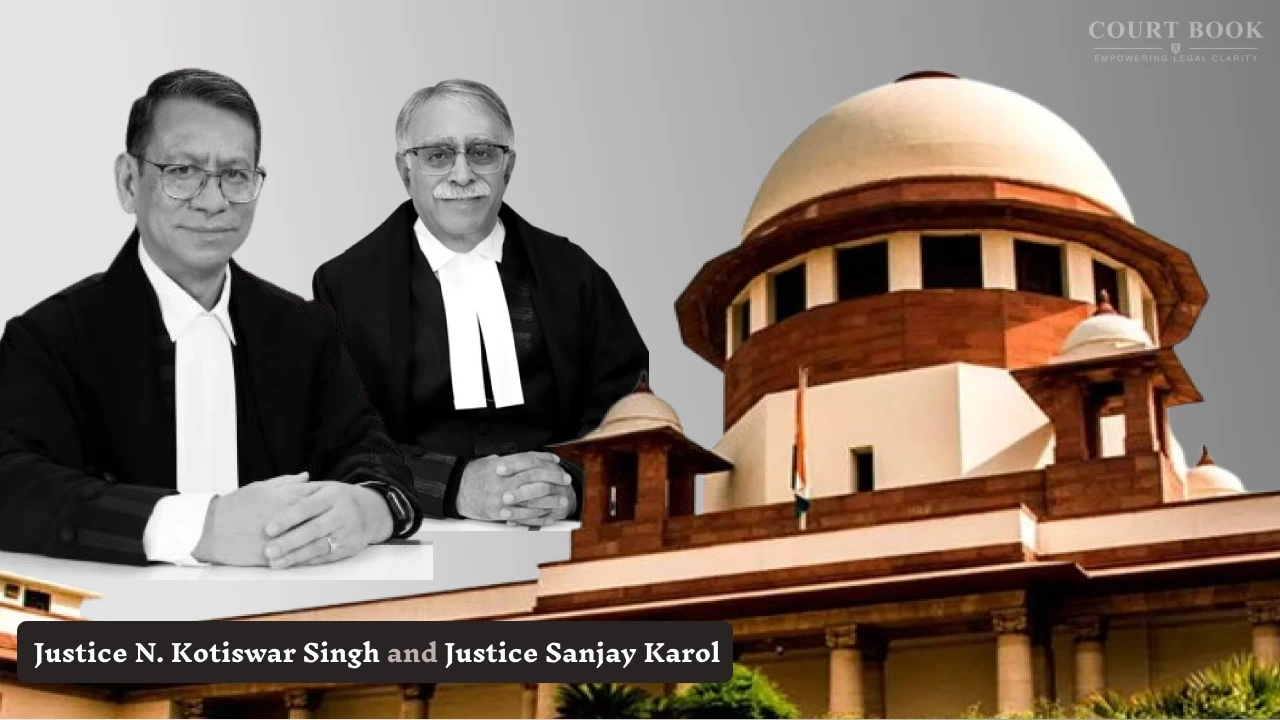
The Supreme Court has quashed the Chandigarh Administration's 2020 notification that expanded the definition of "Essential Service Providers" for street vendors, holding that the COVID-19-era measure had outlived its purpose. At the same time, the Court issued a series of directions aimed at ensuring that licensed street vendors are relocated to designated vending zones with adequate facilities while protecting their livelihood.
Background of the Case
The matter arose from concerns over the implementation of the Street Vendors (Protection of Livelihood and Regulation of Street Vending) Act, 2014 in Chandigarh. In earlier hearings, the Supreme Court had stressed that enforcement against encroachments should not come at the cost of vendors' livelihoods. It had directed the Chandigarh Administration to identify vending zones, provide relocation support and place updated information before the Court.
The Municipal Corporation informed the Court that more than 10,900 vendors had been registered, anti-encroachment drives had been conducted, and basic facilities were being provided at vending zones. It also stated that smart identity cards were being issued and nodal officers had been appointed to assist relocated vendors.
The Court-appointed amicus curiae, however, argued that issuing challans alone could not solve the problem and expressed concern over the large number of cancelled licences and pending appeals. The amicus also questioned the continued validity of the 2020 notification that had widened the category of Essential Service Providers during the COVID-19 pandemic.
Court's Observations
After considering the affidavits and submissions, the Bench emphasised that the objective was not merely to remove encroachments but to ensure that vendors could continue earning their livelihood lawfully.
The Bench observed,
"The recently identified vending zones and the shifting of licensed vendors to such location be carried out at the earliest."
The Court directed the authorities to make vending zones fully operational with drinking water, toilets, signage, regular publicity, smart cards for vendors, CCTV cameras within six months and consideration of a helpline for vendors and buyers. It also ordered that pending appeals be decided within 60 days, while fresh appeals should ordinarily be disposed of within 30 days, subject to the Street Vendors Act and its bye-laws.
On the disputed notification, the Court noted that it had been introduced during the exceptional circumstances of the COVID-19 pandemic. Since those circumstances no longer existed, the measure had "outlived its object, purpose and utility."
Decision
The Supreme Court quashed the Chandigarh Administration's notification dated 17 July 2020, restoring the earlier regulatory position governing Essential Service Providers. It also directed the Chandigarh Administration to file a compliance affidavit by 22 July 2026, with the matter scheduled for further hearing on 24 July 2026
Case Details:
Case Title: Malkit Singh and Another v. State of U.T., Chandigarh & Others
Case Number: Civil Appeal No. 4400 of 2026
Judge: Justice Sanjay Karol and Justice Nongmeikapam Kotiswar Singh
Decision Date: 1 July 2026


