

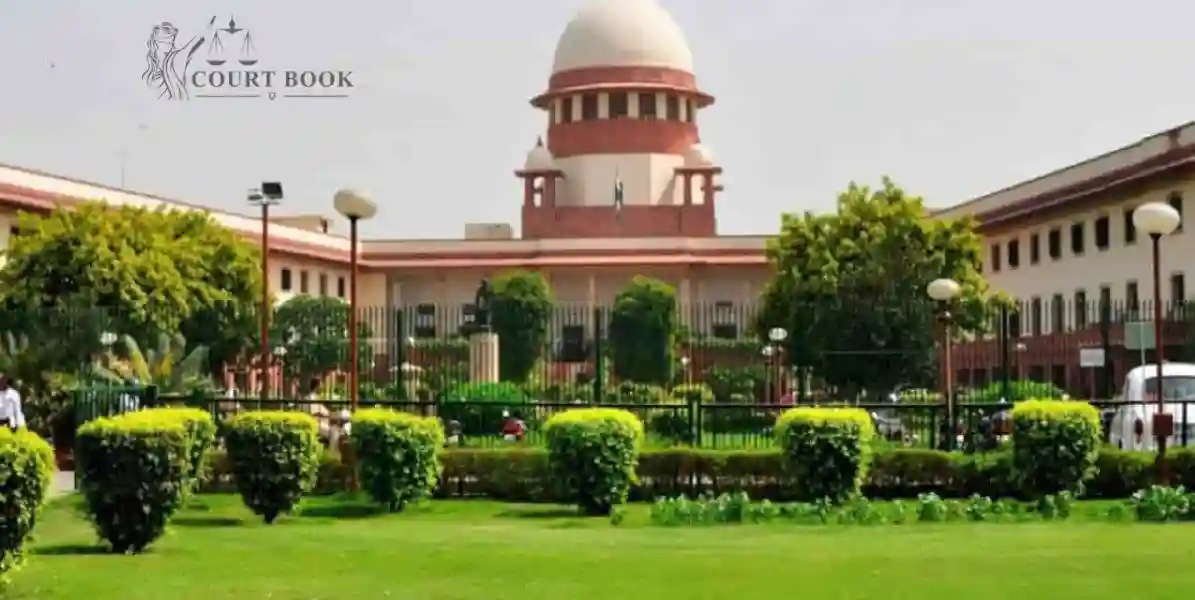
The Supreme Court has set aside a Madhya Pradesh High Court judgment that directed the demolition of shops constructed by the Municipal Council at Khachrod in Ujjain district, holding that the affected shop allottees were never made parties to the litigation and were denied an opportunity to defend their rights.
A Bench comprising Justice Vikram Nath and Justice N.V. Anjaria allowed four appeals filed by shop allottees and the Municipal Council, concluding that the High Court had committed serious errors while exercising its jurisdiction in a public interest litigation (PIL).
Background of the Case
The dispute arose from a PIL filed before the Madhya Pradesh High Court alleging that shops had been illegally constructed on land known as “Dussehra Maidan” at Khachrod. The petitioner claimed that the land was reserved for Dussehra celebrations and cultural activities and that the construction of shops had reduced the available open space.
Acting on the PIL, the High Court directed removal of the shops. The court later dismissed review petitions filed by the shop allottees, who argued that they had not been impleaded in the PIL despite being directly affected by the demolition order.
The allottees had obtained the shops through auction processes conducted by the Municipal Council and had been occupying them for years after paying the required amounts and executing lease-related documents.
Court Examines Failure to Hear Affected Shopkeepers
The Supreme Court found that the shop allottees were necessary parties to the proceedings because the demolition order directly affected their rights and livelihoods. The Bench observed that the High Court should have reviewed its earlier order once it became clear that the affected occupants had not been heard.
“The persons who were the allottees of shops through auction, who had paid the auction price and who had remained in possession of the shops for long period, were indispensably required to be heard,” the Bench observed.
The Court held that passing demolition directions against persons who were not parties to the proceedings amounted to a violation of natural justice and produced serious civil consequences.
Ownership Dispute Could Not Be Decided in PIL
Another major issue before the Supreme Court concerned ownership of the land.
While the Municipal Council asserted that the land had vested in the municipality under applicable laws and historical records, the State Government claimed ownership and argued that no construction could have been raised without its approval.
The Supreme Court held that such disputed questions of title and ownership could not be adjudicated in proceedings under Article 226 of the Constitution or through a PIL.
The Bench noted that by declaring the shops unauthorized, the High Court had effectively entered into a property ownership dispute between the State and the Municipal Council, which was beyond the scope of writ jurisdiction.
Findings on the Dussehra Maidan Allegations
After examining the material on record, including a certified map produced by the Municipal Council, the Supreme Court found that the shops were located along a road and on the boundary area, away from the main open ground used for Dussehra celebrations.
The map showed that other structures, including a school, hostel and community facilities, existed between the shops and the main open area of the Maidan. According to the Court, a substantial open space continued to remain available for cultural and festival activities.
“The question of reduction of or obstruction to the open Maidan area does not arise,” the Bench stated while noting that Dussehra celebrations had continued and no complaints had been received regarding obstruction caused by the shops.
Court’s Observations on Public Interest Litigation
The Supreme Court emphasized that PIL jurisdiction is intended to protect public interest and should not be used in a manner that harms legitimate private rights.
The Bench observed that the shop occupants had entered possession through official auctions and lease arrangements and therefore could not simply be treated as encroachers. It further remarked that courts must remain cautious while dealing with PILs so that the process is not misused to cause injustice to third parties.
Decision
Allowing all four appeals, the Supreme Court set aside the Madhya Pradesh High Court’s judgment dated April 20, 2015, as well as the orders dismissing the review petitions. The Court consequently dismissed the PIL.
At the same time, the Bench clarified that the State Government would remain free to take any action available under law against the Municipal Council regarding alleged illegal constructions, if permissible, and stated that it was expressing no opinion on the merits of that issue.
Case Details
Case Title: Prem Porwal and Others etc. v. Jagdeesh Chandra Prajapati and Others
Case Number: Civil Appeals arising out of SLP (C) Nos. 16483-85 of 2015 and SLP (C) No. 16469 of 2015
Judges: Justice Vikram Nath and Justice N.V. Anjaria
Decision Date: March 19, 2026


