

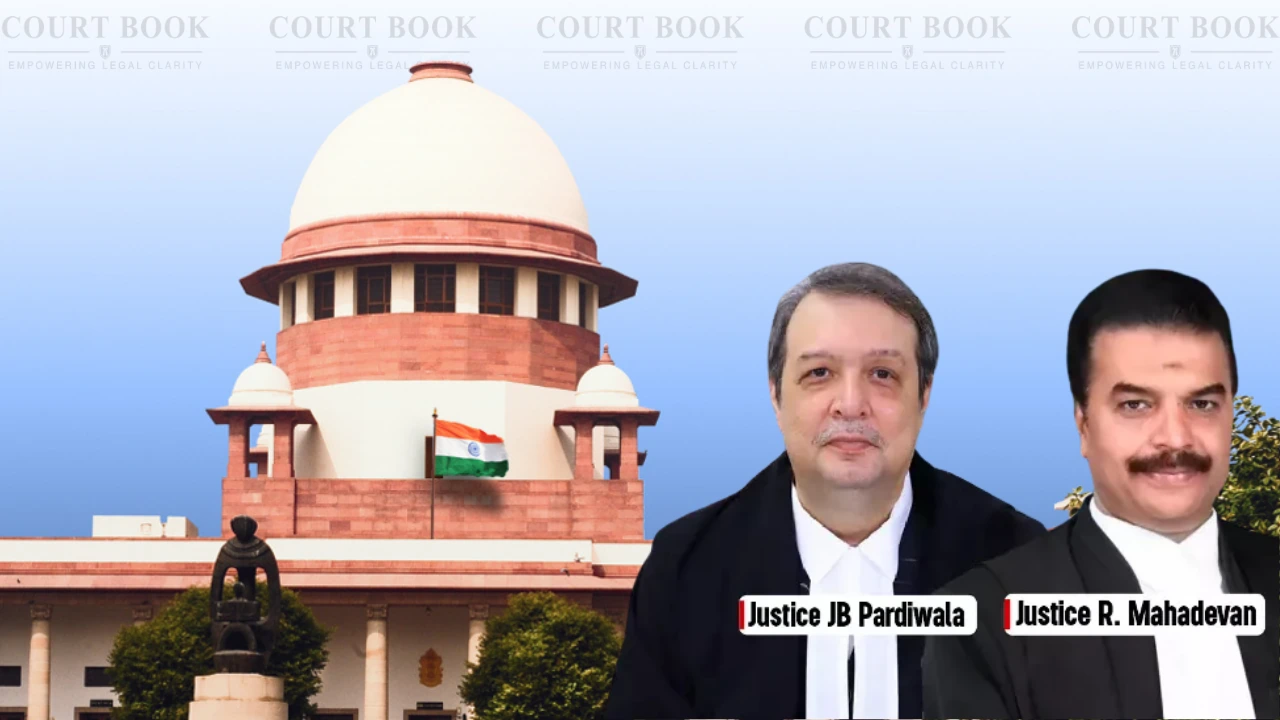
In a significant judgment aimed at strengthening protections for victims of human trafficking, the Supreme Court has held that survivors of trafficking for commercial sexual exploitation are entitled to a constitutional right to rehabilitation. The Court said the State’s responsibility does not end with rescue and that meaningful rehabilitation is an essential part of restoring dignity and freedom to survivors.
A Bench of Justice J.B. Pardiwala and Justice R. Mahadevan delivered the 297-page judgment while deciding an application filed by anti-trafficking organisation Prajwala. The Court also framed an extensive “Victim Protection Plan” to guide authorities across the country in rescue, protection, rehabilitation and reintegration efforts.
Background of the Case
The litigation traces its origins to a public interest petition filed by Prajwala in 2004, raising concerns about the treatment of women and children rescued from trafficking and commercial sexual exploitation.
The organisation argued that despite existing laws, victims often faced inadequate protection after rescue, poor rehabilitation mechanisms and a high risk of re-trafficking. It sought a comprehensive framework to ensure that survivors were treated as victims rather than offenders and were provided long-term support.
The Supreme Court had earlier disposed of the original petition in 2015 after recording assurances from the Union Government regarding a comprehensive anti-trafficking framework and the creation of an organised crime investigation mechanism. However, Prajwala later returned to the Court alleging that key commitments had not been implemented.
Court’s Observations
After examining the existing legal framework, the Bench concluded that serious gaps remained in the protection and rehabilitation of trafficking survivors.
The Court noted that while various laws and schemes existed, there was still no comprehensive protocol clearly setting out how victims should be protected and rehabilitated after rescue. It observed that the absence of a structured victim protection framework created inconsistency and left critical decisions to the discretion of officials at the ground level.
“The lack of a Victim Protection Plan is a serious lacuna,” the Court observed while discussing the shortcomings of the current system.
The Bench further held that Articles 21 and 23 of the Constitution, when read together, require the State to take positive steps for the rehabilitation of trafficking survivors. According to the Court, rehabilitation is not limited to providing shelter or financial support but also includes medical care, psychological assistance, vocational training, social reintegration and respect for the survivor’s choices and dignity.
Victim Protection Plan Issued
Finding that existing measures were inadequate, the Court exercised its powers under Articles 32 and 142 of the Constitution to formulate detailed guidelines covering every stage of intervention.
The Victim Protection Plan lays down procedures relating to:
Pre-rescue preparation and coordination;
Rescue operations;
Post-rescue care and legal assistance;
Safe custody arrangements;
Rehabilitation and reintegration;
Repatriation of victims;
Protection of privacy and confidentiality;
Training of law enforcement agencies and stakeholders.
The Court also stressed that protective homes should be survivor-friendly and must not resemble prisons or lock-ups. It prescribed minimum standards regarding accommodation, healthcare, counselling, sanitation and overall living conditions.
Directions to Governments
The Supreme Court directed all States and Union Territories to notify recognised welfare institutions, prepare lists of qualified social welfare workers and designate senior nodal officers for implementing the Victim Protection Plan. The Union Government was directed to ensure compliance with these directions within three months.
The Bench additionally asked the Registry to relist the matter in September 2026 for monitoring compliance with the directions issued.
Decision
Disposing of the application, the Supreme Court held that survivors of trafficking for commercial sexual exploitation possess a constitutional right to rehabilitation and that the existing framework suffered from significant gaps requiring judicial intervention. The Court therefore issued a detailed nationwide Victim Protection Plan and accompanying directions to safeguard the rights, dignity and rehabilitation of trafficking survivors.
The Miscellaneous Application was disposed of in these terms on 29 May 2026.
Case Details
Case Title: Prajwala v. Union of India & Others
Case Number: Miscellaneous Application No. 530 of 2022 in Writ Petition (Civil) No. 56 of 2004
Judges: Justice J.B. Pardiwala and Justice R. Mahadevan
Decision Date: 29 May 2026


