

In a significant ruling on succession rights in former princely families, the Supreme Court has held that private properties retained by the erstwhile rulers of Kapurthala after merger with the Indian Union would not automatically pass to a single heir under the rule of primogeniture.
The Court clarified that while succession to the royal throne could continue according to custom, private properties declared after accession would devolve according to ordinary personal law.
The dispute arose within the former Kapurthala royal family and concerned claims over several high-value residential properties, jewellery, movables and other assets.
Background of the Case
The litigation began with two civil suits filed in 1977 between Brigadier Sukhjit Singh - recognised by the Government of India as the ruler of Kapurthala - and members of his family, including his wife Gita Devi and children.
Gita Devi and her children claimed that several properties were ancestral coparcenary assets liable to partition under Hindu law. On the other hand, the Brigadier argued that the properties devolved upon him exclusively under the customary rule of male lineal primogeniture applicable to princely states.
The properties in dispute included the Villa at Kapurthala, Chateau at Mussoorie, properties in Delhi, jewellery and other movable assets.
The trial court initially favoured the partition claim in 1992. However, after review and rehearing, the Single Judge later ruled in favour of Brigadier Sukhjit Singh in 2004, holding him to be the absolute owner under the rule of primogeniture. The High Court affirmed that ruling in 2010, leading to the present appeal before the Supreme Court.
Court’s Observations
The Supreme Court examined the effect of the 1948 merger covenant signed by princely states with the Dominion of India. The bench noted that after accession, rulers ceased to be sovereign authorities and retained only such private properties as were specifically declared by them.
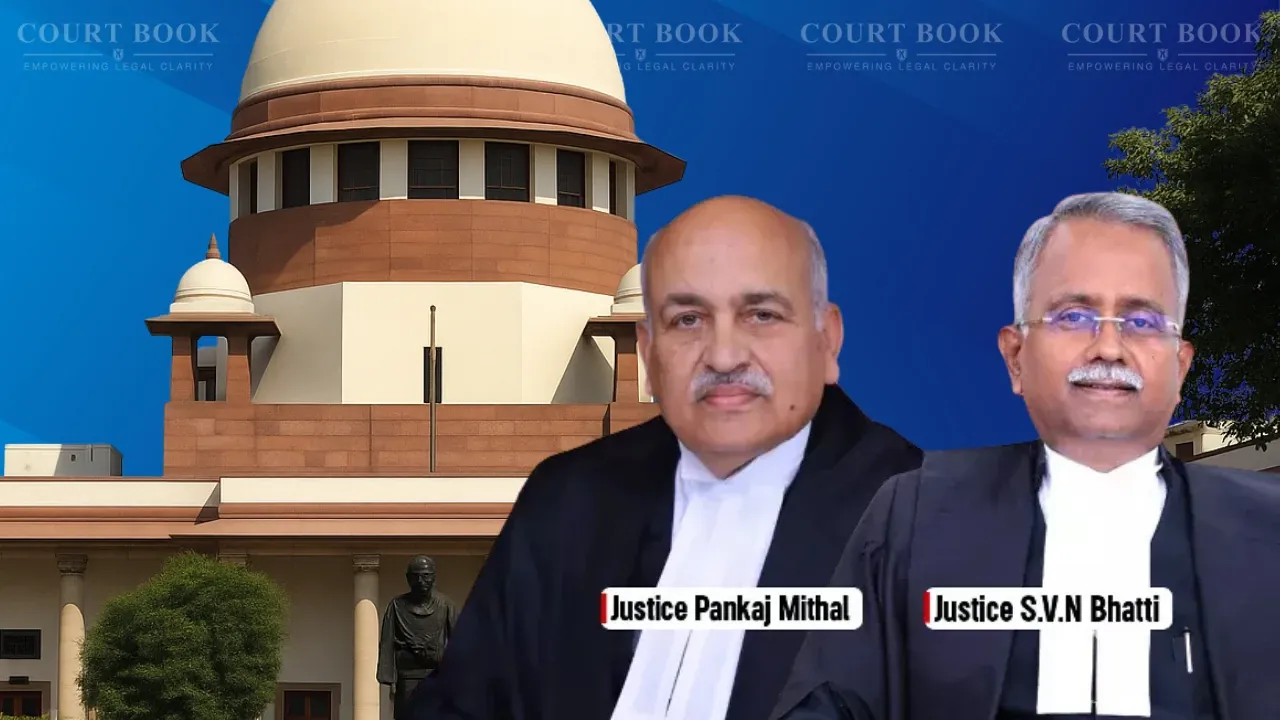
The bench of Justice Pankaj Mithal and Justice S. V. N. Bhatti observed that the merger covenant protected succession by custom only in relation to the “Gaddi” or throne and related dignities, not private personal properties.
“The covenant nowhere provided that such private and personal properties declared by the Maharaja would be governed by the rule of primogeniture,” the Court observed.
The Court also referred to earlier Supreme Court judgments concerning princely families of Travancore, Rampur and Faridkot, which drew a distinction between succession to royal status and succession to private property.
Importantly, the bench held that once rulers surrendered sovereignty and became ordinary citizens, their private properties would devolve under personal succession laws unless specifically protected otherwise.
Decision
The Supreme Court concluded that the rule of primogeniture survived only for succession to the royal throne and ceremonial status, not for private properties declared after accession.
The bench held that the private properties of the Kapurthala royal family would devolve according to ordinary personal law and not exclusively upon the eldest male heir under customary princely succession.
Case Details
Case Title: Tikka Shatrujit Singh & Ors. v. Sukjit Singh & Anr.
Case Number: Civil Appeal No. 11179 of 2011
Judge: Justice Pankaj Mithal and Justice S. V. N. Bhatti
Decision Date: May 27, 2026


