

In a significant ruling involving voting rights linked to Birla Group-associated societies, the Supreme Court set aside a Calcutta High Court judgment that had treated trustee decisions as valid only when taken unanimously.
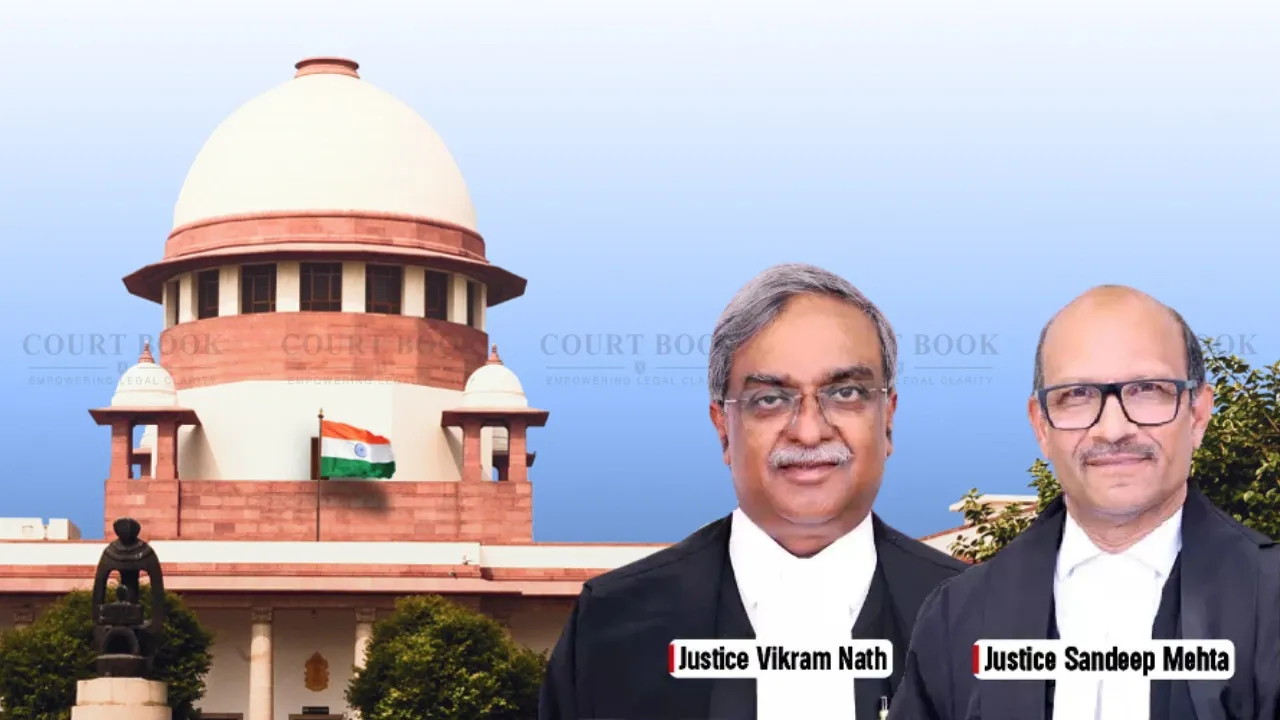
A Bench of Justice Vikram Nath and Justice Sandeep Mehta held that resolutions supported by a majority of trustees could legally bind the societies if their by-laws expressly permitted such action.
The dispute revolved around voting rights attached to shares held in Birla Corporation Limited by three societies - Hindustan Medical Institution, Eastern India Educational Institution and Belle Vue Clinic.
Background of the Case
The litigation arose from internal disagreements within the three societies over who had the authority to vote on behalf of the institutions during Birla Corporation’s annual general meetings. Rival groups within the societies claimed control over trustee decisions and authorisations.
The Calcutta High Court’s Division Bench had earlier ruled that trustees must act “in consonance” and observed that the vote cast first should be considered valid, irrespective of whether it came from the Managing Committee or the Board of Trustees.
Both the societies and Anamika Lodha challenged different portions of that ruling before the Supreme Court.
The Supreme Court closely examined Clause 24 of the societies’ by-laws, which allowed delegation through a written resolution signed by the majority of trustees.
Rejecting the High Court’s interpretation, the Bench observed that the by-laws themselves created an exception to the general rule requiring all trustees to act jointly.
“The governing by-laws themselves recognise and validate delegation evidenced in writing under the hands of the majority of the trustees,” the Bench noted.
The Court further held that the High Court had incorrectly relied on Section 48 of the Indian Trusts Act without considering the exception contained in the societies’ governing documents.
On the issue of voting rights, the Court said authority to vote could not be determined merely on the basis of who cast the vote first.
“The law protects the first valid vote of the member against duplication or change. It does not validate the first unauthorised act of a rival claimant,” the Bench observed.
Allowing the appeals filed by the three societies, the Supreme Court set aside both the Division Bench judgment dated September 26, 2022 and the connected interim orders of the Single Judge.
The Court held that a majority-backed written resolution by trustees could legally constitute a valid authorisation under the societies’ by-laws. It also ruled that the “first vote prevails” principle adopted by the High Court was legally unsustainable.
At the same time, the Bench clarified that it had not decided the factual validity of the disputed resolutions or appointments within the societies. Those issues, the Court said, would continue to be examined independently by the competent forum.
Case Details
Case Title: Hindustan Medical Institution v. Birla Corporation Limited & Ors.
Case Number: Civil Appeal arising out of SLP (C) No. 1182 of 2023 with connected matters
Judge: Justice Vikram Nath and Justice Sandeep Mehta
Decision Date: May 26, 2026


