

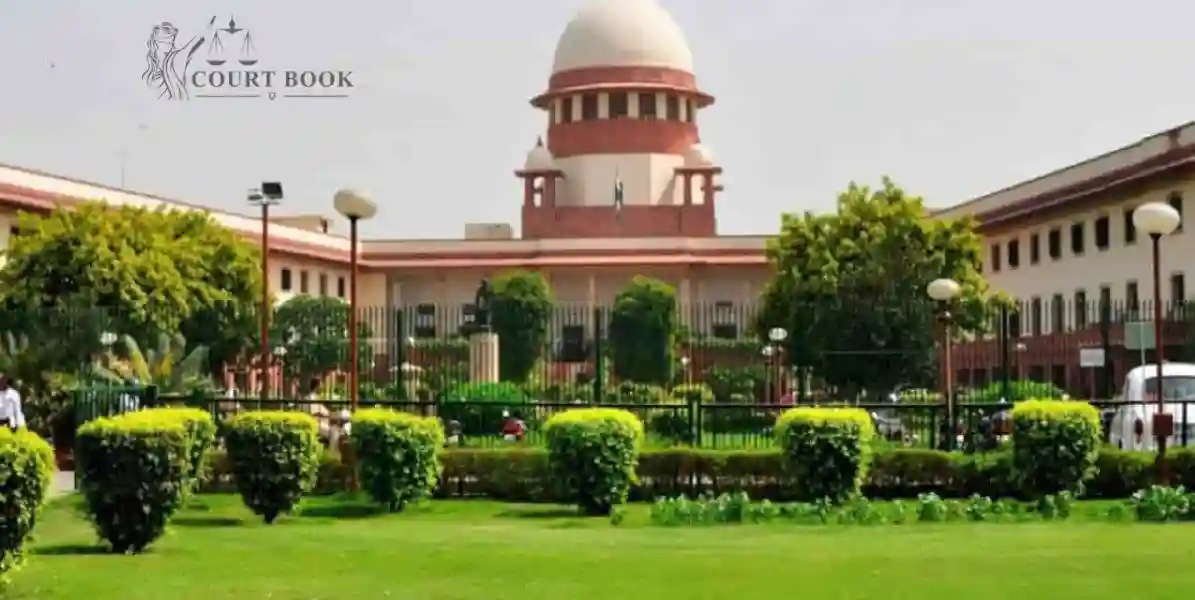
The Supreme Court dismissed an appeal filed by former North Delhi Municipal Corporation (NDMC) Executive Engineer Rajesh Sharma and upheld his dismissal from service. The Court ruled that the Municipal Commissioner was legally competent to impose the penalty, resolving a long-standing dispute over who could act as the disciplinary authority for senior municipal officers.
The judgment, authored by Justice Manoj Misra and concurred by Justice Sanjay Karol, examined the impact of amendments made to the Delhi Municipal Corporation Act in 1993.
Background of the Case
Rajesh Sharma, who served as an Executive Engineer (Civil), was dismissed from service in November 2011 after his conviction in a criminal case. He challenged the dismissal before the Central Administrative Tribunal (CAT), arguing that as a Group A officer, only the “Corporation” and not the Commissioner could take disciplinary action against him.
The CAT accepted that argument in 2014 and set aside the dismissal, while allowing the competent authority to pass a fresh order.
The North Delhi Municipal Corporation then approached the Delhi High Court, which reversed the CAT’s decision. The High Court held that the Commissioner was the disciplinary authority and was therefore competent to dismiss Sharma. That ruling was challenged before the Supreme Court.
Court’s Observation
The central issue before the Court was whether the Commissioner had the authority to dismiss a Group A officer despite provisions in the 1959 service regulations that appeared to vest that power in the Corporation.
The bench undertook a detailed examination of the Delhi Municipal Corporation Act and the amendments introduced through the Delhi Municipal Corporation (Amendment) Act, 1993.
“The legislative intent was to make the Commissioner, subject to Section 89, the appointing authority as well as the disciplinary authority of all municipal officers and other municipal employees,”
the bench observed.
The Court noted that the 1993 amendment specifically inserted Section 59(d), declaring the Commissioner to be the disciplinary authority for municipal employees. It rejected the argument that the older 1959 Regulations continued to control disciplinary proceedings against Group A officers.
According to the bench, the phrase
“subject to any regulation that may be made in this behalf”
referred to regulations that could be framed after the 1993 amendment and not to regulations already in existence before that amendment.
The Court further held that Parliament was competent to amend the parent statute and override inconsistent subordinate regulations.
Decision
Summarising its conclusions, the Supreme Court held that the amended Section 59(d) came into force on October 1, 1993, and did not operate retrospectively. It also ruled that the Commissioner became the disciplinary authority for municipal officers after the amendment and was competent to pass dismissal orders.
The bench additionally overruled the contrary legal position adopted in the Delhi High Court’s earlier decision in G.S. Matharoo.
“In consequence, the Commissioner was the Disciplinary Authority on the date when the appellant was dismissed from service and as such competent to pass the dismissal order,”
the Court said.
Dismissing the appeal, the Supreme Court concluded that the Delhi High Court’s judgment required no interference and upheld the dismissal of Rajesh Sharma from service.
Case Deatils:
Case Title: Rajesh Sharma v. North Delhi Municipal Corporation & Anr.
Case Number: SLP (C) No. 28644 of 2019 (Civil Appeal of 2026)
Bench: Justice Sanjay Karol and Justice Manoj Misra
Decision Date: June 17, 2026


