

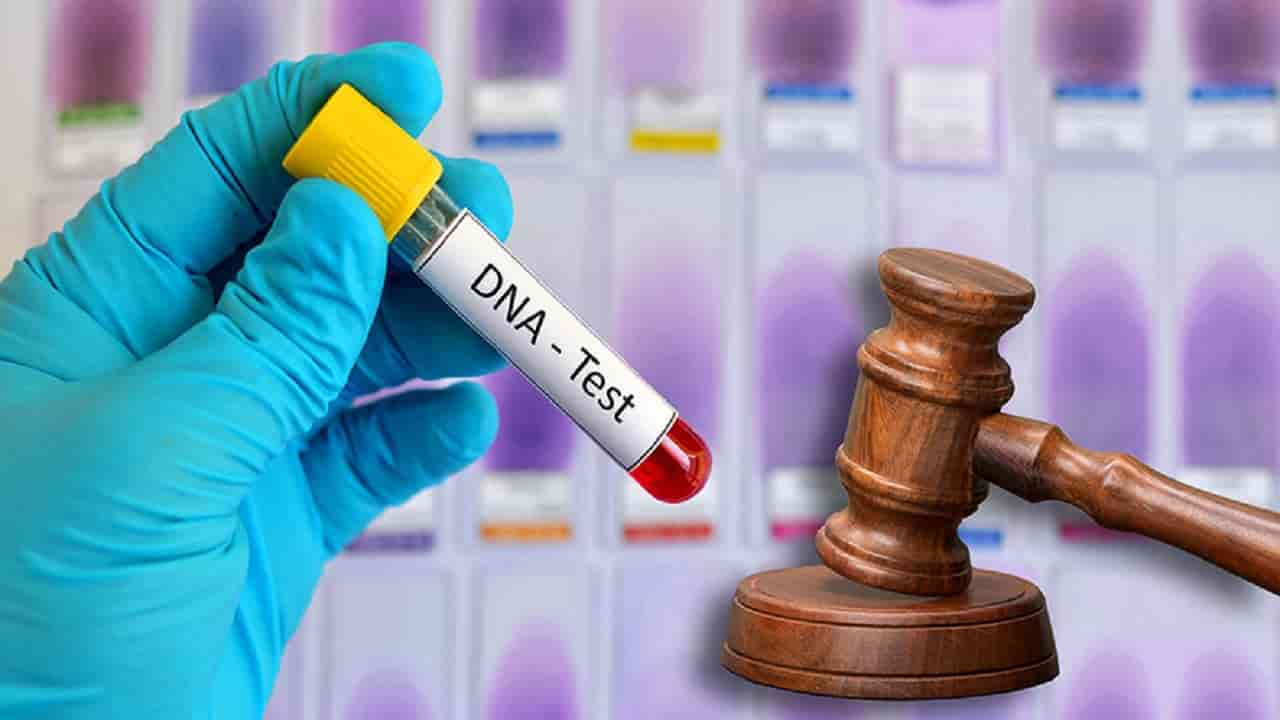
The Supreme Court has upheld an order directing a DNA test in a long-running paternity dispute, holding that the test was necessary to determine whether a man claiming to be the son of Chaturbhuj Pradhan was entitled to inheritance rights in his alleged father's property.
A Bench of Justice Sanjay Karol and Justice N. Kotiswar Singh dismissed the appeal filed by Chaturbhuj Pradhan, finding that the balance of interests favored the claimant, Amar Pradhan, who has sought a declaration that he is Pradhan's biological son.
Background of the Case
The dispute traces back more than two decades. Amar Pradhan claimed that he was born on September 10, 1999, from a relationship between his mother and Chaturbhuj Pradhan. According to Amar, the relationship took place in January 1999.
Chaturbhuj Pradhan consistently denied paternity. Over the years, the parties were involved in multiple legal proceedings, including maintenance litigation. Amar later filed a civil suit seeking a declaration that he is the son of Chaturbhuj Pradhan and therefore entitled to a one-third share in his property.
The trial court ordered a DNA test to determine paternity. The Chhattisgarh High Court affirmed that direction, observing that no other evidence could conclusively establish the relationship. Pradhan then approached the Supreme Court challenging those orders.
Arguments Before the Court
On behalf of Chaturbhuj Pradhan, it was argued that no person can be compelled to provide a DNA sample and that there was no compelling necessity for such a test. He also contended that Amar's suit was barred by the principle of res judicata because earlier proceedings had already dealt with issues concerning their alleged relationship.
Amar opposed the appeal, submitting that Pradhan had continuously denied paternity and that there was no other effective method to determine the truth. He argued that the right to privacy is not absolute and that justice required a scientific determination of paternity.
Court's Observations
The Bench reviewed a series of earlier Supreme Court decisions governing DNA testing in paternity disputes. It noted that courts should not order such tests routinely and must first examine whether the issue can be resolved through other evidence.
At the same time, the Court emphasized that where paternity is directly in issue and no other evidence can provide a clear answer, a DNA test may become necessary.
Summarizing the legal position, the Bench observed:
“When the Court is confronted with the question whether or not to order a DNA test, the only test to be satisfied is whether the result of the DNA test is directly in issue and whether any other evidence-on-record can substitute for the answer that may be arrived at through this scientific process.”
The Court found that Amar's civil suit was specifically aimed at establishing paternity and inheritance rights, making the question of biological parentage central to the dispute. It also noted that Chaturbhuj Pradhan had consistently denied being Amar's father and that no other evidence could conclusively answer the issue.
Addressing privacy concerns, the Bench said the case required balancing competing interests.
“The balance of interests definitely lies in favour of Amar,” the Court observed, noting that he had spent much of his life facing uncertainty regarding his parentage and could be deprived of rights available to him if the question remained unresolved.
Decision
Finding no error in the orders passed by the trial court and the High Court, the Supreme Court dismissed the appeal.
The Court directed that the matter be placed before the concerned civil court for fixing a date for the DNA test and for further proceedings in the pending civil suit based on the outcome of that test.
All pending applications were also disposed of, with no order as to costs.
Case Details
Case Title: Chaturbhuj Pradhan v. Amar Pradhan & Anr.
Case Number: Civil Appeal arising out of SLP (C) No. 4016 of 2026
Judge: Justice Sanjay Karol and Justice N. Kotiswar Singh
Decision Date: May 29, 2026


