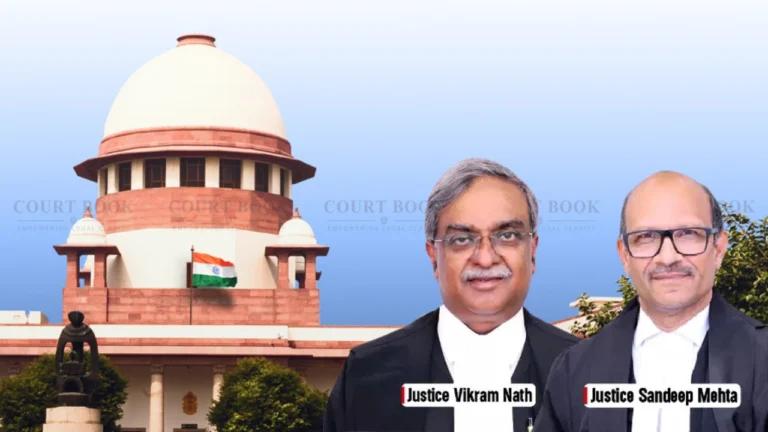
The Supreme Court of India, in a heartfelt judgment delivered on December 3, 2025, strongly reminded the nation that equal rights are not favours but constitutional assurances. A bench led by Justice Vikram Nath and Justice Sandeep Mehta heard a petition filed by advocacy group Mission Accessibility, which raised practical, everyday hurdles faced by visually impaired aspirants in the country’s top competitive examination - the Civil Services Examination conducted by UPSC.
The hearing, much like the issue itself, wasn’t only about test rules. It was about dignity.
Background
Mission Accessibility, working for disability rights, requested modifications in application rules so that candidates who require scribes are not forced to lock in their scribe’s details months before the exam. They also demanded permission for visually impaired aspirants to use laptops with screen-reader software and receive question papers in accessible digital formats.
The Court noted that forcing details too early can be unreasonable - people fall sick, plans change, and not all scribes can commit for long periods.
Earlier in May, the Court had already nudged UPSC to allow flexibility and to examine whether assistive technology like screen readers could be allowed. The Commission initially hesitated, stating infrastructure challenges.
Court’s Observations
Justice Mehta, speaking for the bench, opened with moral clarity:
“The measure of a just and inclusive society lies… in the opportunities it ensures for all its citizens.”
The Court appreciated that UPSC - after deliberations with government agencies - finally agreed in principle to introduce Screen Reader Software in its exams. But there was frustration too: no roadmap, no clarity on when the change will reach the ground.
The bench remarked that inclusion cannot remain stuff of files and press notes. Changes must reflect at exam centres spread across India, where candidates fight for their dreams.
Another sharp reminder came when the Court observed that rights of persons with disabilities are embedded in the Constitution itself.
“These rights are not acts of benevolence,” the bench stressed.
The article references Articles 14 and 21 equality and dignity as firm pillars supporting this direction.
Decision
Calling the fight for accessibility a step toward a more humane recruitment system, the Court issued binding directions:
- Scribes: UPSC must allow changes to scribe details up to at least seven days before any exam and decide each request within three working days.
- Screen Readers: UPSC must file a detailed compliance affidavit within two months, listing how and when screen readers will be deployed at centres nationwide.
- Government Support: DoPT, NIEPVD, and the Social Justice Ministry must support implementation and standardise protocols.
- Security + Accessibility Together: Technology upgrades should protect exam integrity while enabling dignity for disabled candidates.
The writ petition was disposed of with the directions above - and the Court will check compliance in February 2026.
Case Title:- Mission Accessibility v. Union of India & Ors.
Case Number:- Writ Petition (Civil) No. 206 of 2025