

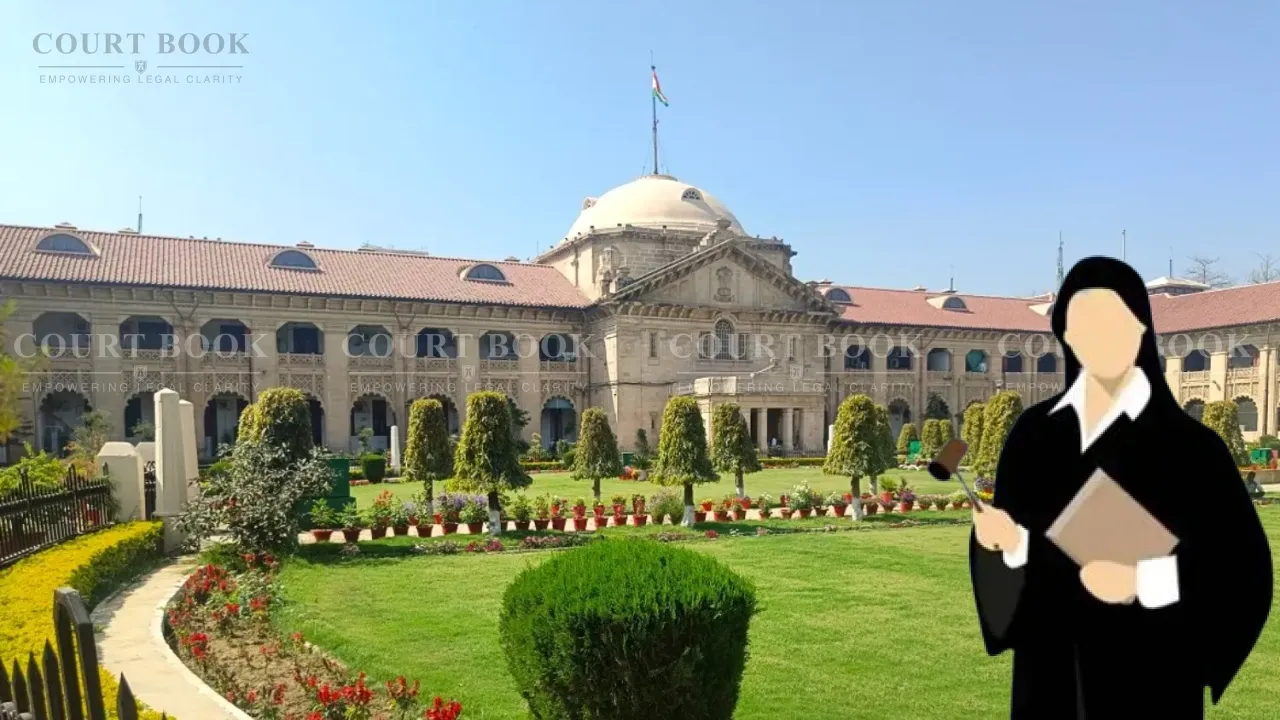
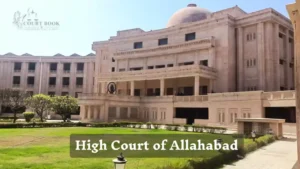
The Allahabad High Court has declined to quash the 2026 elections of the Civil Bar Association, Bulandshahr, despite finding that the election process initially did not provide for 30% representation of women lawyers as directed by the Supreme Court.
A Division Bench comprising Chief Justice Arun Bhansali and Justice Kshitij Shailendra held that the subsequent nomination of four women advocates brought the representation in the elected body to the level contemplated by the Supreme Court's directions. The Court, however, directed the Bar Association to amend its bye-laws for future elections.
Background of the Case
The Public Interest Litigation was filed by Bhavna Pandit, an advocate practising in the Bulandshahr District Court, challenging the elections of the executive body of the Civil Bar Association for 2025-26.
The election programme was notified on April 4, 2026, and polling took place on April 16. The voter list contained 387 ordinary members and 108 life members, along with four additional members. Among them were 79 women lawyers.
The petitioner relied on the Supreme Court's March 13, 2026 order in Deeksha N Amruthesh v. State of Karnataka and Others, which directed that at least 30% representation of women lawyers be ensured in the governing or executive bodies of Bar Associations.
No woman lawyer had been elected as an office bearer in the Bulandshahr election. Subsequently, on April 20, the elected body nominated four women advocates—one as Joint Treasurer and three as Executive Members.
Court's Observations
The High Court examined the sequence of Supreme Court orders in the Deeksha proceedings. It noted that the directions initially applied to Karnataka but were extended to other High Courts through the Supreme Court's March 13 order.
The Bench observed that the Bulandshahr election programme had been notified after the March 13 directions had already been issued. Therefore, the respondents could not rely solely on their claim that they received a copy of the Supreme Court order only on April 8.
"The respondents, being an association of lawyers, are supposed to be aware of the orders of the Hon’ble Supreme Court, particularly in light of nature of controversy involved in the present case where the very election of Bar Association was to be conducted as per the directions issued."
The Court found that the initial failure to provide 30% representation among the 12 elected office-bearer posts was not in accordance with the Supreme Court's directions.
However, the Supreme Court subsequently modified and clarified the nomination mechanism on April 16. It provided that where women advocates did not contest elections, the shortfall in representation could be addressed through nominations.
The High Court noted that no woman lawyer had come forward to contest the relevant election. It therefore held that the nomination of women advocates could not, by itself, be treated as illegal.
The Bench also acknowledged that the nominations were not made through the precise procedure prescribed by the Supreme Court's April 16 order. Nevertheless, four women advocates had been nominated only four days after the election.
The Court observed that the inclusion of the four women advocates meant that the body then had 16 members, and the representation achieved was sufficient to fulfil the immediate purpose of the Supreme Court's direction.
Decision
The High Court disposed of the PIL without cancelling the Bulandshahr Bar Association elections.
The elected body was directed to amend its bye-laws or Memorandum of Association within one month to provide for 30% representation of women lawyers in all future elections of the governing or executive body.
The Bar Association was also directed to send details of the four nominations and the entire election proceedings to the Administrative Judge of District Bulandshahr, in consultation with the District and Sessions Judge, elected office bearers and the senior-most woman member of the Bar Association.
Unless otherwise ordered by the Administrative Judge, the April 16 election and April 20 nominations would remain intact, and the elected body along with the nominated women members would continue to function.
The Bench comprising Chief Justice Arun Bhansali and Justice Kshitij Shailendra accordingly disposed of the petition on September 11, 2026.
Case Details:
Case Title: Bhavna Pandit v. State of U.P. and 16 Others
Case Number: Public Interest Litigation (PIL) No. 1131 of 2026
Judges: Chief Justice Arun Bhansali and Justice Kshitij Shailendra
Decision Date: September 11, 2026





-300x169.webp)

-300x169.webp)