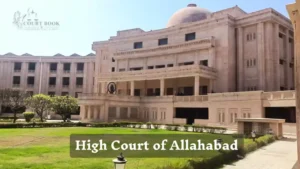
The Allahabad High Court has set aside a Public Works Department (PWD) order that rejected compassionate appointment claims after a government employee’s death, ruling that a registered Will cannot determine eligibility for such jobs. The court directed authorities to reconsider the claims strictly under service rules, not succession documents.
Background of the Case
The case arose after Ranjeet Kumar, a PWD employee, died while in service in September 2025. Following his death, two family members sought compassionate appointment under the Uttar Pradesh Recruitment of Dependents of Government Servants Dying-in-Harness Rules, 1974.
One claimant was Ache Lal, the deceased employee’s brother, who relied on a registered Will executed in his favour. The other was Smt. Aruna Devi, the widow of the deceased, who claimed her right as the legally wedded wife.
The department rejected both applications in November 2025, stating that it was impossible to determine the rightful heir because of conflicting claims and the presence of the Will.
Court Observations
Justice Manish Mathur, after hearing both sides, made it clear that compassionate appointment is not about inheritance or ownership of property.
The bench noted that under the 1974 Rules, compassionate employment is meant to support the family financially after the sudden death of a government employee.
Read also:- Bombay High Court Cracks Down on Deadly Nylon Manja: ₹25,000 Fine for Kite Flyers, ₹2.5 Lakh for Vendors
“The aspect of a registered Will does not have any role to play with regard to grant of compassionate employment,” the court observed.
The judgment explained that the rules clearly define who comes under “family,” including the spouse and, in certain cases, an unmarried brother. More importantly, the authority must examine dependency, financial condition, and the overall welfare of the family - especially the widow and minor children.
The court also pointed out that Aruna Devi remained the lawful wife, as there was no divorce decree. Mere separation, the bench said, does not end her legal status. The presence of the deceased’s daughter also needed consideration while deciding the claim.
Read also:- Second Marriage During Subsisting First One Void, Chhattisgarh HC Rules in Property Case
Decision
Holding that the authorities ignored key provisions of the 1974 Rules, the High Court quashed the rejection order dated November 18, 2025.
The court issued directions to the Executive Engineer, PWD, Lakhimpur Kheri, to reconsider both applications afresh. The authority must assess dependency and suitability under Rules 2, 6, and 7, give a proper hearing to all concerned family members, including the daughter, and take a decision within eight weeks.
With these directions, the writ petition was allowed at the admission stage, and parties were asked to bear their own costs.
Case Title: Ache Lal vs State of Uttar Pradesh & Others
Case Number: Writ – A No. 14910 of 2025
Date of Judgment: January 12, 2026
Download Order