In a significant ruling affecting family property disputes and women’s rights, the Supreme Court has clarified that a daughter-in-law who becomes a widow after the death of her father-in-law is still entitled to seek maintenance from his estate. The court dismissed appeals challenging such claims, holding that the law does not restrict maintenance only to those widowed during the father-in-law’s lifetime.
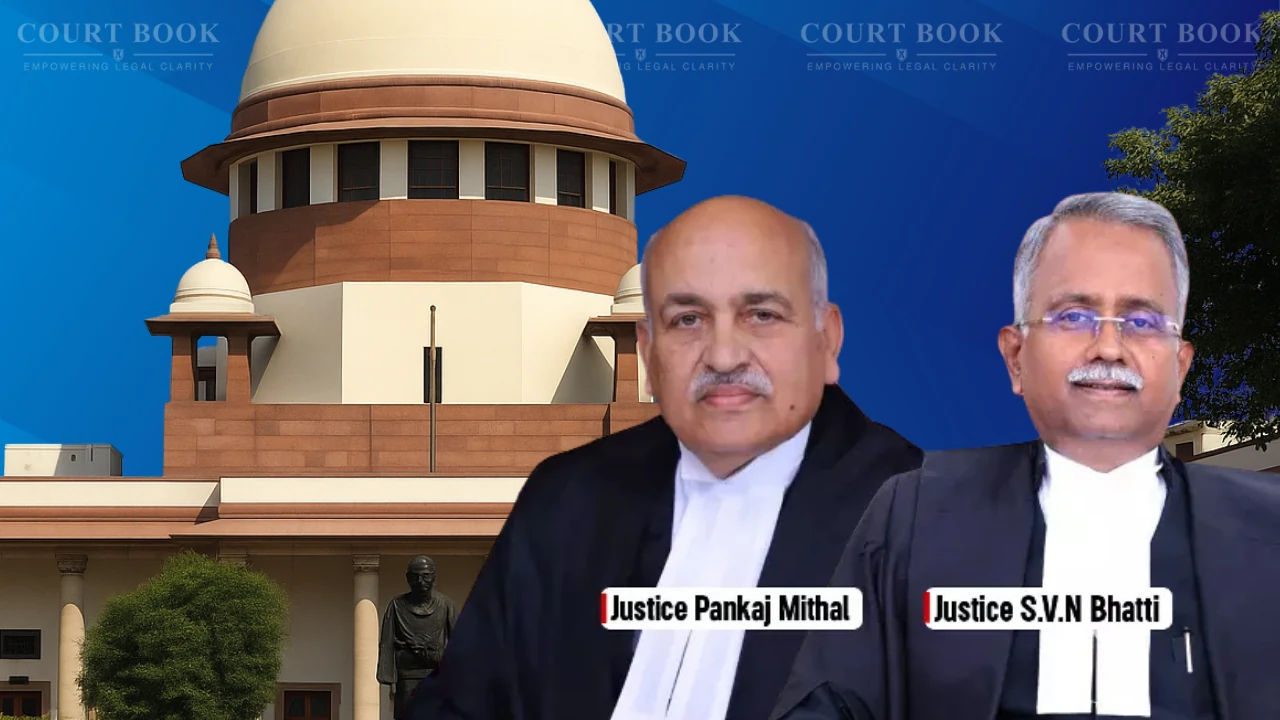
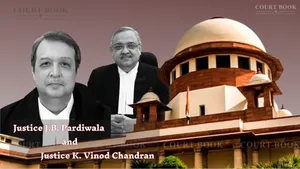
The judgment was delivered by a bench of Justice Pankaj Mithal and Justice S.V.N. Bhatti, bringing closure to a bitter intra-family dispute over inheritance and financial support.
Background of the Case
The dispute arose from the estate of late Dr. Mahendra Prasad, who passed away in December 2021. He was survived by his sons, including Ranjit Sharma and Rajeev Sharma, while another son, Devinder Rai, had died earlier.
Read also:- Bombay High Court Cracks Down on Deadly Nylon Manja: ₹25,000 Fine for Kite Flyers, ₹2.5 Lakh for Vendors
According to the case record, Dr. Prasad had executed a registered will in 2011, appointing his daughter-in-law Kanchana Rai wife of his predeceased son as executor, while bequeathing his properties to her sons. This arrangement excluded his other sons.
After Dr. Prasad’s death, Geeta Sharma, wife of Ranjit Sharma, sought maintenance from her father-in-law’s estate under the Hindu Adoptions and Maintenance Act, 1956. At the time of Dr. Prasad’s death, her husband was alive, but he later passed away, making her a widow.
The Family Court rejected her plea, holding that she was not a widow when her father-in-law died. However, the High Court reversed this view, ruling that her petition was maintainable and directing the Family Court to decide the amount of maintenance.
Read also:- Second Marriage During Subsisting First One Void, Chhattisgarh HC Rules in Property Case
Appeals Before the Supreme Court
The High Court’s order was challenged before the Supreme Court by two appellants. One was Kanchana Rai, who argued that only widows of predeceased sons could claim maintenance. The other was Uma Devi, who claimed to be the long-term partner of the deceased and opposed Geeta Sharma’s right to seek maintenance.
The core legal question before the court was narrow but important: Does a daughter-in-law who becomes a widow after her father-in-law’s death qualify as a “dependent” under the law?
Court’s Observations
Interpreting Section 21 of the Hindu Adoptions and Maintenance Act, the bench noted that the statute clearly includes “any widow of his son” as a dependent.
Read also:- Woman Free to Choose Her Life: Orissa High Court’s Strong Stand Against Forced Marriage
“The words used by the legislature are plain and unambiguous,” the bench observed, adding that courts cannot insert restrictions that Parliament never intended.
Rejecting the argument that only widows of predeceased sons are covered, the court said the timing of a woman becoming a widow is irrelevant.
“The Act does not use the expression ‘widow of a predeceased son’. It consciously uses the wider phrase ‘any widow of a son’,” the judgment noted.
The bench also cautioned against rewriting statutes under the guise of interpretation, stressing that judges must give effect to the language as enacted.
The Supreme Court went further, warning that any narrow reading would violate constitutional guarantees. Drawing from Articles 14 and 21, the bench said denying maintenance based on the timing of a husband’s death would be arbitrary and unfair.
Read also:- Child’s Welfare Paramount: Gujarat High Court Refuses to Shift Custody From Father to Mother
Such a distinction, the court said, would expose widowed daughters-in-law to financial hardship and undermine their right to live with dignity.
Final Decision
Upholding the High Court’s ruling, the Supreme Court held that Geeta Sharma’s maintenance petition was legally maintainable. The bench confirmed that she qualifies as a dependent and is entitled to seek maintenance from the estate of her deceased father-in-law.
“All heirs who inherit the estate are under an obligation to maintain the dependants,” the court concluded.
With this finding, both appeals were dismissed, and the Family Court will now decide the maintenance claim on merits. No costs were imposed.
Download Judgment


-300x169.webp)
-300x169.webp)