

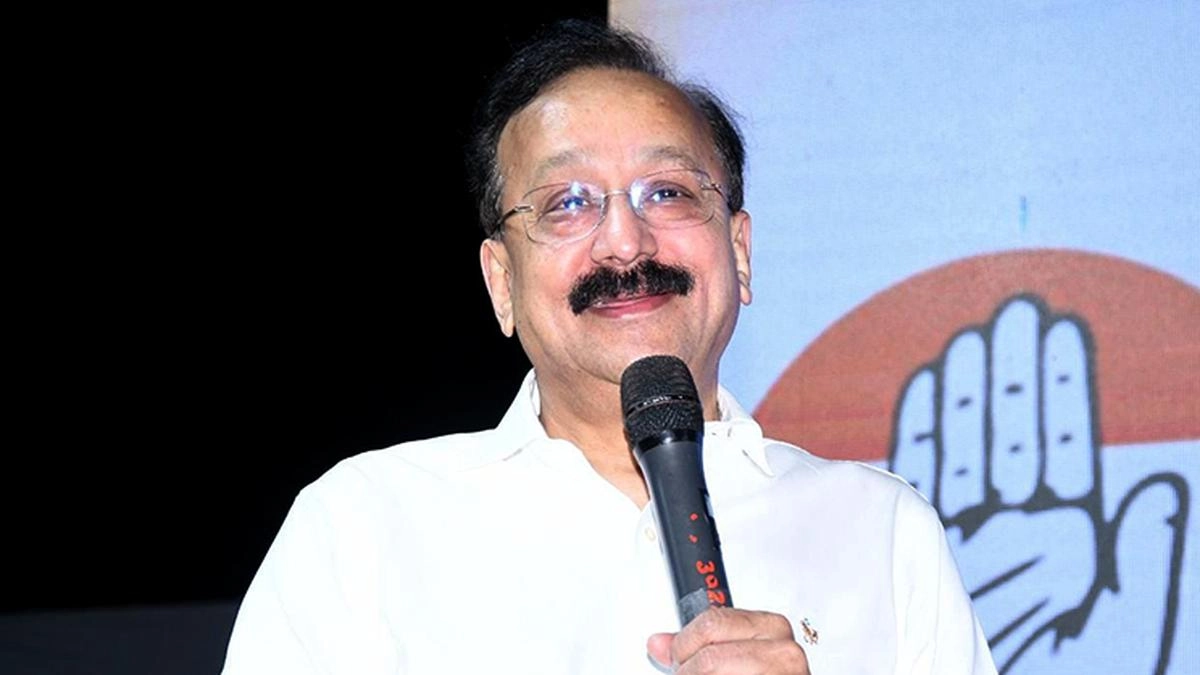
The Bombay High Court on Monday granted bail to Akashdeep Karaj Singh, a 22-year-old man arrested in connection with the murder of former Maharashtra minister Baba Siddiqui, holding that the prosecution had failed to show reasonable grounds that he was part of an organised crime syndicate under the stringent Maharashtra Control of Organised Crime Act (MCOCA).
Justice Dr. Neela Gokhale, who heard the matter, observed that the material placed on record against the applicant was limited and did not, at this stage, justify his continued incarceration under the special law. The order was pronounced on 9 February 2026, after being reserved earlier this month.
Read also:-Bombay HC Disposes Unmarried Woman’s Abortion Plea, Cites Supreme Court Ruling on MTP Rights
Background of the Case
The case arises out of the fatal shooting of Ziauddin Abdul Rahim Siddiqui, popularly known as Baba Siddiqui, on the night of 12 October 2024 in Mumbai’s Bandra area. According to the prosecution, Siddiqui was attacked by three assailants while he was walking towards his car after visiting his son’s office.
Two shooters were arrested at the spot with firearms and ammunition. As the investigation widened, police alleged the involvement of an organised crime syndicate linked to the Bishnoi gang, following which provisions of MCOCA were invoked. In total, 27 accused were arrested, including Akashdeep Karaj Singh, who was shown as Accused No. 24.
Singh’s earlier bail plea was rejected by the Special MCOCA Court in July 2025, prompting him to approach the High Court.
What the Prosecution Alleged
The State, represented by the Special Public Prosecutor, argued that Singh was an active member of the organised crime syndicate. The prosecution relied mainly on two phone calls allegedly made by Singh to a co-accused on 7 October 2024, using another person’s mobile internet hotspot in Punjab.
Read also:-Calcutta High Court Refuses to Quash Forgery Case Linked to 1963 Land Deed, Orders Police Prob
Investigators also pointed to alleged international calls, photographs of Singh holding a firearm found on his phone, and a claim that money deposited at an ATM in Punjab had reached an associate of a co-accused in Mumbai.
Opposing bail, the widow of Baba Siddiqui, appearing through senior counsel, submitted that a young man of Singh’s age had no reason to make international calls, and this itself raised serious suspicion.
Court’s Observations
After examining the record in detail, the court found the prosecution’s case against Singh to be thin at this stage.
“The entire case against the applicant hinges on two phone calls,” the bench noted, adding that merely making a call to a co-accused does not automatically establish involvement in organised crime unless there is material to show knowledge or participation.
Read also:-Bombay High Court Flags Flawed Tree-Felling Notices, Closes Pune Coconut Trees Case
Justice Gokhale also pointed out that while international calls were alleged, the prosecution had not identified the recipients or shown how those calls were connected to the crime.
Significantly, the court examined the confessional statements of key accused persons and found that Singh’s name did not figure anywhere. “The applicant’s name is eloquently absent,” the judge remarked while noting that other accused had named several individuals in detail.
On the firearm photograph, the court said that a picture alone does not prove conspiracy, especially when the prosecution itself claimed that the weapons used in the murder were sourced from Rajasthan.
Application of MCOCA Bail Law
The court carefully analysed the strict bail conditions under Section 21(4) of MCOCA, which require the court to be satisfied that the accused is not guilty and unlikely to commit an offence if released.
Referring to Supreme Court judgments, the bench clarified that at the bail stage, the court must look for reasonable grounds, not proof beyond doubt.
“In the present case, I am unable to form an opinion that there are reasonable grounds to believe that the accusations under MCOCA are prima facie true,” the judge held.
The court also took note of Singh’s young age, lack of criminal antecedents, and the limited nature of allegations while assessing the likelihood of reoffending.
Read also:-Married Daughter Can’t Be Denied Compassionate Job: Orissa High Court Pulls Up State Over Gender
The Decision
Allowing the bail application, the Bombay High Court ordered that Akashdeep Karaj Singh be released on bail, subject to strict conditions. These include furnishing a personal bond of ₹1 lakh, regular attendance before the trial court and investigating agency, surrender of passport, travel restrictions, and a clear warning against influencing witnesses.
The court clarified that all observations are prima facie and confined only to the bail proceedings, and that the trial court shall decide the case on its own merits.
Case Title: Akashdeep Karaj Singh v. State of Maharashtra
Case No.: Bail Application No. 3679 of 2025
Decision Date: 9 February 2026


