

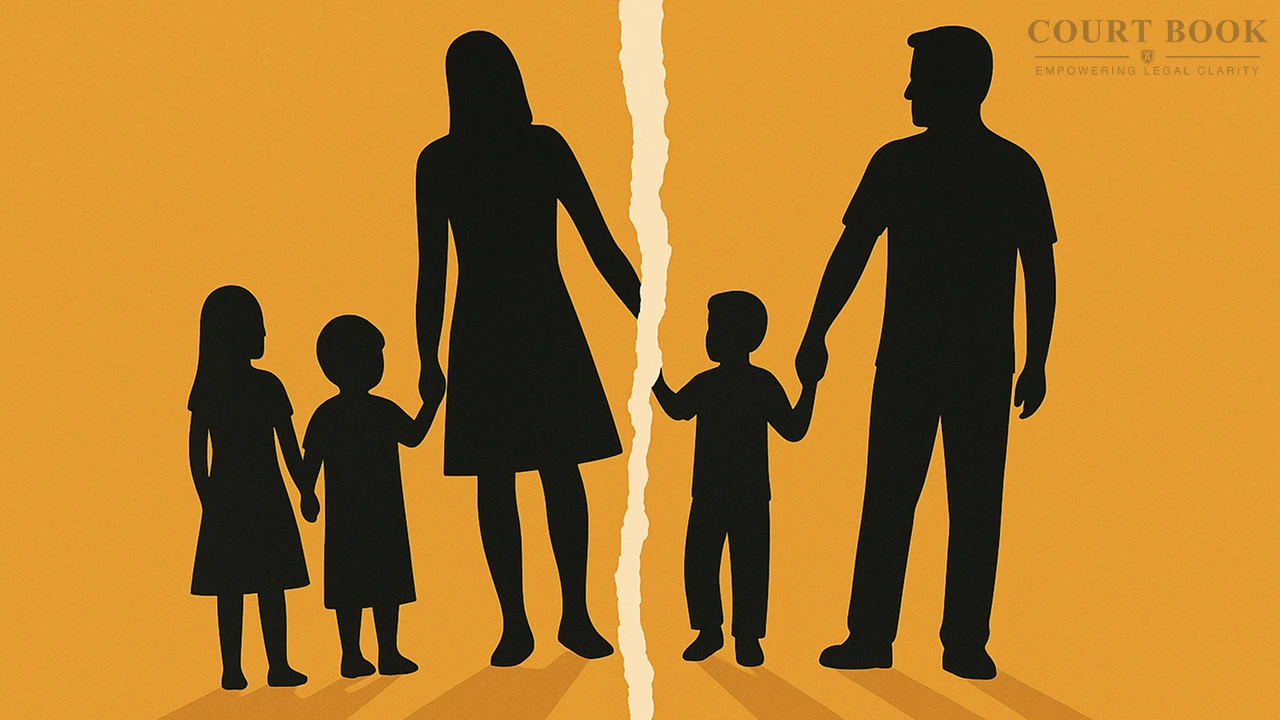
The Delhi High Court when Justice Swarana Kanta Sharma finally read out the verdict in Hitesh Makhija vs Ritu Makhija. The case, at first glance, looked like another maintenance dispute. But as arguments unfolded, it became clear this was about more than numbers on an affidavit. At stake were three young children, competing claims of hardship, and the court’s growing discomfort with half-truths placed before it.
हिंदी में पढ़ें
Background
Hitesh and Ritu Makhija married in January 2014. Within six years, they had three children - two daughters and a son. The marriage later broke down, and in December 2022, Ritu moved the Mahila Court under the Protection of Women from Domestic Violence Act, seeking relief for her children.
The trial court, after examining bank records and income disclosures, directed Hitesh to pay ₹30,000 per month as interim maintenance, ₹10,000 for each child. Hitesh challenged this, claiming he earned only ₹9,000 a month working at his mother’s pharmacy. The Sessions Court was not convinced and dismissed his appeal. That dismissal led him to the High Court.
Court’s Observations
Justice Sharma was notably direct while dealing with the income dispute. The bench observed that it was “difficult to reconcile” a claim of ₹9,000 monthly income with earlier income tax returns showing earnings closer to ₹40,000 a month.
Read also:-J&K High Court Pulls Up Magistrate for Issuing Warrants After Cheque Bounce Settlement
The court took note of several inconsistencies - missing ITRs for certain years, unexplained bank credits, and the fact that the husband held a credit card. “A person pleading inability must come with clean hands,” the bench observed, adding that selective financial disclosure weakens credibility.
On the wife’s side, the court acknowledged she earns about ₹34,500 per month. But it also noted she had not sought maintenance for herself and was raising three minor children alone. “Employment does not erase the daily burden of caregiving,” the judge remarked, pointing out that school, health, and basic dignity of children cannot be measured only in rupees.
The court also addressed the argument that both parents must contribute. Yes, it agreed, responsibility is shared. But shared responsibility does not mean the father can sidestep his obligation by understating income.
Read also:-Madras High Court Defers Plea to Halt ‘Parasakthi’ Release, Seeks Report From Writers’ Body
Decision
After balancing past earnings, present claims, and the needs of the children, the High Court partly modified the earlier orders. The bench reduced the interim maintenance from ₹30,000 to ₹25,000 per month for all three children, payable from the date of filing, with adjustment of amounts already paid.
With that limited modification, the High Court upheld the core findings of the lower courts and disposed of the revision petition, making it clear that these observations would not affect the final trial on merits.
Case Title: Hitesh Makhija vs Ritu Makhija
Case No.: CRL.REV.P. 723/2024 (along with connected applications)
Case Type: Criminal Revision Petition (Domestic Violence Act – Interim Child Maintenance)
Decision Date: 27 December 2025


