

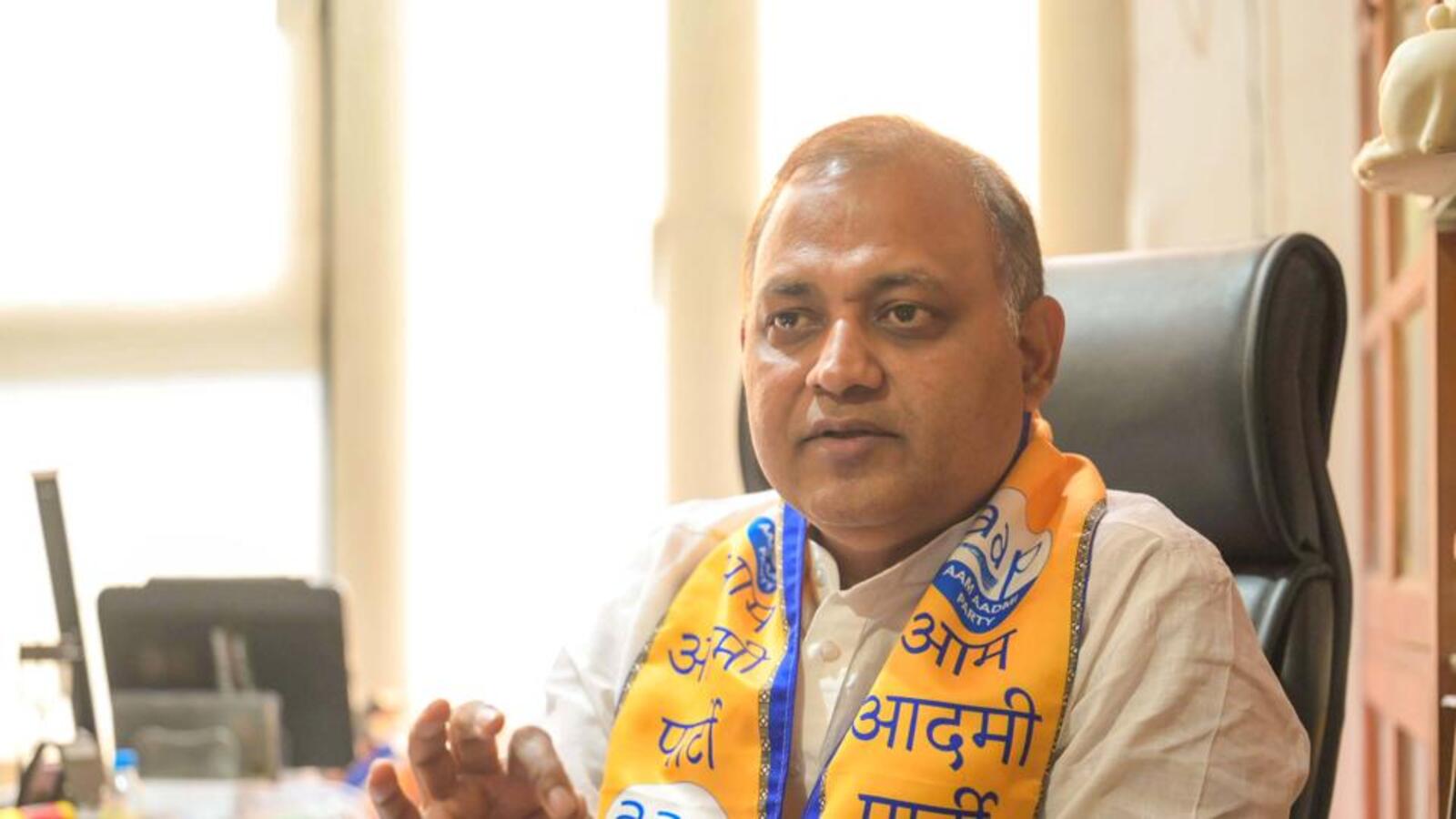
The Delhi High Court on Friday dismissed AAP leader Somnath Bharti’s election petition challenging his defeat from the Malviya Nagar Assembly constituency, holding that the case suffered from a “fatal legal defect.” The court ruled that Bharti failed to implead a necessary party despite making serious allegations of corrupt practices, making the petition legally untenable.
Justice Jasmeet Singh pronounced the judgment on January 17, 2026, bringing an end to the challenge against BJP candidate Satish Upadhyay’s victory in the 2025 Delhi Assembly elections.
Read also:-No Evidence, Yet Organised Crime Tag: MP High Court Calls It Misuse of Power, Grants Bail
Background of the Case
Somnath Bharti, a three-time MLA and former Delhi Law Minister, had contested the 2025 Assembly election from Malviya Nagar as the Aam Aadmi Party candidate. He lost to BJP’s Satish Upadhyay by a margin of 2,131 votes.
Challenging the result, Bharti filed an election petition alleging several irregularities, including corrupt practices under the Representation of the People Act (RPA). He claimed that the BJP candidate had colluded with Congress candidate Jitender Kumar Kochar to split votes and influence the outcome.
According to Bharti, the Congress candidate allegedly ran a campaign aimed only at damaging his prospects while avoiding any criticism of the BJP nominee.
Key Allegations Raised
In his petition, Bharti alleged that:
• Voters were illegally transported to polling booths
• The BJP candidate coordinated with the Congress candidate
• Money was allegedly used to influence voting behaviour
• The voters’ list was manipulated
• Election expenditure details were not properly disclosed
He argued that these acts amounted to corrupt practices under Sections 123, 127A, and 130 of the Representation of the People Act.
Respondent’s Objection
Senior advocates representing Satish Upadhyay raised a preliminary objection, arguing that the petition itself was not maintainable.
They pointed out that Bharti had made direct allegations of corrupt practices against Congress candidate Jitender Kochar but failed to implead him as a respondent. Under Section 82(b) of the RPA, any candidate accused of corrupt practices must be made a party to the election petition.
“The law leaves no discretion. If a necessary party is not impleaded, the petition must fail,” the respondent’s counsel argued.
They also stressed that such a defect could not be cured later by amendment once the 45-day limitation period had expired.
Court’s Observation
After examining the pleadings and relevant legal provisions, the High Court agreed with the respondent’s objections.
Justice Jasmeet Singh observed that election petitions are special proceedings governed strictly by statute. The court noted:
“The use of the word ‘shall’ in Section 82 of the Representation of the People Act leaves no discretion with the Court.”
The court held that Bharti’s petition clearly accused the Congress candidate of participating in corrupt practices. Once such an allegation is made, impleading that candidate becomes mandatory.
The judge further observed:
“Non-joinder of a necessary party is not a technical defect but goes to the root of the maintainability of the election petition.”
The court rejected Bharti’s argument that only the giver of bribes is culpable and not the receiver, noting that the law had been amended long ago to cover both aspects.
Read also:-Environmental Lapse Exposed: MP High Court Flags Thousands of Units Operating Without Consent
Why the Petition Failed
The court highlighted three key reasons for dismissal:
1. Mandatory Requirement Ignored:
Section 82(b) requires that any candidate accused of corrupt practices must be made a respondent.2. Limitation Period Expired:
The law allows only 45 days to file a proper election petition. Bharti failed to implead the Congress candidate within this time.3. Defect Cannot Be Cured Later:
The court held that amendments or deletions after the limitation period cannot cure a fundamentally defective petition.Relying on multiple Supreme Court judgments, the court reiterated that election law must be followed strictly, even if the result appears harsh.
Read also:-Bar Associations Do Not Discharge Public Functions, Says Delhi High Court While Dismissing Appeal
Final Decision
Concluding the matter, the Delhi High Court dismissed the election petition in its entirety.
“The failure to implead the Congress candidate is an incurable defect. The petition is liable to be dismissed under Section 86(1) of the Representation of the People Act,” the court ruled.
All pending applications were also disposed of, and no costs were imposed.
Case Title: Somnath Bharti v. Satish Upadhyay
Case No.: EL.PET. 7/2025
Decision Date: 17 January 2026
Download Judgment

