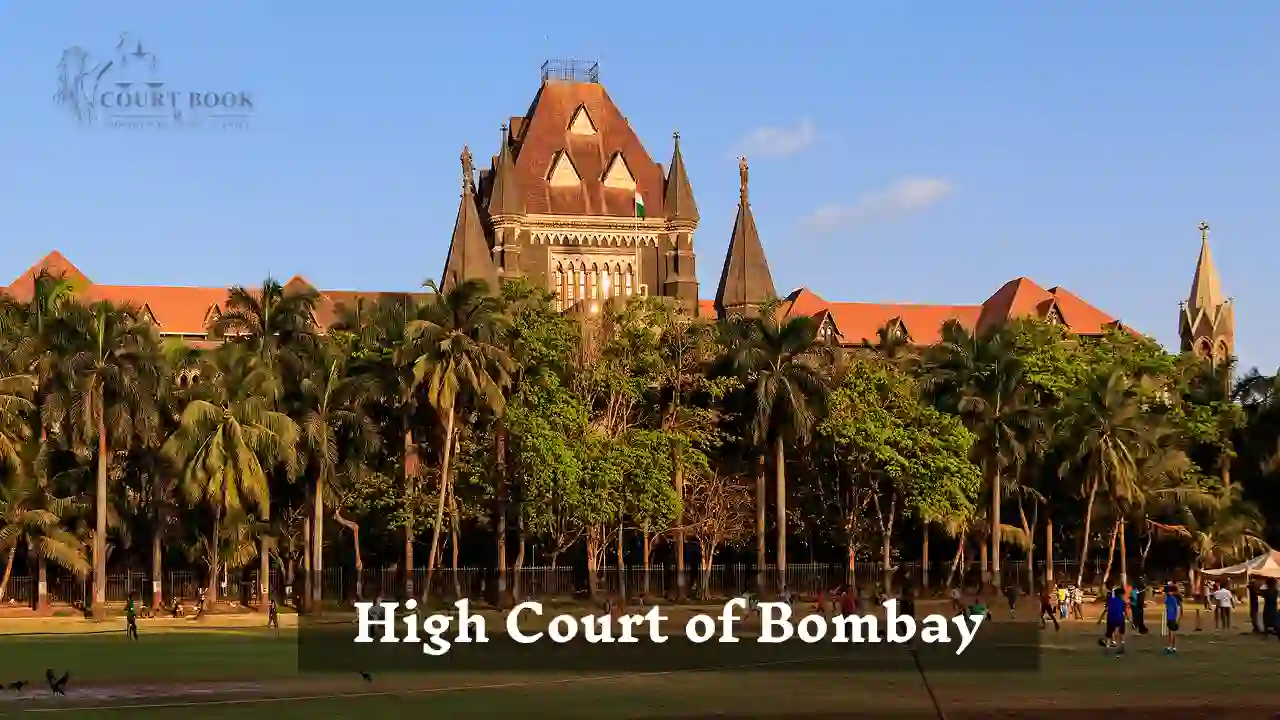
In a significant ruling reinforcing personal liberty, the Bombay High Court has held that an adult woman rescued during a raid under the Immoral Traffic (Prevention) Act, 1956 (PITA) cannot be forced to stay in a protective home against her wishes. The court set aside earlier orders that had directed her one-year detention, observing that poverty or lack of family support cannot justify curtailing the fundamental rights of a major.
Justice N.J. Jamadar delivered the judgment while allowing a writ petition filed by the woman, referred to as Victim No.3, who challenged the legality of her continued confinement.
Background of the Case
The case arose from a police raid conducted at Hotel Vijay Lodging in Yeola, Maharashtra, based on information about illegal activities. During the operation, five women were rescued, including the petitioner. Two men were arrested, and a criminal case was registered under Sections 3, 4, 5, and 6 of PITA.
Read also:- Delhi HC Dismisses Election Petition Against Manish Sisodia Over Campaigning Claims, Affidavit Disclosure
Following the rescue, the Judicial Magistrate conducted an inquiry under Section 17 of PITA. After reviewing reports from the probation officer, medical examinations, and statements of the victims, the Magistrate ordered that three of the women, including the petitioner, be sent to a protective home in Nashik for one year.
The Magistrate reasoned that the petitioner had no immediate family to support her and no stable income. There was, in the court’s view, a risk that she might again be drawn into commercial sex work if released.
An appeal before the Sessions Court failed, prompting the petitioner to approach the High Court.
Counsel for the petitioner argued that the lower courts had treated the victim as if she were an offender. Emphasising that the woman was a major, the lawyer submitted that her detention violated her fundamental rights to personal liberty, movement, and choice of residence.
“It was wrongly assumed that she would relapse into sex work merely because she is poor and alone,” the counsel contended, adding that such assumptions had no legal basis.
Read also:- Bar Associations Do Not Discharge Public Functions, Says Delhi High Court While Dismissing Appeal
The State, however, defended the orders. The prosecution argued that protective detention was necessary for the woman’s own safety, given her vulnerable social and economic condition.
Court’s Observations
Justice Jamadar framed the central question clearly: Can an adult victim be detained in a protective home against her will only because she lacks family support and may be economically vulnerable?
The court answered this in the negative.
The bench noted that PITA was enacted to prevent sexual exploitation and trafficking, not to punish victims.
“There is no provision in the Act that criminalises prostitution by itself,” the court observed, reiterating that the law targets exploitation by others, not the victim’s existence or poverty.
Read also:- Environmental Lapse Exposed: MP High Court Flags Thousands of Units Operating Without Consent
Referring to earlier judgments of the Bombay and Delhi High Courts, Justice Jamadar underlined that the wishes of a major victim must be respected. The court quoted precedent to stress that fundamental rights under Article 19 of the Constitution stand on a “higher pedestal” than statutory provisions.
The judge was particularly critical of the assumption that absence of family automatically justifies detention.
“The mere fact that the victim was alone, by itself, could not have been a justifiable ground to detain her in a protective home,” the court observed.
The court also noted procedural lapses. Under Section 17(5) of PITA, a Magistrate may summon a panel of five respectable persons, preferably including women, to assist in deciding the fate of rescued victims. Previous rulings have interpreted this requirement as mandatory in spirit.
In the present case, there was no material showing that such assistance was meaningfully sought before ordering long-term detention.
Read also:- Bombay High Court Halts Ambernath Panel Formation Amid Political Tug-of-War Between BJP, Congress and Sena
Final Decision
Allowing the writ petition, the Bombay High Court quashed both the Magistrate’s order dated 19 April 2025 and the Sessions Court’s order dated 24 June 2025.
“The courts below approached the issue from a wrong perspective,” Justice Jamadar held, adding that personal liberty cannot be curtailed on the basis of conjecture.
The court directed that Victim No.3 be released forthwith, provided she was not required in any other case. It also recorded an undertaking that she would not engage in activities similar to those that led to her rescue.
With this, the rule was made absolute, and no costs were imposed.
Case Title: XYZ v. State of Maharashtra
Case Number: Writ Petition No. 4726 of 2025
Pronounced On: 16 January 2026
Advocates
• For Petitioner:
Mr. Abhijeet V. Jangale with Ms. Nikita Bordepatil• For State:
Mrs. R.S. Tendulkar, Additional Public Prosecutor