

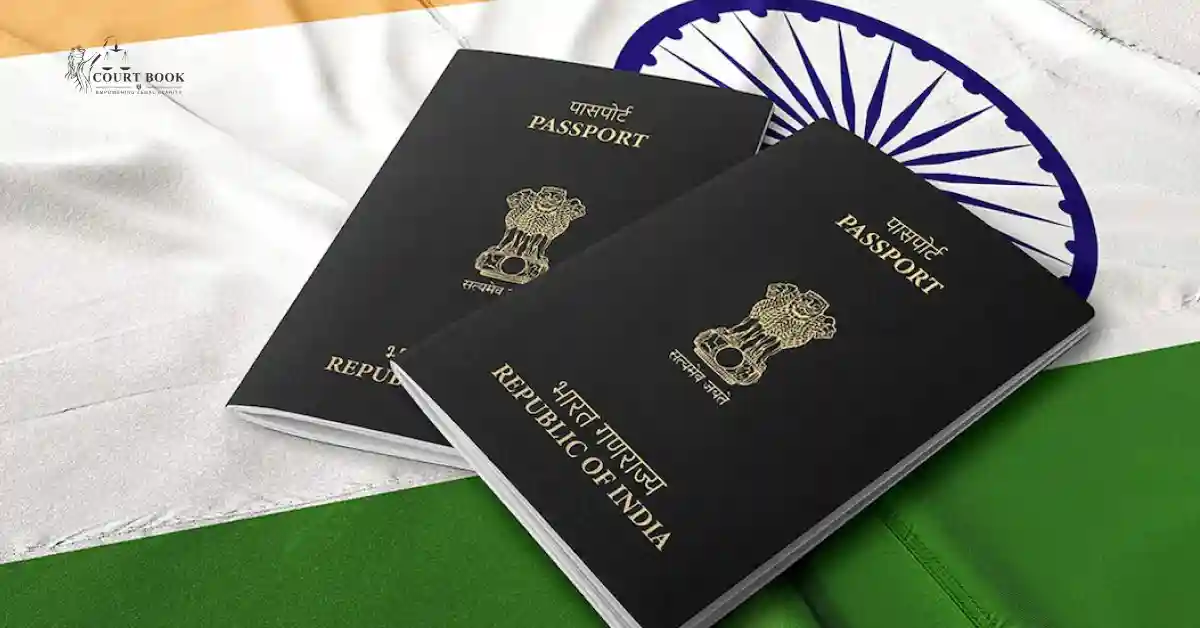
The Delhi High Court has upheld the conviction of a former Delhi Police Assistant Sub-Inspector in a decades-old fake passport verification case, holding that the officer knowingly submitted a false police verification report that enabled the issuance of a passport on fabricated residential details.
Justice Chandrasekharan Sudha dismissed the criminal appeal filed by former ASI Sube Singh and found no infirmity in the 2006 trial court judgment convicting him under provisions of criminal conspiracy and corruption law.
Background of the Case
According to the prosecution, four accused persons allegedly entered into a conspiracy in 1993 to obtain passports using forged documents and false addresses. Sube Singh, who was then posted as an Assistant Sub-Inspector in the Special Branch of Delhi Police, had been assigned to conduct police verification of the passport applicants.
The Central Bureau of Investigation registered the case in April 1995 after receiving secret information regarding fraudulent passport issuance. The agency alleged that forged ration cards and fabricated address details were used to obtain passports.
The trial court later convicted Sube Singh under Section 120-B of the Indian Penal Code and Section 13(1)(d) read with Section 13(2) of the Prevention of Corruption Act. He was sentenced to imprisonment and fines, while one co-accused was acquitted.
During the hearing, the appellant argued that all incriminating circumstances had not been properly put to him during examination under Section 313 of the Code of Criminal Procedure. He also claimed that he had personally visited the address mentioned in the passport documents and verified the details.
However, the High Court examined testimonies of residents and a postman connected to the address used in the passport application. Witnesses consistently stated that no person by the name mentioned in the passport records had ever lived there. They also denied renting out any part of the property.
The Court noted that the evidence clearly contradicted the appellant’s claim of conducting proper verification.
“The explanation is apparently wrong in the light of the testimony of PW2, PW12 and PW8,” the Court observed while holding that a false verification report had been submitted.
The Court further held that the offence under the Prevention of Corruption Act stood established because the false report directly facilitated the issuance of the passport.
Findings on Criminal Conspiracy
On the charge of conspiracy, the Court said direct evidence is rarely available in such offences and courts can rely on surrounding circumstances and conduct of the accused.
Referring to earlier Supreme Court rulings, the bench observed that conspiracy is often “hatched in secrecy” and may be proved through necessary implication and circumstantial evidence.
The High Court concluded that the false verification report itself showed coordination between the accused persons for securing a passport using incorrect details.
Finding no legal or factual error in the trial court judgment, the Delhi High Court dismissed the appeal filed by Sube Singh and upheld his conviction and sentence.
Case Details
Case Title: Sube Singh v. C.B.I.
Case Number: CRL.A. 1063/2006
Judge: Justice Chandrasekharan Sudha
Decision Date: May 5, 2026
Download Judgment

