

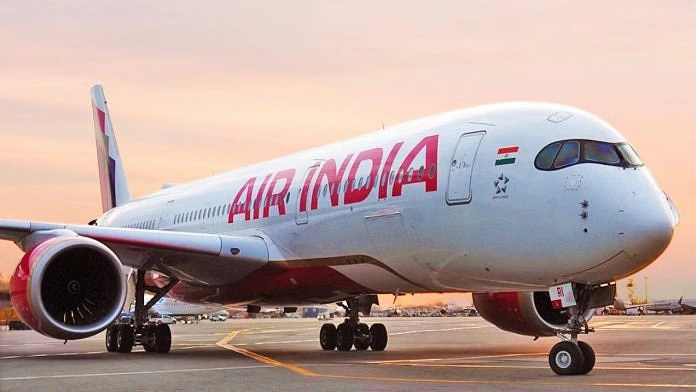
The Delhi High Court has upheld compensation awarded to several former casual workers of Air India after finding that their termination violated Section 25-F of the Industrial Disputes Act. However, the Court refused to order reinstatement, observing that the workers had been engaged only as casual employees and nearly three decades had passed since their disengagement.
Justice Justice Shail Jain delivered the judgment on May 8, 2026, while deciding a batch of writ petitions led by Sauraj Singh v. M/s Indian Airlines Ltd. & Anr..
Background Of The Case
The dispute dates back to the 1990s, when Indian Airlines had prepared panels for engaging casual workers in different departments including drivers, helpers, sweepers and clerical staff. The petitioners claimed they were engaged through the approved panels and had worked continuously for more than 240 days in a calendar year.
According to the workers, their services were terminated between 1997 and 1998 without notice, retrenchment compensation or wages in lieu of notice. They argued that the airline replaced them with fresh casual workers despite earlier court directions protecting existing workers from arbitrary replacement.
The Central Government Industrial Tribunal had earlier held that the retrenchment violated Section 25-F of the Industrial Disputes Act but awarded compensation ranging from Rs.25,000 to Rs.55,000 instead of reinstatement. The workers challenged that limited relief before the High Court.
Court On Maintainability Of Writ Against Air India
Air India argued that after privatization, it was no longer a “State” under Article 12 of the Constitution and therefore writ petitions against it were not maintainable.
The High Court rejected the objection in the present circumstances. The Court clarified that although a private company may ordinarily not be directly amenable to writ jurisdiction, judicial review could still be exercised over awards passed by labour tribunals.
The bench observed,
“Once a Labour Court or Industrial Tribunal renders an award, such award is subject to judicial review by the High Court under Articles 226/227.”
Court Finds Retrenchment Illegal
The Court held that Air India failed to establish that the workers’ termination was a direct consequence of earlier High Court directions issued in connected litigation.
Justice Shail Jain noted that if the terminations were genuinely in compliance with court orders, all workers would have been disengaged simultaneously. Instead, the management terminated workers gradually over several months.
“The staggered and selective manner of termination... is wholly inconsistent with the conduct one would expect of an employer acting in faithful and prompt compliance with a judicial direction,” the Court observed.
The Court further held that the workers had completed the threshold of continuous service under Section 25-B of the Industrial Disputes Act and were therefore entitled to protection under Section 25-F. Since no notice, notice pay or retrenchment compensation was given before termination, the retrenchment was declared illegal.
Why Reinstatement Was Refused
Despite holding the retrenchment illegal, the High Court declined reinstatement. The Court noted that the petitioners were casual and daily-rated workers who had worked only for limited periods, mostly around two years.
The bench also considered the fact that the dispute had remained pending for nearly 30 years.
Relying on several Supreme Court rulings, the Court said reinstatement is not automatic in every case involving violation of Section 25-F, especially where casual workers are involved.
The Court ultimately upheld the tribunal’s approach of granting monetary compensation instead of restoring the workers to service.
Case Details
Case Title: Sauraj Singh v. M/s Indian Airlines Ltd. & Anr.
Case Number: W.P.(C) 377/2013 and connected matters
Judge: Justice Shail Jain
Decision Date: 08 May 2026
Download Judgment

