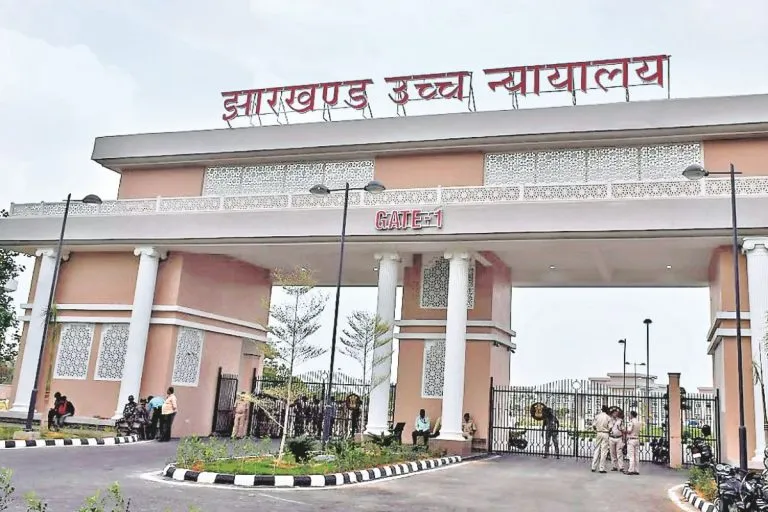
In a significant judgment aimed at strengthening institutional support for survivors of sexual violence, the Jharkhand High Court has issued a comprehensive set of directions covering police procedures, compensation, shelter homes, victim protection, education, and speedy trials.
The division bench of Chief Justice and Justice Rajesh Shankar dealt with a public interest litigation that was later converted into a suo motu proceeding after the court found that the issues raised involved matters of larger public importance.
Background
The proceedings originated from a PIL filed by Padma Baraik seeking several directions related to the treatment and rehabilitation of sexual assault survivors. The concerns included non-registration of Zero FIRs, lack of proper shelter facilities, delays in compensation, disclosure of survivors' identities, inadequate investigation practices, and the absence of long-term support mechanisms.
During the hearing, the court received assistance from the Amicus Curiae, the Jharkhand State Legal Services Authority (JHALSA), and the intervenor. Various shortcomings in the functioning of One-Stop Centres and implementation of victim protection measures were brought to the court's notice.
Court on Zero FIR Registration
The bench noted that the law makes registration of a Zero FIR mandatory regardless of territorial jurisdiction. Referring to Supreme Court precedents and provisions of the Bharatiya Nagarik Suraksha Sanhita (BNSS), the court observed that police officials cannot refuse to register an FIR merely because the alleged offence occurred outside their jurisdiction.
“The police personnel are duty bound to strictly adhere to the mandate,” the court observed while expressing concern that delays in registration often affect medical examination and collection of evidence in sexual offence cases.
The court accepted the suggestion that erring officers may face departmental as well as penal consequences for failure to comply with mandatory provisions.
Directions on Shelter Homes and One-Stop Centres
The High Court examined the condition of One-Stop Centres functioning across Jharkhand and found that several centres lacked adequate infrastructure, staffing, security arrangements, sanitation facilities, and other essential services.
The bench noted with concern that some centres did not have proper drinking water, functional kitchens, CCTV systems, or sufficient personnel. It directed the State Government to implement the recommendations placed before the court regarding improvement of facilities, filling vacant posts, enhancing security measures, and ensuring proper maintenance of shelters for survivors.
Compensation and Speedy Trial Directions
Addressing the issue of compensation, the court emphasized that victims of sexual offences are entitled to rehabilitation support irrespective of whether the criminal case ends in conviction, acquittal, or even where the offender is not traced.
The bench directed trial courts dealing with sexual offences to examine the immediate rehabilitation needs of victims and pass suitable orders for interim compensation where required.
It further directed that compensation awarded to victims should be released within 30 days of the order. The court also instructed courts handling sexual offence cases to strictly follow statutory timelines and avoid unnecessary adjournments.
To improve monitoring, the Director General of Police was directed to constitute a Special Task Force to oversee investigations and ensure timely production of witnesses during trials.
Free Education for Children Born from Sexual Assault
In one of the most notable directions, the High Court ordered the State Government to appoint nodal officers in every district to ensure free education for children born from rape incidents up to Class XII.
The court further directed that meritorious students from this category who secure admission to premier institutions such as IITs, NITs, AIIMS, and IIMs should be provided scholarships by the State Government.
The bench observed that education is a constitutional right and an important tool for preventing marginalisation of vulnerable children.
Protection of Victims' Identity
The court reiterated that the identity of survivors of sexual offences cannot be disclosed by the media, police authorities, or any other person.
“The disclosure of the name or identity of the rape victim either in media or in any court records or even by any person, is prohibited,” the bench stated.
It directed that documents containing the survivor's identity be kept in sealed cover and that identifying details be removed from records accessible to the public. The court also ordered strict compliance by police officials, media personnel, and trial courts, warning that violations could attract departmental and penal action.
Decision
Disposing of the PIL, the Jharkhand High Court issued a series of binding directions to the State Government, police authorities, trial courts, and other agencies. The court mandated strict compliance with Zero FIR provisions, improvement of One-Stop Centres, timely compensation and rehabilitation measures, faster disposal of sexual offence cases, protection of victims' identities, and free education up to Class XII for children born from rape incidents.
It also directed the State to implement the recommendations placed before it regarding survivor welfare and institutional accountability.
Court Details
Case Title: Court on its Own Motion v. State of Jharkhand & Ors.
Case Number: W.P. (PIL) No. 2253 of 2024
Bench: Chief Justice and Justice Rajesh Shankar
Decision Date: 08 June 2026