

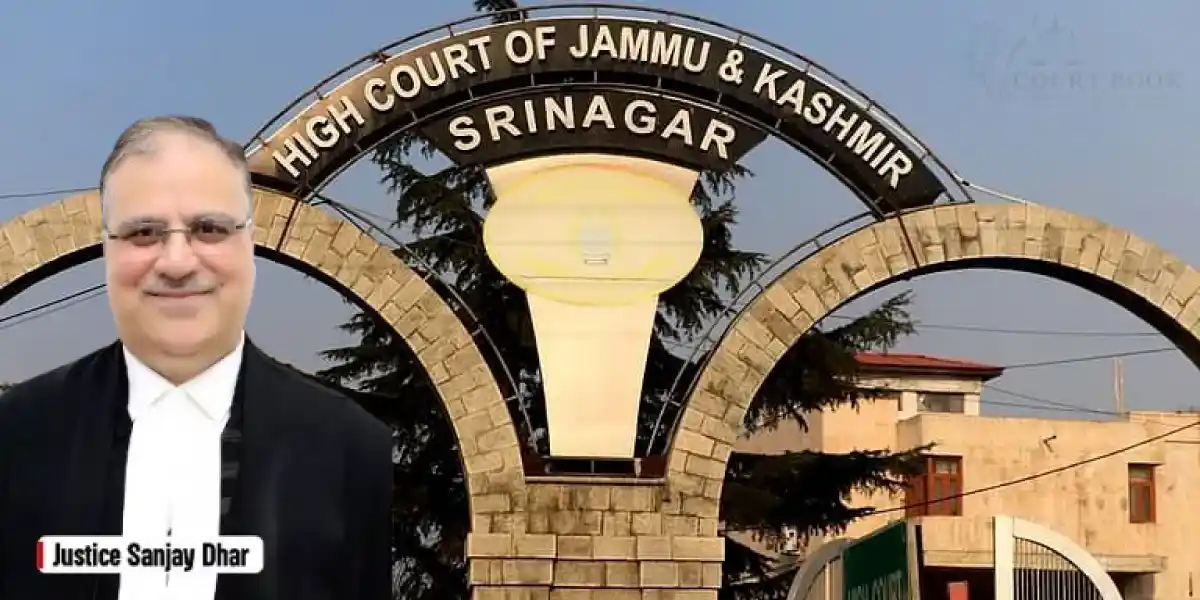
The Jammu & Kashmir and Ladakh High Court has ruled that government officers and officials cannot be made parties to an election petition merely because allegations have been made against them. The Court held that election disputes under the Representation of the People Act, 1951 are primarily contests between candidates and must remain confined to those permitted by law.
Justice Sanjay Dhar delivered the ruling while deciding a preliminary issue in an election petition filed by former minister Harsh Dev Singh.
Background of the Case
The election petition challenged the outcome of an election and named not only contesting candidates as respondents but also several officers and officials. The petitioner alleged impropriety and irregularities involving these officials during the electoral process.
Respondent No. 10 objected to their inclusion, arguing that the Representation of the People Act specifically identifies who can be made parties to an election petition and does not permit the addition of government officers merely because allegations have been raised against them.
The petitioner, however, argued that the Civil Procedure Code applies to election petitions and that all necessary and proper parties should therefore be included. Reliance was also placed on provisions dealing with corrupt practices during elections.
After examining the statutory provisions and Supreme Court precedents, Justice Dhar noted that Section 82 of the Representation of the People Act clearly specifies the parties who may be joined in an election petition.
Referring to earlier Supreme Court rulings, the Court observed that election disputes are a special category of proceedings and the concept of "proper parties" applicable in ordinary civil litigation does not automatically apply to election petitions.
The Court quoted the Supreme Court's view that the contest in an election petition is intended to remain confined to candidates and that persons outside the categories mentioned in the Act cannot ordinarily be added as respondents.
Addressing the petitioner's argument regarding allegations of corrupt practices, the Court explained that the law provides a separate mechanism. Individuals other than candidates may be named later if evidence during trial establishes their involvement, but that does not make them necessary parties at the time of filing the petition.
“The concept of proper parties is and would remain alien to an election dispute under the Act,” the Court observed while discussing the legal position emerging from Supreme Court judgments.
Applying these principles, the Court found that respondents No. 1 to 9, who were officers and officials rather than contesting candidates, had been improperly impleaded in the election petition.
However, Justice Dhar clarified that such misjoinder would not result in dismissal of the election petition. Instead, following Supreme Court precedent, the appropriate course was to remove the improperly added parties from the proceedings.
The Court directed that respondents No. 1 to 9 be deleted from the array of parties and instructed the petitioner to file an amended memo of parties before the next hearing.
The matter has been listed for further proceedings on May 11, 2026.
Case Details:
Case Title: Harsh Dev Singh v. UT of J&K & Ors.
Case Number: EP No. 1/2024
Judge: Justice Sanjay Dhar
Decision Date: April 20, 2026


