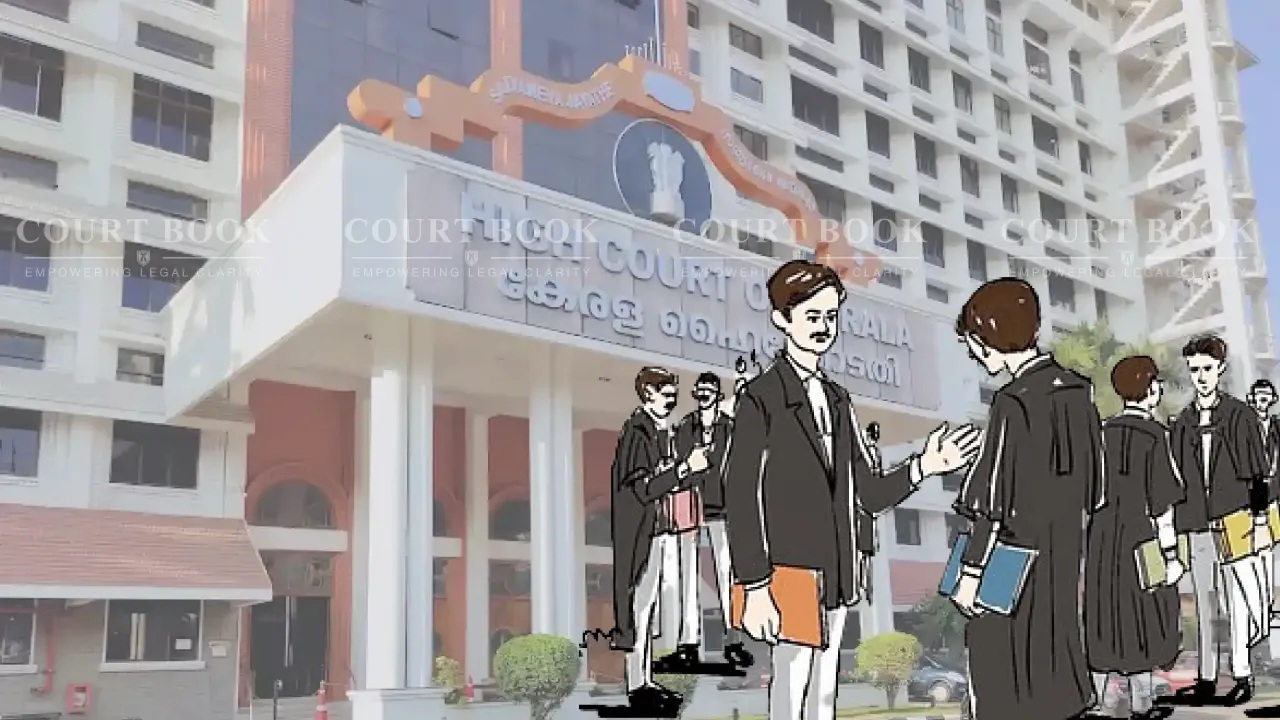
The Kerala High Court has ruled that foreign lawyers cannot conduct the examination or cross-examination of a witness before an Advocate Commissioner in India, even when the evidence is being recorded for use in a foreign court. The Court held that such proceedings amount to the practice of law in India and are governed by Indian statutes and the Bar Council of India (BCI) Rules.
The decision came while considering a request made during proceedings initiated on the basis of a Letter of Request issued by a United States District Court under the Hague Evidence Convention.
Background of the Case
The matter arose after Sharestates, Inc., a company based in New York, approached the Kerala High Court seeking execution of a Letter of Request issued by the United States District Court for the Eastern District of New York. The request was part of a civil dispute pending in the US, where the company sought documentary and oral evidence from an Indian resident.
The High Court had earlier appointed an Advocate Commissioner to record the witness's testimony and collect documents. During the proceedings, the defendants in the US litigation sought permission for their American counsel to examine and cross-examine the witness before the Commissioner. This request was opposed, leading to the present order.
Court's Observations
Justice Mohammed Nias C.P. examined the provisions of the Hague Convention, the Advocates Act, 1961, and the Bar Council of India Rules governing foreign lawyers.
The Court noted that although the Hague Convention allows a requesting court to suggest a particular procedure, it also makes it clear that such a procedure can only be followed if it is compatible with the law of the country executing the request.
Rejecting the plea, the bench observed:
“The procedure to be adopted has to align with the law applicable in India.”
The Court further explained that recording evidence before an Advocate Commissioner forms part of litigation and therefore falls within the practice of law in India.
It observed:
“The recording of evidence before a Commissioner is, indeed, a litigious act forming part of the practise of law in India, from which the foreign lawyers stand excluded.”
Justice Mohammed Nias C.P. also relied on the Supreme Court's ruling in Bar Council of India v. A.K. Balaji, which held that foreign lawyers cannot practise law in India except in limited situations specifically permitted under law. The Court found that examination or cross-examination of witnesses before an authority empowered to record evidence on oath does not fall within those exceptions.
Decision
The Kerala High Court declined the request to permit foreign counsel to conduct the examination or cross-examination of the witness before the Advocate Commissioner.
However, the Court clarified that foreign lawyers or representatives may attend, observe, and participate in the proceedings, while the actual examination and cross-examination must be carried out only by the respective Indian advocates representing the parties.
The matter has been posted for further proceedings on 13 August 2026.
Case Details
Case Title: Sharestates, Inc. v. Prasad Choorakuzhiyil Gopalan & Others
Case Number: M.J.C. No. 82 of 2026 (I.A. No. 1 of 2026)
Judge: Justice Mohammed Nias C.P.
Decision Date: 13 July 2026