

In a significant ruling that settles years of conflicting legal opinions, the Kerala High Court has held that a Hindu wife has the right to claim maintenance from her husband’s immovable property, even if the property has been transferred - provided certain legal conditions are met. The Full Bench decision brings clarity to a long-standing debate under property and family law, especially concerning Section 39 of the Transfer of Property Act and the Hindu Adoptions and Maintenance Act, 1956.
Background of the Case
The case arose from a dispute where a third party purchased a portion of land from a man who was already estranged from his wife. Shortly after the sale, the wife initiated legal proceedings seeking maintenance, leading to attachment of the property.
The purchaser challenged this move, arguing that the wife had no legal right to claim maintenance from property that had already been sold-especially when the sale happened before she filed her maintenance case.
Conflicting judgments from earlier cases such as Vijayan v. Sobhana, Sathiyamma v. Gayathri, and Nysha v. P. Suresh Babu led to confusion. Due to these contradictions, the matter was referred to a Full Bench of the Kerala High Court for authoritative clarification.
Key Legal Questions Before the Court
The Full Bench was asked to decide:
• Whether a Hindu wife can claim maintenance from her husband’s immovable property.
• Whether such a right exists independently of the Hindu Adoptions and Maintenance Act.
• Whether a purchaser of property can be bound by a wife’s maintenance claim.
• Whether earlier judgments denying such rights were legally sound.
Court’s Observations
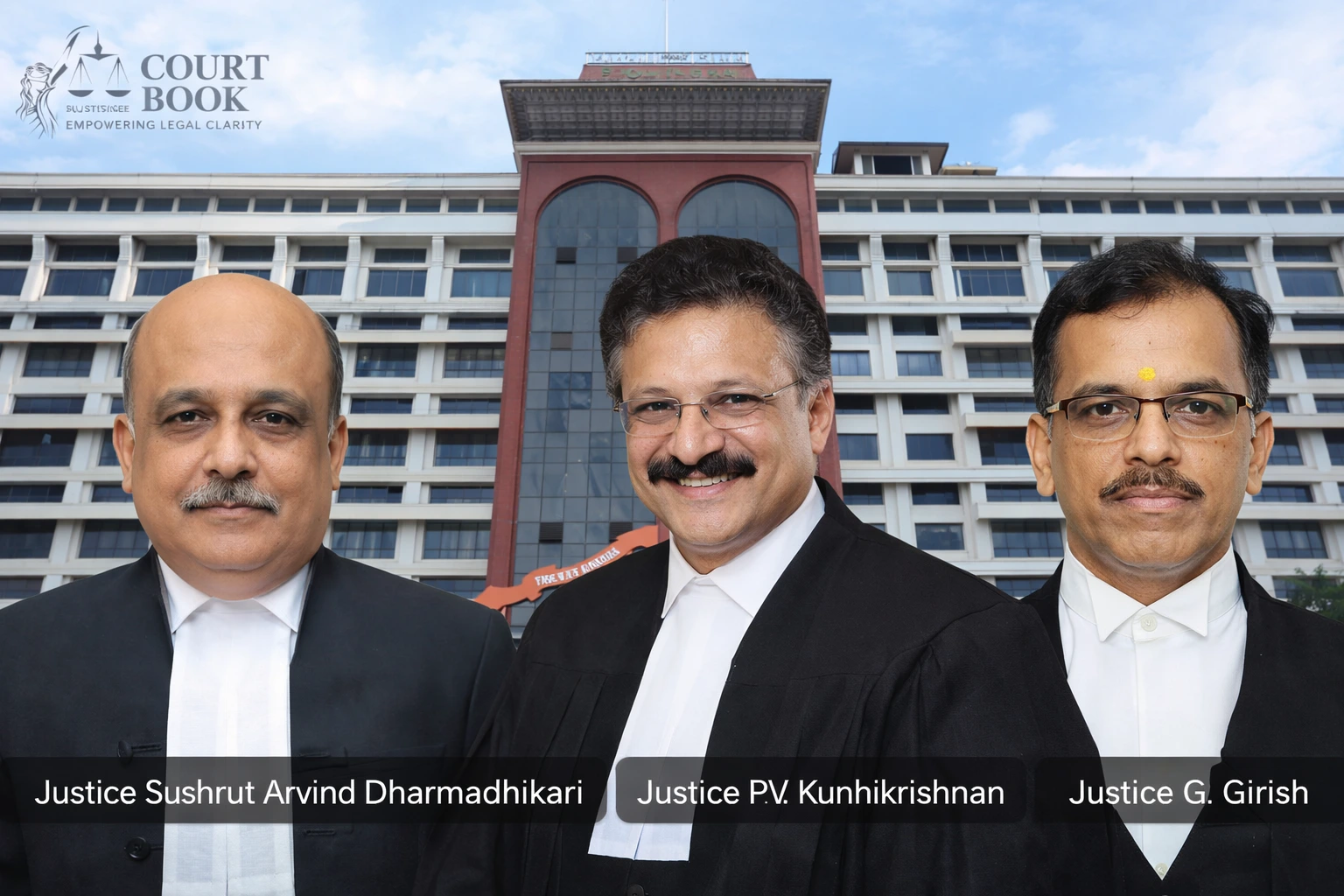
The Bench, comprising Justices Sushrut Arvind Dharmadhikari, P.V. Kunhikrishnan, and G. Girish, undertook a detailed analysis of Hindu law, statutory provisions, and past judicial rulings.
The court noted that the obligation of a husband to maintain his wife is deeply rooted in ancient Hindu law and continues under modern statutes. While the Hindu Adoptions and Maintenance Act, 1956, does not explicitly say that a wife can proceed against her husband’s property, it does not prohibit such a right either.
“The right of a wife to maintenance is not a mere personal obligation. It carries with it a legal and moral duty that cannot be defeated by transferring property,” the Bench observed.
The court clarified that Section 39 of the Transfer of Property Act protects a wife’s right when property is transferred with knowledge of her claim or when the transfer is gratuitous.
Dormant Right and When It Becomes Enforceable
A key aspect of the judgment is the concept of a “dormant right.”
The Bench explained that:
• A wife’s right to maintenance exists from the time of marriage.
• However, it remains dormant until the husband refuses or neglects to maintain her.
• Once she initiates legal action or issues a formal demand, the right becomes enforceable.
• From that stage onward, any transfer of property is subject to her maintenance claim.
The court clarified that a purchaser cannot automatically be presumed to have notice of the wife’s rights unless:
• Maintenance proceedings had already begun, or
• The purchaser had knowledge of the dispute, or
• The transfer was gratuitous.
Overruling Earlier Interpretation
The court expressly disagreed with the earlier ruling in Vijayan v. Sobhana, which held that a wife could not claim maintenance from her husband’s property.
Calling that view legally unsustainable, the Bench held:
“The wife’s right to maintenance extends to the husband’s estate. Any interpretation denying this would defeat the very purpose of maintenance law.”
The court reaffirmed that decisions in Sathiyamma, Nysha, and Hadiya correctly stated the law.
Final Decision
The Full Bench conclusively ruled that:
• A Hindu wife can claim maintenance from her husband’s immovable property.
• This right exists even outside the Hindu Adoptions and Maintenance Act.
• The right remains dormant until legal steps are initiated.
• Property transfers made after maintenance claims arise are subject to the wife’s rights.
• Earlier contrary rulings, especially Vijayan v. Sobhana, do not lay down correct law.
The matter has now been sent back to the Division Bench for further proceedings in light of these findings.
Case Title: Sushrut Arvind Dharmadhikari & Ors.
Case No.: ICR (Mat. A) No. 23 of 2025
Decision Date: January 14, 2026
Download Order

