

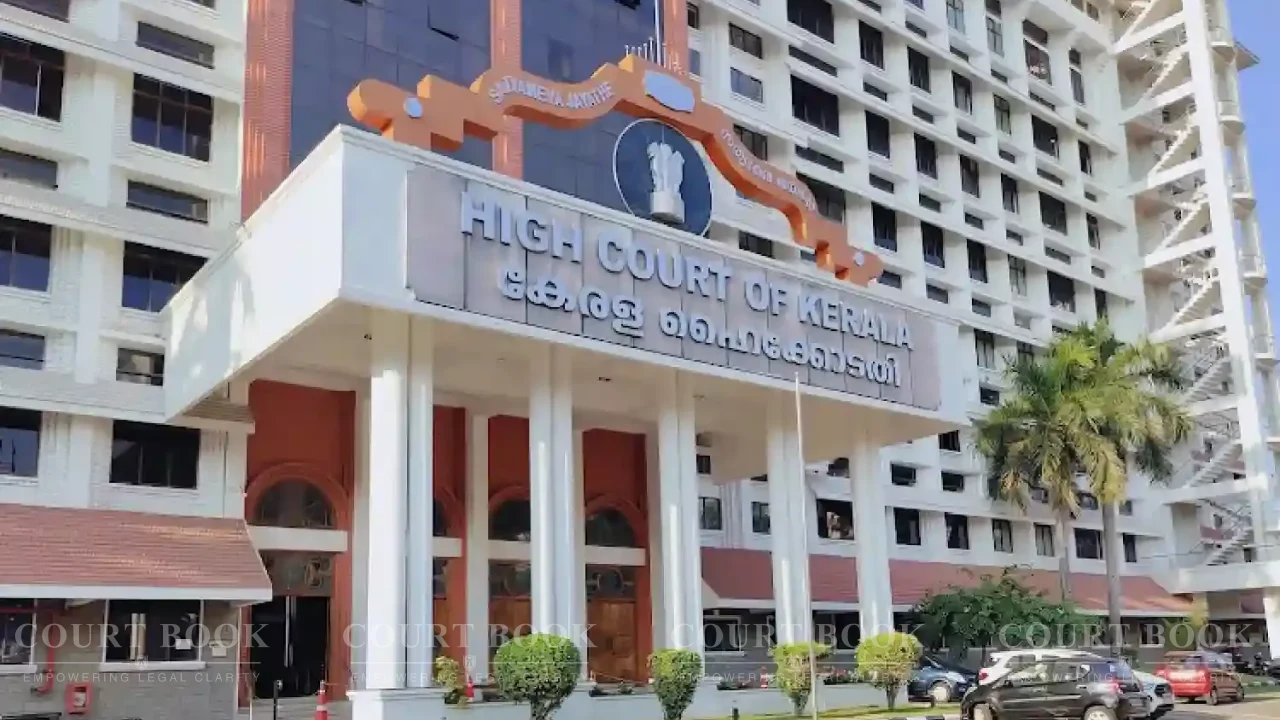
The Kerala High Court, on June 12, 2026, dismissed the criminal appeal filed by Rasheed, a Madrassa teacher from Mullassery in Thrissur district, who had challenged his conviction under the Protection of Children from Sexual Offences (POCSO) Act, 2012. Justice A. Badharudeen, after carefully reviewing the entire record, declined to interfere with the sentence awarded by the Fast Track Special Court at Kunnamkulam.
The case traces back to August 25, 2020 - a time when schools across Kerala were shut due to the COVID-19 pandemic and classes had moved online.
Background of the Case
The survivor, referred to throughout the proceedings as PW1, was a nine-year-old boy studying in Class 5 at Vanivilasam School, Padoor. He was also enrolled at Noorul Hidaya Madrassa, Mullassery, which functioned under the Sidhiquel Akbar Juma Masjid. The accused, Rasheed, was the Usthad or religious teacher at this Madrassa and resided in a building on the Masjid premises adjacent to it.
With online exams scheduled at the Madrassa in August 2020, Rasheed had told students' families he was available to clear doubts. On the afternoon of August 25, 2020, the boy visited Rasheed's room at around 4:00 to 4:30 PM. According to the child's testimony, the accused then committed sexual assault against him.
Afraid and in pain, the boy initially said nothing. Only after the Magrib (evening) prayer did he tell his mother what had happened. She informed her husband, and the family reported the matter to the police the following day. The accused was arrested on August 26, 2020.
The Special Court at Kunnamkulam, after examining 20 prosecution witnesses and 27 documents, convicted Rasheed. He was found guilty under Section 377 of the Indian Penal Code (unnatural offences), multiple sections of the POCSO Act including Sections 5(f) and 5(m) which relate to aggravated penetrative sexual assault as well as Section 75 of the Juvenile Justice Act, 2015.
The sentence imposed included rigorous imprisonment of 20 years under the POCSO Act provisions and 10 years under IPC Section 377, along with fines. All sentences were directed to run concurrently. Rs. 40,000 from the fine amount was ordered to be paid to the survivor as compensation.
Rasheed's lawyers raised several arguments before the High Court. They contended that the entire case was fabricated due to sectarian tensions within the Muslim community - specifically, that the accused, who belonged to the Sunni sect, had been falsely implicated by members of another sect. It was also argued that the child's testimony was unreliable, that PW1 was not a "sterling witness," and that the special court had erred in relying solely on his account.
Defence counsel cited two Supreme Court precedents - Pancchi v. State of UP (AIR 1998 SC 2726) and Rai Sandeep @ Deepu v. State of NCT of Delhi (2012(8) SCC 21) - to argue that the evidence of a child witness must be assessed with greater care.
The Public Prosecutor countered that PW1's age as a minor was proved through multiple witnesses and documentary evidence, and that no material contradictions emerged during cross-examination that could shake his testimony.
Justice Badharudeen undertook a detailed re-appreciation of all the evidence. The bench found no contradictions significant enough to disbelieve the child's version or the supporting witnesses.
"The evidence of PW1 as to the sexual overtures at the instance of the accused found to be wholly reliable, supported by other evidence discussed in detail," the court noted.
On the sectarianism argument, the court was equally clear no convincing evidence was placed on record to suggest that community rivalry had anything to do with the registration of the crime.
The claim that PW1 was not a sterling witness was rejected as "unacceptable and negatived."
The High Court upheld the conviction on all charges and confirmed the sentence. Since the minimum mandatory punishment under Section 6(1) of the POCSO Act for the offences under Sections 5(f) and 5(m) is 20 years which may extend to life imprisonment the court held that no reduction was possible. The Special Court had already imposed only the minimum.
The appeal was dismissed accordingly. The Registry was directed to forward a copy of the judgment to the jurisdictional court for compliance.
Case Details:
Case Title: Rasheed v. State of Kerala
Case No.: CRL.A 421 of 2023
Judge: Justice A. Badharudeen
Decision Date: June 12, 2026


