

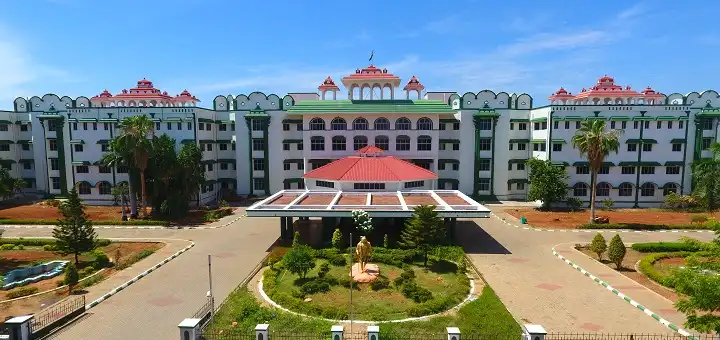
The Madurai Bench of the Madras High Court has granted relief to an LL.M student who was unable to submit her dissertation within the prescribed period because of pregnancy, childbirth, and the responsibility of caring for her newborn child. The Court directed the university authorities to accept her dissertation, allow her to appear for the viva voce examination, and process her degree if she successfully completes all academic requirements.
Justice Hemant Chandangoudar passed the order on June 18, 2026, while hearing a petition filed by R. Sangeetha against The Tamil Nadu Dr. Ambedkar Law University and other authorities.
Background of the Case
The petitioner had enrolled in the LL.M programme during the 2019-2020 academic year. Due to attendance shortage, she was not initially permitted to take examinations and was later re-admitted in the following academic year. She subsequently cleared all theory papers by 2022.
However, the dissertation, a mandatory component of the LL.M course, remained incomplete. The student informed the Court that she conceived in March 2024 and gave birth to a daughter on December 7, 2024. Because of pregnancy-related difficulties, childbirth, and post-natal responsibilities, she could not complete and submit the dissertation within the timeline prescribed by the university regulations.
After her representation seeking permission to pay the dissertation fee and submit the dissertation did not receive a favourable response, she approached the High Court.
University’s Stand
The university authorities argued that the petitioner was governed by the "N+2" rule, under which students admitted to the LL.M programme in 2019-2020 were required to complete all course requirements within four years. According to the respondents, the student should have completed the programme by 2024 and there was no provision allowing submission of a dissertation after the expiry of the prescribed period.
Court’s Observations
The Court acknowledged that universities have the authority to prescribe academic standards and completion timelines. However, Justice Chandangoudar observed that such regulations should not be applied in a manner that ignores exceptional circumstances faced by women students.
The Court noted that the petitioner had already completed all theory examinations and was only seeking an opportunity to finish the final academic requirement.
“The petitioner is not seeking exemption from any academic requirement. She merely seeks an opportunity to complete the final component of the course,” the Court observed.
Referring to the medical records, the Court found that the petitioner’s pregnancy and subsequent childcare responsibilities were genuine circumstances that affected her ability to meet the deadline.
“A woman undergoing pregnancy and thereafter caring for a newborn child cannot be placed on the same footing as an ordinary student for the purpose of strict application of academic timelines,” the Court said.
The judgment also referred to a University Grants Commission communication encouraging educational institutions to extend maternity and child-care benefits to women students and provide reasonable accommodations where necessary. The Court emphasized that educational opportunities should not be denied solely because of pregnancy and motherhood.
Justice Chandangoudar further observed that allowing the student to submit her dissertation would not dilute academic standards because she would still have to undergo evaluation and successfully complete the viva voce examination before obtaining the degree.
Court’s Decision
Allowing the petition, the High Court directed the university authorities to permit the petitioner to pay the dissertation fee through physical or offline mode and accept her dissertation. The Court also ordered that the dissertation be evaluated in accordance with the applicable regulations and that the petitioner be allowed to participate in the viva voce examination scheduled for June 2026.
The Court further directed that if she successfully completes all academic requirements, the authorities must issue the certificate evidencing completion of the LL.M degree course.
At the same time, the Court clarified that the order was passed considering the unique facts of the case, particularly the petitioner’s completion of theory examinations and the impact of pregnancy, childbirth, and post-natal responsibilities. The judgment stated that it should not be treated as a precedent in cases where such exceptional circumstances are absent.
Case Details
Case Title: R. Sangeetha v. The Registrar, Tamil Nadu Dr. Ambedkar Law University & Others
Case Number: W.P.(MD) No.14351 of 2026
Judge: Justice Hemant Chandangoudar
Decision Date: June 18, 2026


