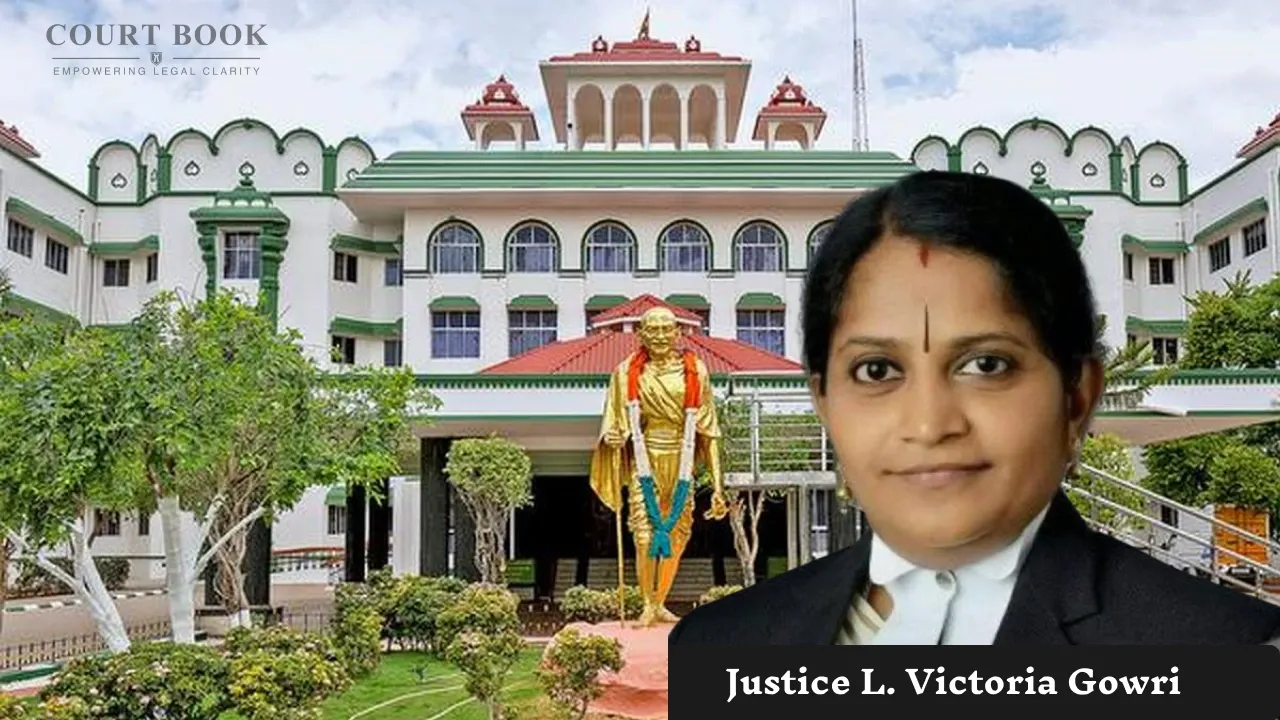
The Madurai Bench of the Madras High Court permitted Tamil Nadu authorities to carry out the final rites of a deceased man whose body has remained in a government mortuary for more than three months after his family declined to receive it.
Justice L. Victoria Gowri passed the order while hearing proceedings arising from a petition filed by A. Rajeshkannan concerning the death of Akash Delison and the subsequent investigation.
Background of the Case
The original petition sought directions for registration of a criminal case based on allegations surrounding the death of Akash Delison and requested transfer of the investigation to the Crime Branch-Criminal Investigation Department (CBCID).
Earlier, the High Court had recorded that the investigation was transferred to CBCID and that additional penal provisions, including Section 103 of the Bharatiya Nyaya Sanhita and provisions of the Scheduled Castes and Scheduled Tribes (Prevention of Atrocities) Act, had been incorporated into the case.
After disposal of the writ petition, the State informed the court that despite completion of the post-mortem examination and preservation of evidence, the deceased's family had not taken custody of the body for more than 90 days.
According to the State, the prolonged preservation had resulted in substantial decomposition and created practical as well as public health concerns.
Court Observations
During the hearing, counsel for the petitioner submitted that the family continued to have concerns regarding the circumstances of the death and believed that complete justice had not yet been achieved.
The State, however, argued that major concerns raised earlier had already been addressed. It pointed out that CBCID was conducting the investigation, records and CCTV footage had been secured, and the case had been altered to include additional legal provisions.
Justice Gowri observed that allegations relating to a custodial death require
“the highest degree of judicial sensitivity and institutional accountability.”
At the same time, the court stressed that dignity extends beyond life. The bench observed
, “The right of a deceased person to receive a decent burial or cremation is not merely a matter of religious observance. It is an extension of human dignity itself.”
The court noted that constitutional protections under Article 21 include dignified treatment of mortal remains and referred to judicial precedents recognizing the State's responsibility to ensure respectful disposal of bodies.
The judge further observed that indefinite preservation of a body cannot be justified merely because relatives refuse to receive it.
“The continued refusal of the family to receive the body cannot result in indefinite preservation of mortal remains,” the court said.
Decision
Finding that all medico-legal formalities had been completed and that the investigation was progressing independently, the High Court authorized the District Collector, Madurai, the Madurai City Municipal Corporation, Government Rajaji Hospital, and other competent authorities to proceed with the dignified disposal of Akash Delison's mortal remains.
The court directed that the final rites should, as far as possible, be conducted according to the deceased's religious customs and family traditions. Authorities were also instructed to preserve photographic and videographic records before carrying out the last rites.
Justice Gowri clarified that the disposal of the body would not affect the ongoing CBCID investigation, which must continue independently and be completed in accordance with law.
Case Details:
Case Title: A. Rajeshkannan v. Home Secretary & Others
Case Number: W.P.Crl.(MD) No.1392 of 2026
Judge: Justice L. Victoria Gowri
Decision Date: June 16, 2026







-300x169.webp)