

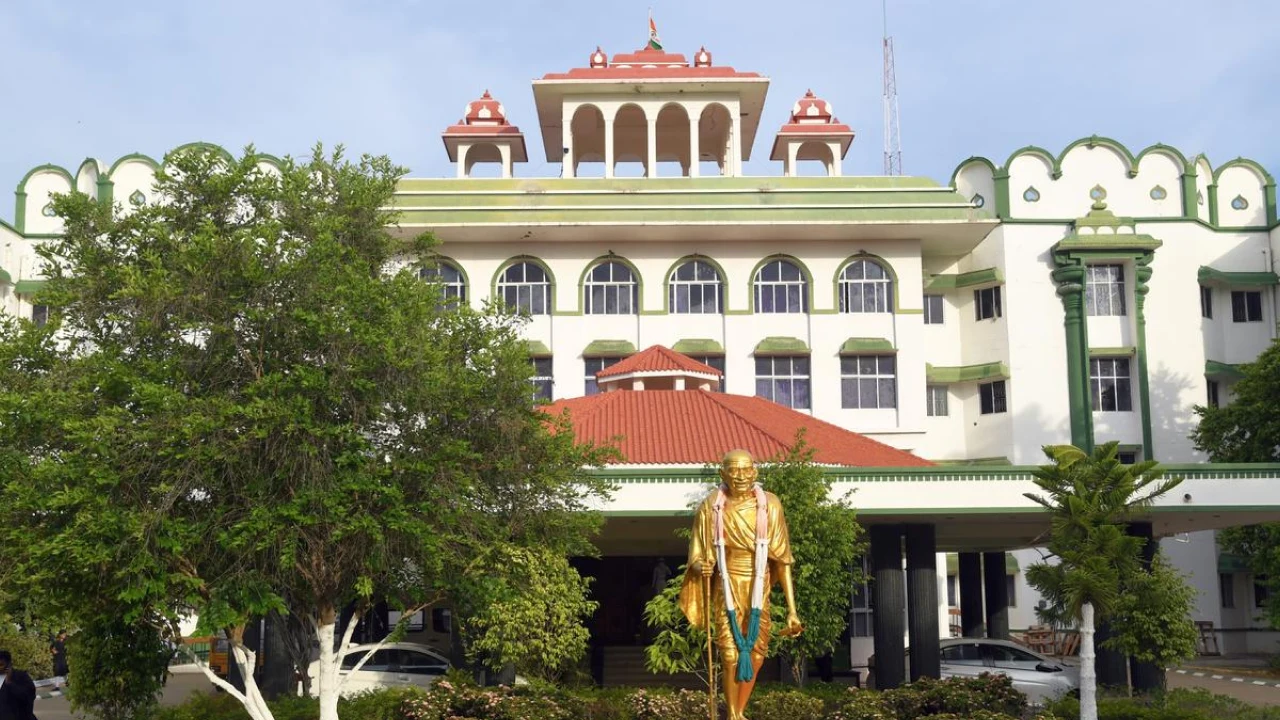
The Madras High Court has ruled that a person’s right to dignity and identity includes the freedom to be recognised as part of the family that actually raised them, even in the absence of formal adoption.
Justice D. Bharatha Chakravarthy passed the order while allowing a writ petition filed by Durgadevi, a college student who sought inclusion of her foster parents’ names in her birth certificate.
The Court directed authorities to add the names of the petitioner’s paternal uncle Kumaravel and his wife Arumugam with the suffix ‘(Foster)’ in the respective father and mother columns in the birth certificate, while retaining the names of her biological parents.
Background of the Case
According to the petition, Durgadevi’s biological father died in 2006, shortly after her birth, while her mother deserted her and remained untraceable for nearly 20 years. She was thereafter raised by her paternal uncle and aunt, who cared for her education and upbringing.
The petitioner informed the Court that all her educational and identity records, including Aadhaar, community certificate, mark sheets and transfer certificate, reflected Kumaravel and Arumugam as her parents. However, the birth certificate alone carried the names of her biological parents, creating inconsistencies affecting her identity and future prospects.
Her request for modification was rejected by authorities on the ground that only legally adoptive parents could be entered in the birth register under the Hindu Adoption and Maintenance Act.
What Happened During the Hearing
Counsel for the petitioner argued that the plea was not for deletion of the biological parents’ names but only for inclusion of the foster parents’ names as well. Reliance was placed on Article 8 of the UN Convention on the Rights of the Child, which protects a child’s right to identity and family relations.
The State contended that existing rules recognised only biological or adoptive parents in birth records and therefore formal adoption was necessary.
Court’s Key Observation
The Madras High Court observed that the petitioner’s situation stood on a unique footing because she had effectively been raised entirely by the foster family and had no meaningful connection with her biological family.
The Court referred to the Supreme Court’s privacy ruling in K. S. Puttaswamy v. Union of India and held that dignity, family identity and self-determination form part of the fundamental right to privacy.
Justice Chakravarthy observed:
“She wants to be known as their daughter, and that is how she wants to construct her identity vis-à-vis society.”
The Court further noted that adding the foster parents’ names with the suffix “(Foster)” would not violate any law while simultaneously protecting the petitioner’s identity and dignity rights.
Court’s Decision
The High Court set aside the January 23, 2026 rejection order passed by the Chief Registrar of Births and Deaths and remanded the matter for fresh consideration.
It directed the petitioner to submit notarised affidavits from Kumaravel and Arumugam consenting to inclusion of their names as foster parents. Upon submission, authorities were ordered to issue a revised birth certificate within eight weeks by adding their names with the suffix “(Foster)” without removing the biological parents’ names.
Case Details
Case Title: Durgadevi v. Chief Registrar of Births and Deaths & Ors.
Case Number: W.P.(MD) No. 8267 of 2026
Court: Madras High Court
Judge: D. Bharatha Chakravarthy
Date: March 27, 2026
Download Order

