

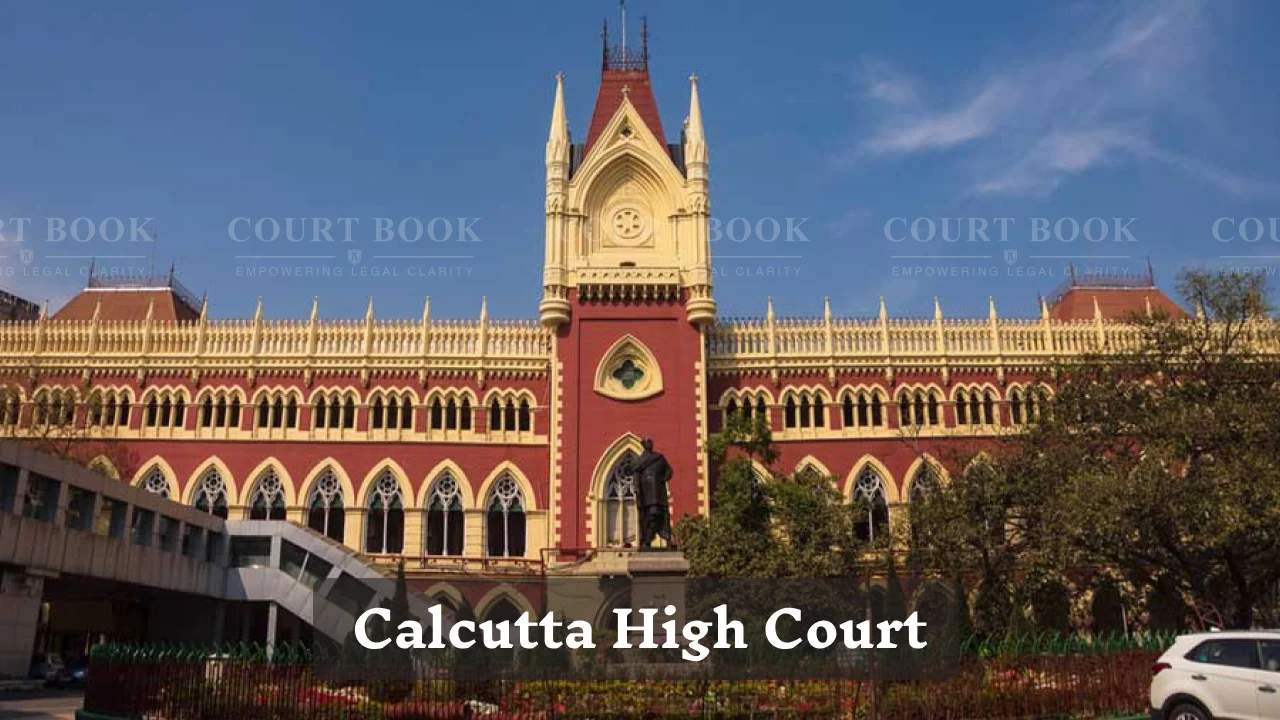
The Calcutta High Court has held that the High Court can, in exceptional circumstances, recognise a compromise reached after final disposal of a revision case if subsequent developments create a fresh right of compounding for the parties.
Justice Dr. Ajoy Kumar Mukherjee observed that although courts ordinarily become functus officio after pronouncing final judgments, the High Court can still invoke its inherent jurisdiction under Section 482 of the Code of Criminal Procedure to secure the ends of justice.
The ruling came while dealing with an application filed after the High Court had already modified the conviction of six accused persons from Section 326 IPC to Section 325 IPC.
Background of the Case
The criminal case originated from a 2010 FIR alleging offences under Sections 326/34 IPC against six accused persons. The trial court convicted all accused and sentenced them to one year of rigorous imprisonment with fine.
Their appeal before the Sessions Court failed, after which they approached the High Court in revision. On March 2, 2026, the High Court altered the conviction from Section 326 IPC to Section 325 IPC and reduced the sentence to six months’ simple imprisonment.
Following this modification, the parties entered into a compromise and sought permission for compounding of the offence.
What Happened During the Hearing
The State opposed the plea, arguing that once the High Court had delivered its final judgment, it became functus officio and could not entertain any further request due to the statutory bar under Section 362 CrPC.
The prosecution relied on several Supreme Court and High Court rulings to contend that a court cannot review or alter its final judgment after disposal of the matter.
However, the petitioners argued that the right to compound the offence arose only after the High Court converted the conviction from a non-compoundable offence under Section 326 IPC to a compoundable offence under Section 325 IPC.
Court’s Key Observation
The High Court clarified that Section 362 CrPC bars review of judgments but does not completely extinguish the Court’s inherent powers under Section 482 CrPC in changed circumstances.
Justice Mukherjee observed:
“The doctrine of functus officio will yield to justice for which law exists.”
The Court held that the settlement did not amount to rehearing the matter or reviewing the earlier judgment. Instead, it was a consequence of a new legal situation created after the conviction was altered.
The Court also relied on Supreme Court precedents recognising that changed circumstances can justify fresh invocation of inherent powers under Section 482 CrPC.
Allowing the application, the High Court directed that the sentences imposed on the six convicted persons would not be executed provided each of them deposits Rs. 2,500 with the Calcutta High Court Legal Services Authority within six weeks.
The Court clarified that failure to deposit the amount would result in revival of the sentence imposed in the revision judgment.
Case Details
Case Title: Goutam Saha & Ors. v. The State of West Bengal & Anr.
Case Number: CRAN/2/2026 with CRR/3174/2018
Court: Calcutta High Court
Judge: Justice Dr. Ajoy Kumar Mukherjee
Date: May 12, 2026
Download Order

