

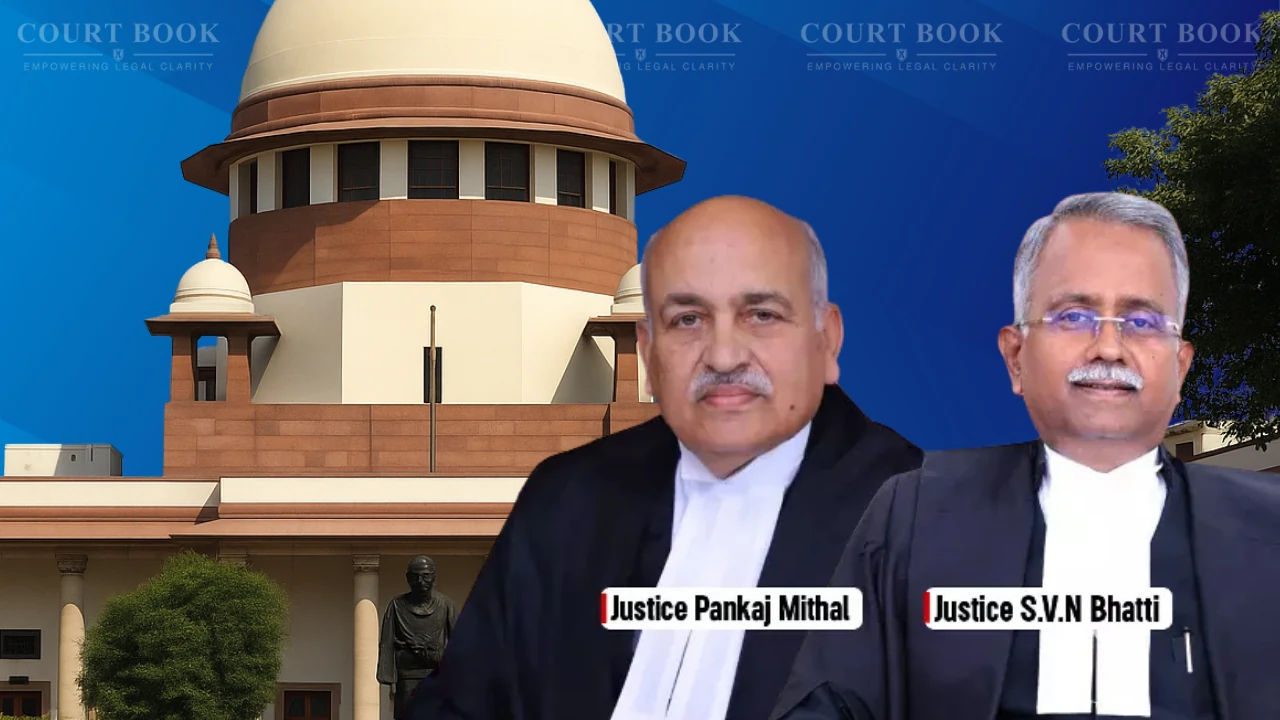
The Supreme Court of India has directed the Indian Institute of Information Technology (IIIT), Allahabad, to grant regular appointment to a faculty member who had been kept on contractual terms despite applying for a regular post through a common recruitment process.
A Bench of Justice Pankaj Mithal and Justice S. V. N. Bhatti held that denying the appellant a regular appointment without assigning any reason was “patently illegal and unconstitutional.”
Background of the Case
The case arose from a 2013 recruitment advertisement issued by IIIT-Allahabad for regular posts of Assistant Professor, Associate Professor and Professor.
Lokendra Kumar Tiwari, who possessed a PhD in Information Security and teaching experience, applied for the Assistant Professor post and appeared before the Selection Committee in March 2013.
Although he was selected through the same process as other candidates, the institute appointed him only on a contractual basis for one year, while most other selected candidates received regular appointments.
Later, the institute cancelled all appointments made through that selection process, triggering litigation before the Allahabad High Court. After reconsideration, the institute again offered Tiwari only a contractual appointment in 2017.
Tiwari challenged the decision, arguing that the advertisement was only for regular vacancies and that there was no justification for treating him differently from similarly placed candidates.
The Supreme Court examined whether an institute could advertise regular vacancies, conduct a common selection process, and then selectively issue contractual appointments without any recorded reasons.
The Bench noted that the appellant had been found suitable for the Assistant Professor post and had participated in the same interview and evaluation process as candidates who were later appointed regularly.
“The point in the case at hand is not whether the reasons recorded are right or untenable,” the Bench observed, adding that the real issue was whether denial of regular appointment could be justified at all when the recruitment process itself was for permanent posts.
The Court further said that if the appellant was considered fit enough to be appointed on contract, there had to be valid reasons for refusing him regular status. However, the records contained no explanation for such differential treatment.
The Bench also remarked that courts normally do not interfere with decisions of selection committees, but in this case the issue involved arbitrariness and unequal treatment.
Allowing the appeal, the Supreme Court set aside the judgments of the Single Judge and Division Bench of the Allahabad High Court.
The Court directed IIIT-Allahabad to issue a regular appointment order to Lokendra Kumar Tiwari within four weeks. It also granted him continuity of service, though without financial arrears or other monetary benefits.
The Bench further ordered that his seniority should be placed after the candidates who had already been appointed through the same 2013 selection process.
Case Details:-
Case Title: Lokendra Kumar Tiwari v. Union of India & Others
Case Number: Civil Appeal No. 5307 of 2024
Judges: Justice Pankaj Mithal and Justice S. V. N. Bhatti
Decision Date: May 13, 2026
Download Judgment

