

The Supreme Court has ruled in favour of a group of Assam Muster Roll and Work Charged workers who were denied regularisation despite being similarly placed to nearly 30,000 workers already absorbed by the State government under a 2005 Cabinet decision.
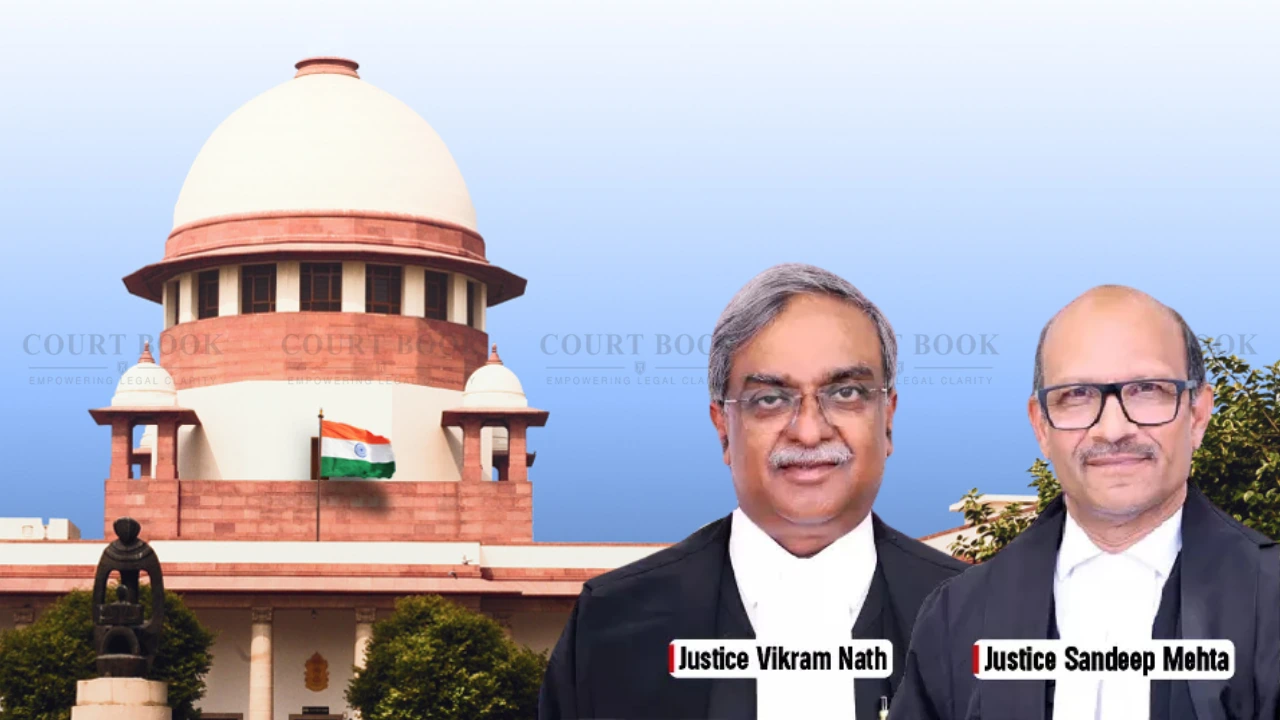
A Bench of Justice Vikram Nath and Justice Sandeep Mehta said the State could not treat “equals unequally” and hold back benefits from workers who were left out because of clerical mistakes or administrative lapses.
Case Background
The matter arose from a long-running dispute involving workers engaged by various Assam government departments before April 1, 1993. These workers had been serving continuously for decades in road construction, maintenance and other public works.
In July 2005, the Assam Cabinet decided to regularise the services of Work Charged and Muster Roll workers engaged before the cut-off date. Following that decision, the government created thousands of Grade-IV and Work Charged posts and regularised nearly 30,000 workers.
However, several workers were excluded from the process because of spelling errors, omissions in records and other clerical issues. Those workers later approached the Gauhati High Court seeking equal treatment.
A Single Judge of the Gauhati High Court had quashed the Assam government’s 2012 Office Memorandum which stopped further regularisation of such workers. The Single Judge directed the State to regularise eligible workers engaged before April 1, 1993.
But in 2017, a Division Bench reversed that decision, holding that the workers were not appointed against sanctioned posts and therefore could not claim regularisation under the Supreme Court’s ruling in Secretary, State of Karnataka v. Umadevi.
The affected workers then moved the Supreme Court.
Justice Sandeep Mehta, writing for the Bench, said the workers before the Court stood on the same footing as those already regularised by Assam under the 2005 policy. The Court noted that their exclusion happened due to administrative lapses and not because they lacked eligibility.
The Bench observed:
“Once the State chose to regularize such a large body of workers forming one identifiable class, it was under a constitutional obligation to treat all eligible members of that class alike.”
The Court also criticised the State government for changing its stand after repeatedly assuring the High Court that a policy for regularising left-out workers was under consideration.
According to the judgment, the State could not rely on the Umadevi ruling after having already implemented the 2005 Cabinet decision for thousands of similarly placed workers.
The Bench further said the government, as a “model employer,” was expected to act fairly and consistently, especially towards low-paid workers who had served for decades.
Allowing the appeals, the Supreme Court set aside the Gauhati High Court Division Bench judgment dated June 8, 2017. The Court restored the relief granted by the Single Judge and held that the eligible left-out workers were entitled to regularisation and consequential benefits in terms of the Assam Cabinet decision dated July 22, 2005.
Case Title: Sukhendu Bhattacharjee and Others v. State of Assam and Others
Case Number: Civil Appeal No(s). 4514 of 2025 and connected matters
Bench: Justice Vikram Nath and Justice Sandeep Mehta
Decision Date: May 21, 2026
Download Judgment

