

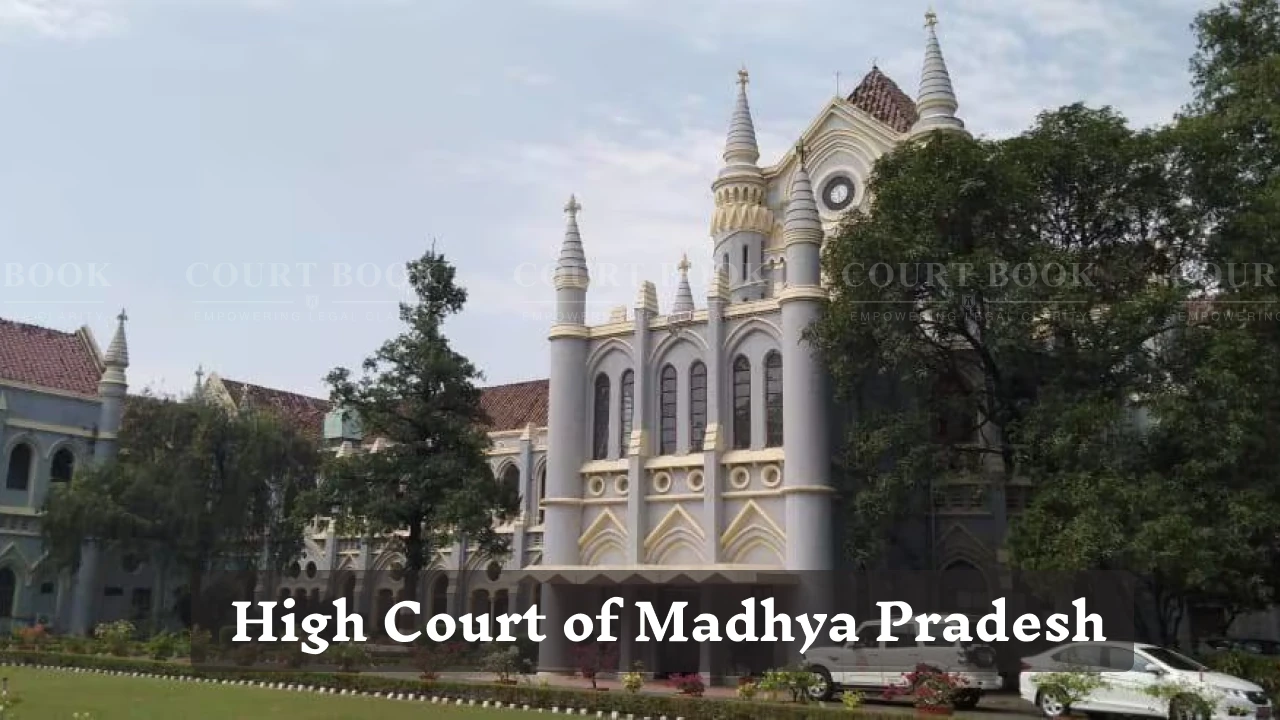
The Gwalior Bench of the High Court of Madhya Pradesh has declined to protect a retired Public Health Engineering (PHE) employee from eviction, holding that long possession on public land without legal title cannot be shielded by a court order. The ruling came while dismissing a miscellaneous petition filed by Maharaj Singh Yadav against the State of Madhya Pradesh.
Background of the Case
Maharaj Singh Yadav approached the High Court under Article 227 of the Constitution, challenging an order passed by the II Additional District Judge, Vidisha. The appellate court had earlier upheld the trial court’s refusal to grant a temporary injunction in a civil suit filed by Yadav.
Read also:-Supreme Court Rules Dumpers, Excavators Not ‘Motor Vehicles’; Gujarat Road Tax Demand Quashed
According to the petitioner, he had been working as a Timekeeper with the PHE Department since 1982. At the time, he claimed he did not own a house and, with the alleged consent of departmental officers, constructed three small tin-shed rooms on vacant land near the PHE quarters in Vidisha. An electricity connection was also installed in his name at the site.
After retiring from service in May 2020, Yadav vacated the official PHE quarters and received a “No Dues Certificate.” However, he continued living with his family in the tin-shed structure, which later became the subject of dispute. When the authorities objected to his occupation, he filed a civil suit seeking a permanent injunction and interim protection against eviction.
Counsel for the petitioner argued that Yadav had been in uninterrupted possession of the disputed premises for over four decades. Even if he lacked legal title, his long-standing occupation, the existence of electricity records, and his continued residence after retirement, it was submitted, deserved interim protection.
Read also:-Preventive Detention Misused: Supreme Court Frees Telangana Woman Held in Ganja Cases
On the other hand, the State opposed the plea, stating that the land in question was public property. Since the petitioner had no legal right or authorization to occupy it, the State argued that he could not seek the court’s protection through a temporary injunction.
Court’s Observations
After examining the records, Justice Hirdesh noted that the law on the issue is well settled. “A person who does not have legal possession over the disputed property is an unauthorized occupant or trespasser,” the court observed.
The bench made it clear that mere long possession, without lawful authority, does not create any enforceable right. The court further remarked that a trespasser cannot seek or obtain a temporary injunction to continue occupying public property.
Importantly, the High Court found no fault in the reasoning adopted by the trial court and the first appellate court. “No perversity, illegality, or jurisdictional error has been pointed out warranting interference,” the judge said while declining to exercise supervisory powers under Article 227.
Read also:-Kerala HC Allows Name Update in Marriage Record for Interfaith Wife Seeking UAE Visa, Citing Parent
Final Decision
Concluding that the petitioner had failed to establish any legal right over the land, the High Court dismissed the miscellaneous petition. The orders of the trial court and the first appellate court rejecting the request for temporary injunction were affirmed.
With this, the court brought the matter to a close, holding that no interference was warranted in the case.
Case Title: Maharaj Singh Yadav v. State of Madhya Pradesh
Case No.: Misc. Petition No. 7495 of 2025
Case Type: Article 227 – Civil (Temporary Injunction Dispute)
Decision Date: January 9, 2026
Download order

