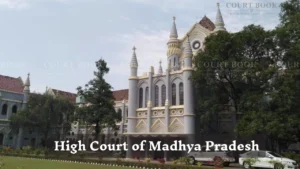
In a significant ruling affecting women candidates in government jobs, the Madhya Pradesh High Court has set aside the rejection of several teachers whose appointments were cancelled because their caste certificates were issued in another state before marriage. The court held that denying reservation benefits on such a technical ground was unfair, especially when recruitment rules never clearly demanded a state-specific certificate.
Background of the Case
The petitions were filed by six women candidates, including Anusuiya Prajapati and others, who had applied for the post of Uchha Madhyamik Shikshak (Higher Secondary Teacher) under reserved categories such as SC, ST, and OBC.
Before marriage, all the petitioners lived in other states and held valid caste certificates from those states. After marrying permanent residents of Madhya Pradesh, they shifted their residence and obtained domicile certificates of the state. Confident about their eligibility, they applied under the reserved category, cleared the written examination, and reached the document verification stage.
That is where their journey stopped.
Officials cancelled their candidature, stating that the women failed to submit caste certificates issued by authorities in Madhya Pradesh. No prior notice or personal hearing was given.
Left without jobs despite clearing the selection process, the candidates approached the High Court.
Read also:-Second Marriage During Subsisting First One Void, Chhattisgarh HC Rules in Property Case
Arguments Before the Court
The petitioners told the court that:
• Their caste is recognized as a reserved category both in their birth states and in Madhya Pradesh.
• The recruitment rules did not clearly say that only certificates issued in Madhya Pradesh would be accepted.
• Cancelling their candidature without notice violated basic fairness.
The State government, however, argued that:
• Reservation benefits are available only to candidates holding caste certificates issued by Madhya Pradesh authorities.
• The women had wrongly declared themselves as domiciles at the time of application.
• They should have first appealed before the revenue authorities instead of coming directly to court.
Court’s Observation
Justice Jai Kumar Pillai closely examined the recruitment rules and found a crucial gap.
“There is no clear clause in the rules or advertisement which makes candidates ineligible merely because their caste certificate was issued in another State,” the bench observed.
The court also referred to earlier judgments, including Dr. Alka Singh vs State of MP, which had already clarified that a woman does not become a “migrant” after marriage if her caste is recognized in both states.
Another strong point made by the court was about fairness in recruitment.
“Rules of the game cannot be changed after the selection process begins,” the judge said, citing Supreme Court rulings that bar authorities from adding new conditions midway.
The bench further noted that reservation is a beneficial provision, meant to uplift disadvantaged groups. Denying it on purely technical grounds defeats its very purpose.
Read also:- Woman Free to Choose Her Life: Orissa High Court’s Strong Stand Against Forced Marriage
Decision of the Court
The High Court allowed all the petitions and quashed the orders that cancelled the women’s candidature.
The court directed the authorities to:
1. Verify whether the petitioners’ caste is recognized as a reserved category in both their birth states and Madhya Pradesh.
2. Proceed with appointments if the caste status matches in both states.
3. Grant them seniority, notional pay fixation, and all consequential benefits from the date other candidates were appointed.
4. Complete the entire process within 60 days.
With this, the court restored not just their jobs, but also their dignity in the recruitment process.
Case Title: Anusuiya Prajapati & Others vs State of Madhya Pradesh
Case No.: W.P. No. 10277/2021 with connected matters
Case Type: Writ Petitions (Service Law)
Decision Date: 12 January 2026
Download Order