

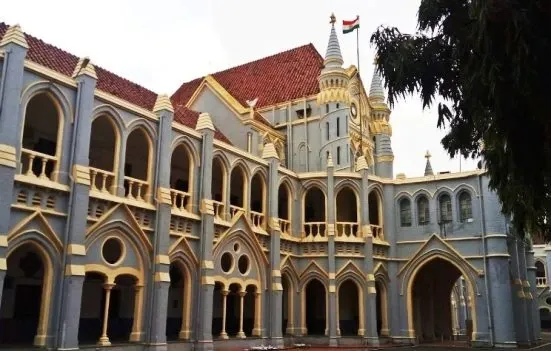
The High Court of Madhya Pradesh has held that a divorced daughter cannot be excluded from consideration for family pension merely because the pension rules do not specifically mention “divorcee daughters” in the definition of family. The court said such exclusion would violate the equality guarantee under Article 14 of the Constitution.
Justice Vishal Dhagat passed the order while hearing a petition filed by Smt. Jyoti Shrivastava, whose request for family pension after the death of her father had been rejected by the Home Guards Department.
Background of the Case
The petitioner, Smt. Jyoti Shrivastava, is the divorced daughter of late Shanker Lal Shrivastava, a retired District Commandant in the Home Guards department who retired in 2001. After the death of his wife in 2017, he had sought to nominate his daughter for family pension benefits. However, the Director General, Home Guards and Civil Defence, rejected the request on December 16, 2021.
The State authorities argued that under Rule 48 of the Madhya Pradesh Civil Services (Pension) Rules, 1976, a divorced daughter was not included within the definition of “family,” and therefore she was not entitled to family pension.
Counsel for the petitioner relied on a 2013 Office Memorandum issued by the Union Government, which clarified that dependent divorced daughters could receive family pension subject to conditions regarding dependency and income. Reliance was also placed on judicial precedents including Khajni Devi v. Union of India.
Court’s Observations
After examining the pension rules, the High Court noted that while divorced daughters were not expressly mentioned, married daughters had already been included within the definition of family under Rule 44(5) of the Rules of 1976.
Justice Vishal Dhagat observed that excluding divorced daughters while including unmarried, widowed and married daughters would amount to unequal treatment.
“The bench observed that there is no reasonable basis to treat a divorced daughter differently from other daughters recognized under the rules,” the order noted.
The court further stated that such exclusion would violate Article 14 of the Constitution, which guarantees equality before law.
At the same time, the court clarified that dependency remains an essential condition for grant of family pension in such cases. Under the rules, proof must be provided showing that the claimant depended upon the deceased government employee and did not have an independent source of income.
Court’s Decision
The High Court quashed the order dated December 16, 2021 passed by the Director General, Home Guards and Civil Defence.
The court directed the authorities to reconsider the petitioner’s claim for family pension. It ordered that if the petitioner is found dependent on the deceased employee and without an independent source of income, her application should be allowed. The competent authority has been directed to pass fresh orders within 90 days after receipt of the representation and supporting evidence.
Case Details:
Case Title: Smt. Jyoti Shrivastava v. State of Madhya Pradesh and Others
Case Number: Writ Petition No. 1666 of 2022
Judge: Justice Vishal Dhagat
Decision Date: May 12, 2026


