The Madhya Pradesh High Court at Gwalior has set aside an order directing a woman to undergo medical examination in a matrimonial dispute, holding that the respondent had failed to place sufficient material to establish a strong prima facie case warranting such a direction.
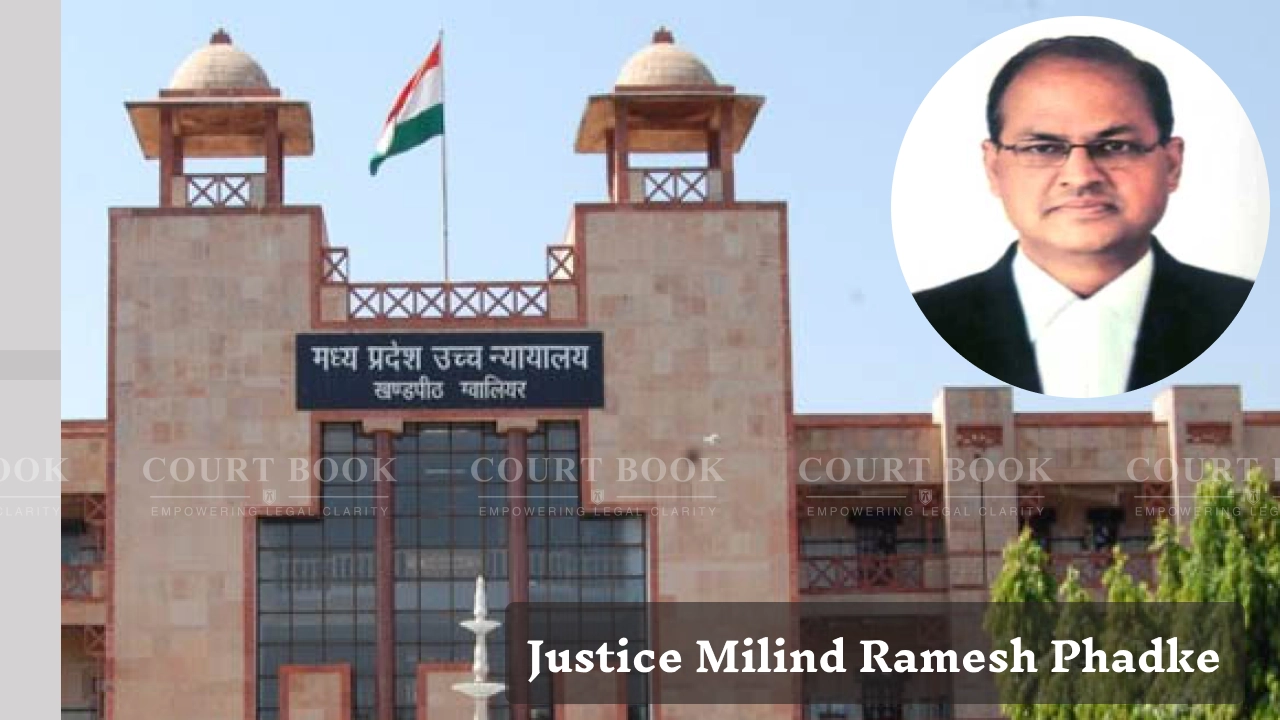
Justice Milind Ramesh Phadke passed the order on September 21, 2026, in Writ Petition No. 4819 of 2012.
"Once the parties had completed their evidence and the matter had reached the stage of final arguments, permitting a medical examination without demonstrating exceptional necessity would cause serious prejudice to the petitioner and would enable the respondent to collect additional evidence in support of a case which had already been tried on the basis of the pleadings and evidence brought before the Court."
The parties were married on April 28, 2004, at Ashoknagar and lived together until July 15, 2011. Thereafter, the respondent initiated divorce proceedings under Section 13 of the Hindu Marriage Act, alleging cruelty. The petitioner denied the allegations and expressed her willingness to reside with the respondent.
Both parties led their evidence, and the petitioner’s evidence was also closed. The matter was subsequently fixed for final arguments. At that stage, on June 22, 2012, the respondent filed an application under Section 151 of the Code of Civil Procedure seeking the petitioner’s medical examination, referring to an allegation that she had undergone three operations.
The petitioner opposed the application, arguing that the request had been made only after completion of the evidence. She contended that there was no proper factual or evidentiary foundation for the proposed examination and that the alleged operations had neither been properly established through evidence nor put to her or her witnesses.
Despite her objection, the District Judge, Ashoknagar, allowed the application on July 2, 2012, permitting the respondent to have the petitioner medically examined. The petitioner then approached the Madhya Pradesh High Court under Article 227 of the Constitution, challenging the order.
The High Court referred to the Supreme Court’s decision in Sharda v. Dharampal, which recognizes the power of a matrimonial court to order medical examination in an appropriate case, but also requires sufficient material and a strong prima facie case.
The High Court observed:
"The Court must have sufficient material before it and the applicant must establish a strong prima facie case before such an intrusive direction is issued."
The Court found that these requirements were not satisfied. It noted that the medical examination was sought after both parties had completed their evidence and the case had reached final arguments. The record also did not show that the respondent had previously asked the petitioner to undergo medical treatment or examination and that she had refused.
The Court further held:
"The allegation regarding the petitioner having undergone three operations also does not, by itself, furnish sufficient foundation for directing her medical examination."
The High Court observed that seeking medical examination after conclusion of evidence would effectively allow the respondent to fill a gap in the evidence already placed before the matrimonial court. It also noted that the lower court had failed to identify the specific medical issue requiring examination or explain how the proposed examination was connected with an issue already pleaded and proved.
The High Court held that the respondent had failed to place sufficient material to establish a strong prima facie case for directing the medical examination. It also emphasized that medical examination in matrimonial proceedings cannot become a means for a roving or fishing inquiry, particularly when bodily autonomy is involved.
Accordingly, the High Court allowed the writ petition and set aside the District Judge’s July 2, 2012 order. The application seeking medical examination was dismissed, and the matrimonial proceedings were directed to proceed on the basis of the pleadings and evidence already available on record.