

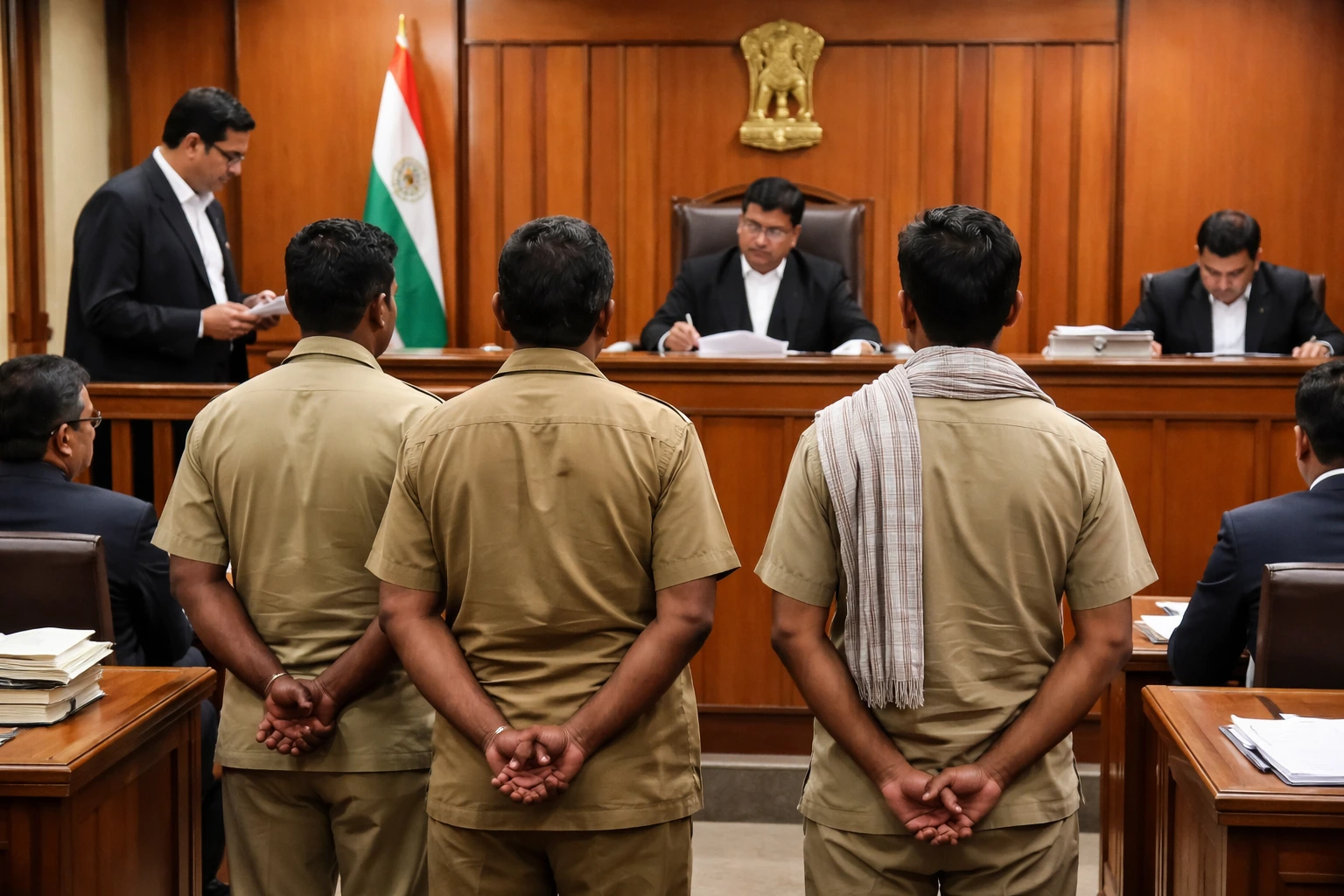
The Patna High Court has set aside disciplinary action issued against three Class-IV employees of Darbhanga Medical College and Hospital (DMCH), ruling that the inquiry into alleged negligence leading to ICU deaths in 2015 was carried out “without evidence” and failed basic legal standards. The order was delivered on 24 December 2025 by Justice Partha Sarthy.
Read in Hindi
Background of the Case
The petitioners Bindeshwari Yadav, Amlesh Prasad, and Shambhu Sah - were working as Kaksha Sevaks (Class-IV employees) at DMCH. They were suspended on 25 September 2015 after three ICU patients reportedly died due to lack of oxygen supply. In May 2017, the hospital issued a punishment order withholding increments, imposing censure, and denying back wages. The employees challenged this before the High Court.
What the Petitioners Argued
The petitioners argued that the disciplinary inquiry violated rules, citing lack of witness examination, documentary proof, and non-supply of the inquiry report. They called the action “a case of no evidence” and urged the court to strike it down for violating principles laid down by the Supreme Court in departmental inquiries.
State’s Position
The Bihar government defended the punishment, stating the employees failed to attend duty on time, causing disruption of oxygen supply in the ICU. The state maintained that negligence on their part contributed to the deaths, and therefore the disciplinary action was justified.
Read also:- Allahabad HC Sets Aside Municipal Election Verdict, Says Delay in Election Petitions Cannot Be Condoned
Court Observation
After reviewing the case record, the court noted that the inquiry officer did not examine a single witness or prove any supporting documents, which is essential in a quasi-judicial process.
In a sharp observation, the bench remarked:
“Not a single witness was examined… nor any document proved… the inquiry… could not have been carried out in a more perfunctory manner.”
The court further held that suspicion “cannot be a substitute for legal proof,” and disciplinary punishment cannot survive without evidence or procedural fairness.
Final Decision
Concluding that the inquiry violated legal standards and due process, the court quashed the punishment order dated 23 May 2017 and restored all service benefits.
“The order of punishment… is not sustainable and is hereby set aside.”
The court also directed that the petitioners be paid arrears and consequential benefits within three months. The writ petition was allowed.
Case Title: Bindeshwari Yadav & Ors. vs. The State of Bihar
Case Number: Civil Writ Jurisdiction Case (CWJC) No. 17213 of 2021
Judgment Date: 24 December 2025


