

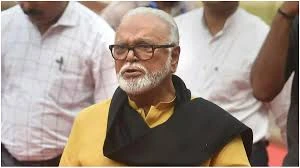
A special court under the Prevention of Money Laundering Act (PMLA) in Mumbai on Thursday 23 January discharged former Maharashtra minister Chhagan Bhujbal, his family members, and dozens of co-accused from long-pending money laundering cases, holding that without a surviving predicate offence, the PMLA prosecution cannot stand.
The ruling came from Special Judge Satyanarayan R. Navander, who allowed all discharge applications filed under Section 227 of the Criminal Procedure Code, bringing an end at least for now to two major Enforcement Directorate (ED) cases linked to alleged corruption and real-estate fraud.
Background of the Case
The money laundering cases stemmed from two predicate offences registered in 2015:
• ACB FIR No. 35/2015, relating to alleged irregularities in the construction of New Maharashtra Sadan in Delhi during Bhujbal’s tenure as Public Works Minister; and
• EOW FIR No. 69/2015, connected to the Hexworld housing project in Navi Mumbai, where flat buyers allegedly lost about ₹44 crore.
Following these FIRs, the ED registered enforcement case information reports (ECIRs) and filed prosecution complaints under PMLA against over 50 accused, including politicians, government officials, builders, and several companies.
However, over the years, trial courts and the Bombay High Court discharged most accused in the predicate offences themselves.
Read also:- Copyright Battle Over Narayan Debnath Works: Calcutta HC Upholds Interim Ban on Publisher
What the Court Examined
At the heart of Thursday’s hearing was a simple but crucial legal question:
Can a money laundering case survive when the underlying scheduled offence no longer exists?Counsel for the accused repeatedly pointed out that:
• Almost all accused had already been discharged in the corruption and cheating cases.
• The State had not challenged most of those discharge orders.
• No court had recorded a finding that proceeds of crime were actually generated.
Senior advocates relied heavily on the Supreme Court’s ruling in Vijay Madanlal Choudhary, which clarified that “proceeds of crime” must arise from a proven scheduled offence.
Read also:- Supreme Court Questions ₹2 Lakh Compensation in 13-Year-Old’s Death Case, Warns of Sentence Enhancement
Court’s Observations
After reviewing records from both predicate cases, Judge Navander noted that competent courts had already found no prima facie criminality in the alleged acts.
“The foundation of the present PMLA case is the existence of proceeds of crime generated from scheduled offences,” the court observed, adding that those very offences had collapsed at the threshold stage.
Referring to earlier discharge orders, the judge highlighted that courts had found the allegations to be civil disputes dressed up as criminal cases or unsupported by material evidence.
Importantly, the court stressed that money laundering is not an independent crime floating in isolation.
“Without a scheduled offence, the question of proceeds of crime does not arise,” the judge said, echoing the Supreme Court’s interpretation of Sections 2(u) and 3 of the PMLA.
Arguments by the Enforcement Directorate
The ED argued that discharge in predicate cases should not automatically terminate PMLA proceedings, especially since revision petitions were pending in some matters.
Read also:- Supreme Court Steps In as ₹150 Crore Transactions Surface During Stalled Corporate Insolvency
The prosecutor submitted that money had been layered through real-estate transactions and shell entities and that witness statements under Section 50 of the PMLA disclosed sufficient material to frame charges.
However, the court was not persuaded. It noted that no stay had been granted against the discharge orders and that mere pendency of revisions could not revive a non-existent predicate offence.
Decision
Allowing all discharge applications, the special court held that continuing the PMLA trials would be legally unsustainable.
“All the accused are entitled to discharge under Section 227 of the Code of Criminal Procedure,” Judge Navander ruled, formally closing PMLA Special Case No. 02 of 2016 and PMLA Special Case No. 03 of 2018 against the applicants.
With this, Chhagan Bhujbal, his relatives, and all other accused stand discharged from the money laundering cases arising out of the 2015 FIRs.
Case Title: Chhagan Chandrakant Bhujbal & Ors. vs Director of Enforcement, Mumbai Zonal Office
Download Judgment

