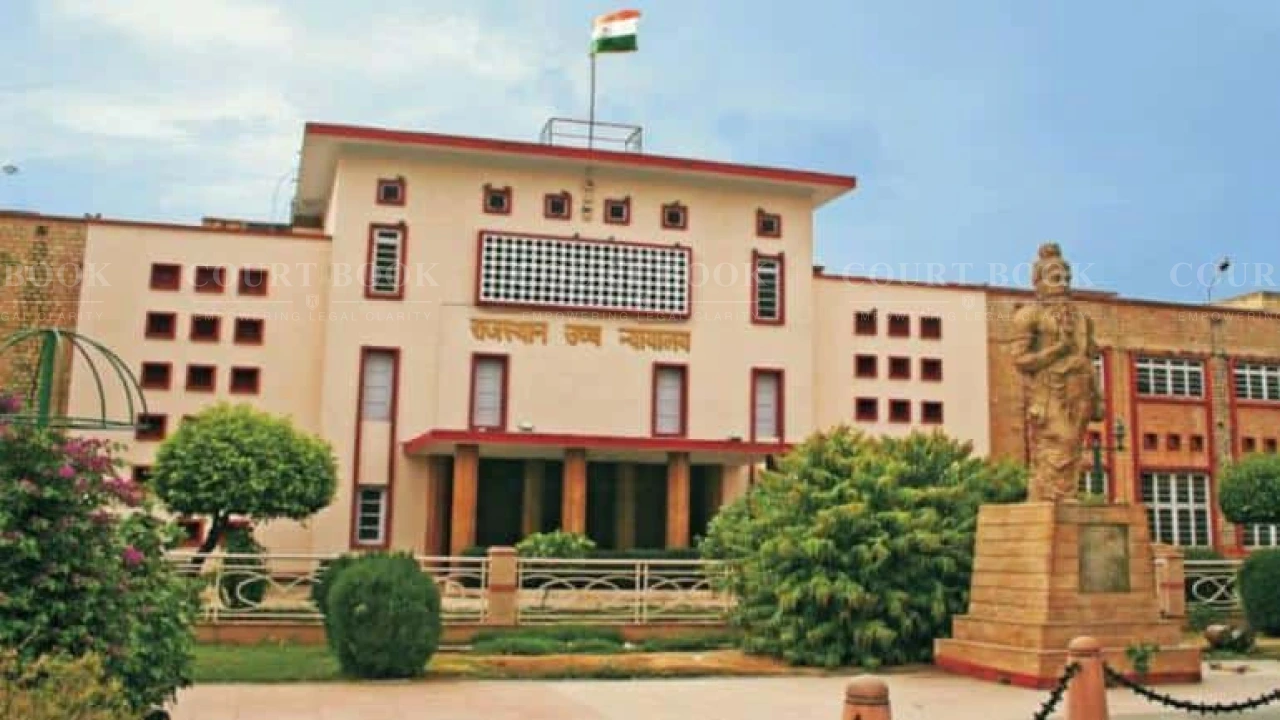
The Rajasthan High Court has set aside an order of the Board of Revenue (BoR), describing the manner in which it was passed as a “grave error of law” and a “gross abuse of process of law.”
Justice Sanjeet Purohit found that the Board had allowed a revision petition at the admission stage itself, without issuing notice to the affected parties, without granting them an opportunity of hearing, and without first deciding an application seeking condonation of delay.
Background of the Case
The case arose from a land dispute pending before the Additional Collector, Jayal. Petitioner Virendra Singh had filed a suit seeking declaration of khatedari rights and permanent injunction over the disputed property.
Along with the suit, he sought temporary protection under the Rajasthan Tenancy Act. On 17 October 2025, the trial court granted ad-interim relief, directed the parties to maintain status quo regarding the property, and restrained any transfer or alienation of the land during the pendency of the proceedings.
According to the petitioner, Bhupendra Singh Ranawat was not a party to the original suit. Although he had filed a caveat, he never moved an application before the trial court seeking to be impleaded in the proceedings.
Despite this, he later approached the Board of Revenue by way of a revision petition challenging the interim order.
The Board of Revenue allowed the revision petition, set aside the trial court’s interim order and directed the trial court to implead the revision petitioner as a party respondent. It further directed the trial court to decide the injunction application within one month.
The petitioner challenged this order before the High Court, contending that the revision had been decided ex parte and that even the application seeking condonation of delay had not been adjudicated before the revision petition was allowed.
During the hearing, counsel appearing for the revision petitioner fairly conceded that the Board could not have allowed the revision petition without issuing notice, granting an opportunity of hearing to the opposite side, and first deciding the delay-condonation application.
After examining the record, Justice Purohit held that the Board had committed a “grave error of law.”
“The manner in which the impugned order has been passed ... is against settled and basic tenets of law,” the Court observed.
The High Court noted that the revision petition had been allowed without hearing the affected parties and without first deciding whether the delay in filing the revision deserved to be condoned. The Court also found it significant that the revision had been filed by a person who was not a party to the original proceedings.
The bench further expressed surprise that the Board went beyond the relief sought in the revision petition. Even though no impleadment application was pending before the trial court, the Board directed that the revision petitioner be added as a party to the suit.
Calling this course of action wholly unjustified, the Court held that the impugned order amounted to a “gross abuse of process of law.”
Justice Purohit further observed that the order was erroneous, violative of judicial propriety and contrary to established legal procedure.
Allowing the writ petition, the High Court quashed the Board of Revenue’s order dated 20 April 2026 and remanded the matter for fresh consideration.
The Court directed the Board of Revenue to decide the revision petition strictly in accordance with law after granting due opportunity of hearing to all concerned parties.
It also clarified that the petitioner would be free to raise all objections, including those relating to the maintainability of the revision petition, before the Board.
Taking note of the manner in which the impugned order had been passed, the High Court further directed that, after remand, the revision petition should be assigned to and heard by a Bench other than the one that had passed the quashed order.
Case Details
Case Title: Virendra Singh v. Bhupendra Singh Ranawat & Others
Case Number: S.B. Civil Writ Petition No. 12307/2026
Judge: Justice Sanjeet Purohit
Decision Date: 04 June 2026



-300x169.webp)