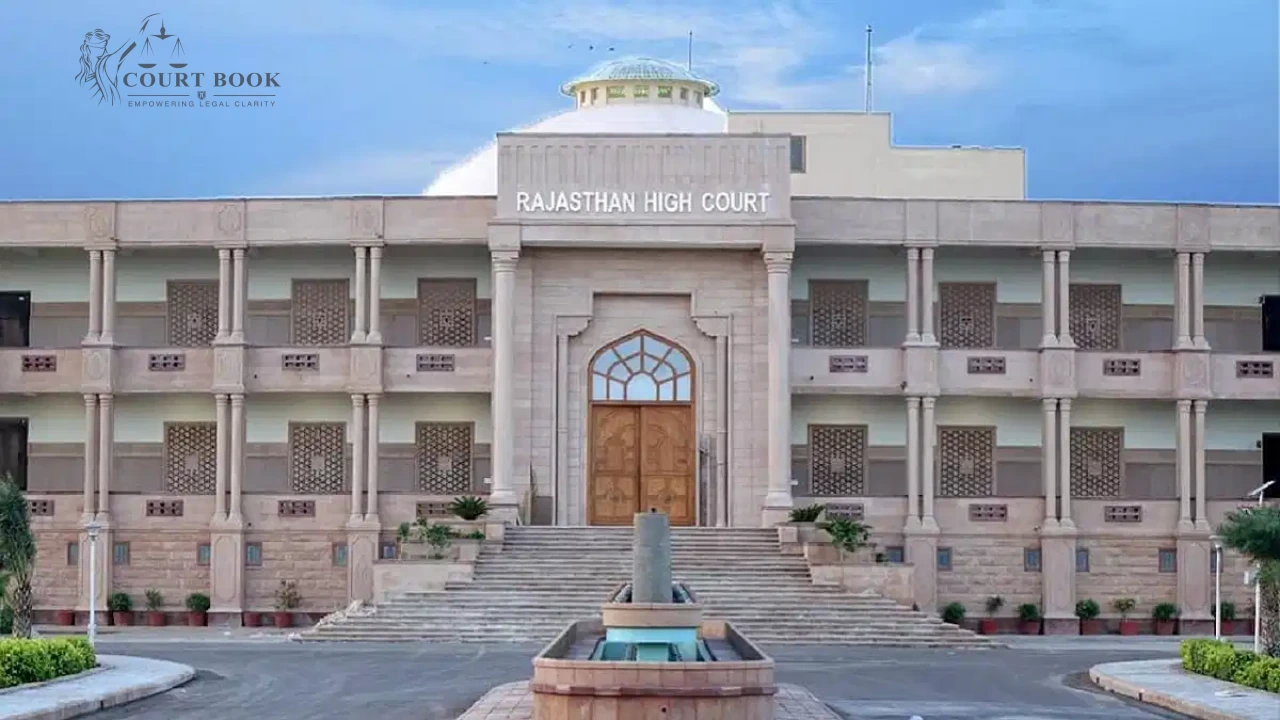
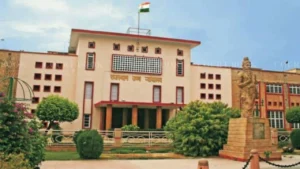
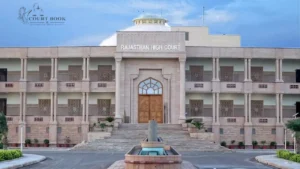
A Division Bench of the Rajasthan High Court at Jodhpur has come down heavily on the tax department for what it called an arbitrary and vendetta-driven suspension of an Indian Revenue Service officer. The Court set aside two suspension extension orders against Manmeet Singh Ahluwalia, a 2012-batch IRS officer, and directed the government to pay him ₹5 lakh in exemplary costs besides restoring his promotional benefits.
The bench of Justice Munnuri Laxman and Justice Anuroop Singhi delivered the verdict on July 30, 2026, in a writ petition challenging an earlier order of the Central Administrative Tribunal, Jodhpur Bench, which had rejected the officer's claims.
Background of the Case
The dispute traces back to a late-night quarrel in September 2019 at a government residential colony in Mayapuri, New Delhi, involving the petitioner's mother and sister on one side, and a GST Council official and a colleague on the other. Following complaints, an enquiry committee found fault with the petitioner's family members - not the petitioner himself. He was later transferred to Jodhpur, and eviction proceedings followed, though he eventually got relief from an appellate court on the eviction issue.
More complaints piled up over the next couple of years, including allegations of unauthorised leave during the Covid-19 pandemic and rude behaviour towards seniors. Based on this, the petitioner was suspended in May 2021. What began as a 90-day suspension was extended twice - first for 180 days, and then again in January 2022 - without any chargesheet being issued until August 2022, well after both extensions had lapsed.
Crucially, a Departmental Promotion Committee met in March 2022 while the second extension was in force. As a result, the petitioner's promotion was kept in a "sealed cover," even as his juniors moved ahead.
Court's Observations
The Court noted that the core allegations stemmed from a family dispute unrelated to the petitioner's official duties, and that he had an otherwise unblemished seven-year career, having represented India at international trade forums.
The bench observed,
"The manner in which these allegations were brought forth prima facie demonstrates personal vendetta on the part of certain high-ranking officials against the petitioner."
It further noted that the disciplinary authority already had all the material - enquiry reports, complaints and statements - right from the time of the original suspension itself, so there was no real justification for extending it further. The judges pointed out that a counter-FIR filed by the petitioner's own family was conveniently ignored while only he was targeted.
Citing the Supreme Court's ruling in Lucknow Development Authority v. M.K. Gupta, the bench reiterated that harassment of a citizen by public authorities, when arising from arbitrary or capricious conduct, loses its individual character and becomes a matter of social concern warranting compensation.
The Court held that the extension orders were "vitiated by malice in law" and reflected an abuse of administrative power, causing serious and unjustified damage to the officer's career prospects.
The Decision
Allowing the writ petition, the High Court set aside the Tribunal's order dated April 16, 2025, along with both suspension extension orders dated July 16, 2021 and January 13, 2022. The Court directed that the petitioner be treated as reinstated from the expiry of his original 90-day suspension, with full salary for the extended period, adjusted against amounts already paid.
The respondents were also directed to open the sealed cover and, subject to eligibility, grant the petitioner notional promotion along with consequential benefits from the date his juniors were promoted - to be completed within two months.
Additionally, the Union of India and CBIC were directed to pay ₹5 lakh as exemplary costs to the petitioner within three months.
Case Details:
Case Title: Manmeet Singh Ahluwalia vs. Union of India & Ors.
Case Number: D.B. Civil Writ Petition No. 11000/2025
Judges: Justice Munnuri Laxman and Justice Anuroop Singhi
Decision Date: July 30, 2026





-300x169.webp)