The Supreme Court has brought closure to a years-long dispute surrounding the recruitment of Motor Vehicle Inspectors in Tamil Nadu, directing that the selection process be completed after considering all eligible candidates whose workshop experience certificates were re-verified.
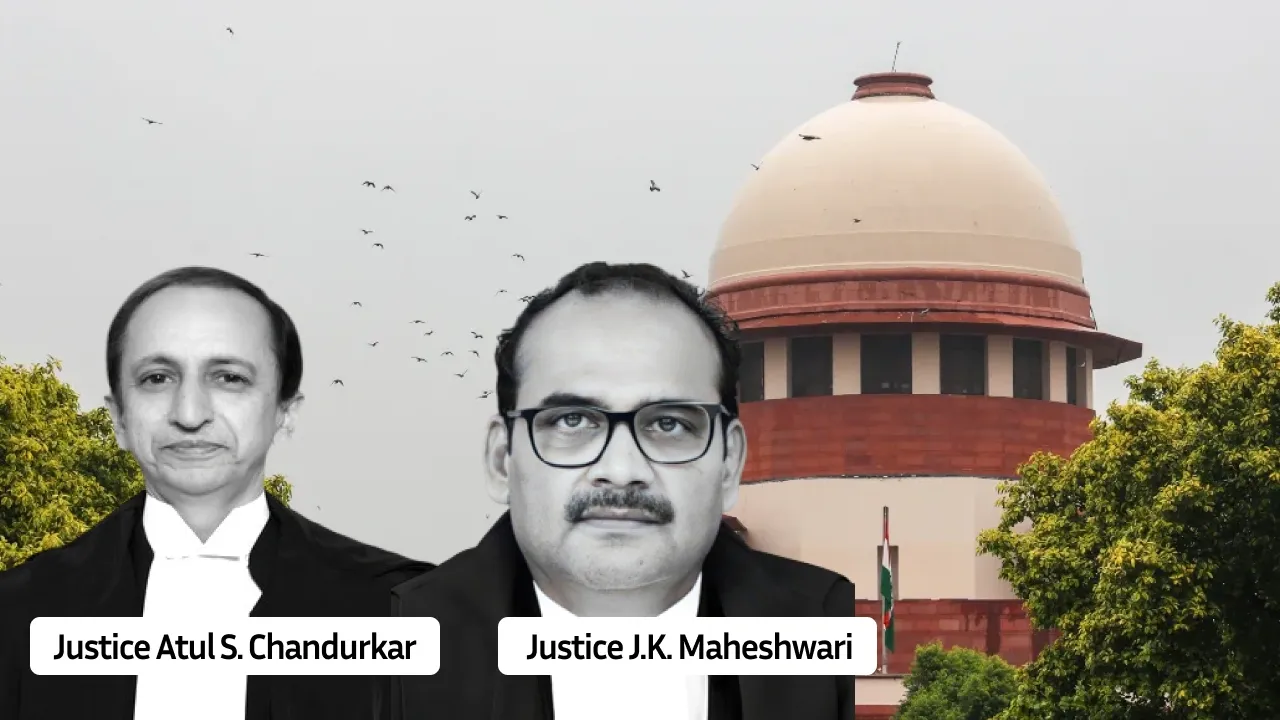
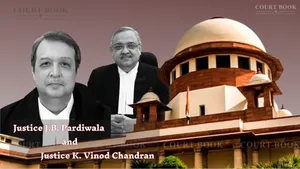
A Bench of Justice J.K. Maheshwari and Justice Atul S. Chandurkar delivered the judgment on June 15, 2026, while deciding a batch of appeals arising from the Tamil Nadu Public Service Commission's (TNPSC) 2018 recruitment notification for 113 Motor Vehicle Inspector Grade-II posts.
Background of the Case
The controversy began after TNPSC issued a notification on February 14, 2018, inviting applications for 113 posts of Motor Vehicle Inspector Grade-II.
The recruitment process soon became entangled in litigation over the validity of workshop experience certificates submitted by candidates. Initially, 32 candidates were selected and appointed. However, the Madras High Court later set aside those appointments and ordered fresh verification of experience certificates.
Subsequent rounds of litigation focused on whether candidates had acquired the required experience in workshops whose approvals had either expired or were awaiting renewal from transport authorities.
The Division Bench of the High Court ultimately directed the authorities to examine whether retrospective approval could be granted to such workshops and ordered a fresh recruitment exercise.
Court's Observations
Before the Supreme Court, several candidates argued that they had wrongly been excluded from the revised selection list despite satisfying the eligibility criteria.
The Court noted that following the High Court's directions, the Motor Vehicles Maintenance Department carried out a fresh verification exercise and granted retrospective approval to eligible workshops. As a result, several candidates who were previously considered ineligible were found to possess more than one year of valid workshop experience.
Referring to the re-verification reports, the Bench observed that the eligibility position of such candidates had materially changed after retrospective approvals were granted.
"The workshop experience certificates submitted by the appellants have been duly verified as well as re-verified," the Court noted while holding that those candidates were entitled to be considered in the selection process.
The Bench also agreed with the High Court's finding that candidates should not suffer because workshop renewals were delayed by authorities.
"The candidates who gained experience in such workshops... could not have been prejudiced," the Court observed.
According to the Court, providing retrospective recognition where appropriate created a "level playing field" for all candidates and ensured that deserving applicants were not excluded for reasons beyond their control.
Candidates whose names were already included in the revised 2021 list opposed the High Court's order requiring a fresh recruitment exercise.
However, the Supreme Court found no fault with the High Court's reasoning.
The Bench held that merely being included in a provisional selection list did not create any vested right to appointment. It emphasized that all eligible candidates should be allowed to compete together in a fair process.
The Court observed that a broader pool of eligible candidates would help ensure that the most meritorious candidates are ultimately selected.
TNPSC's Challenge on PSTM Quota and Disclosure of Marks
The TNPSC also challenged directions relating to candidates claiming reservation under the Persons Studied in Tamil Medium (PSTM) quota and the disclosure of marks obtained by candidates who were outside the zone of consideration.
The Supreme Court upheld the High Court's findings on both issues.
The Bench agreed that certificates issued by the heads of educational institutions were sufficient proof for claiming PSTM benefits, noting that the recruitment notification did not require any additional certification.
On disclosure of marks, the Court accepted the High Court's view that transparency was necessary in a recruitment process that had remained under litigation for several years.
The Bench observed that disclosure of marks, without providing answer scripts, served the larger public interest.
Decision
Disposing of all the appeals, the Supreme Court upheld the key directions issued by the Madras High Court regarding retrospective verification of workshop approvals and the fresh recruitment exercise.
The Court directed that candidates whose experience certificates have now been found valid must be considered in the selection process along with other eligible candidates. It further asked the TNPSC to complete the recruitment exercise at the earliest in accordance with the timeline fixed by the High Court.
Case Details:
Case Title: S. Senthil Kumaran Bose v. State of Tamil Nadu & Others (along with connected matters)
Case Number: Civil Appeals arising out of SLP (C) No. 7906 of 2024 and connected matters
Judges: Justice J.K. Maheshwari and Justice Atul S. Chandurkar
Decision Date: June 15, 2026




-300x169.webp)
-300x169.webp)
-300x169.webp)