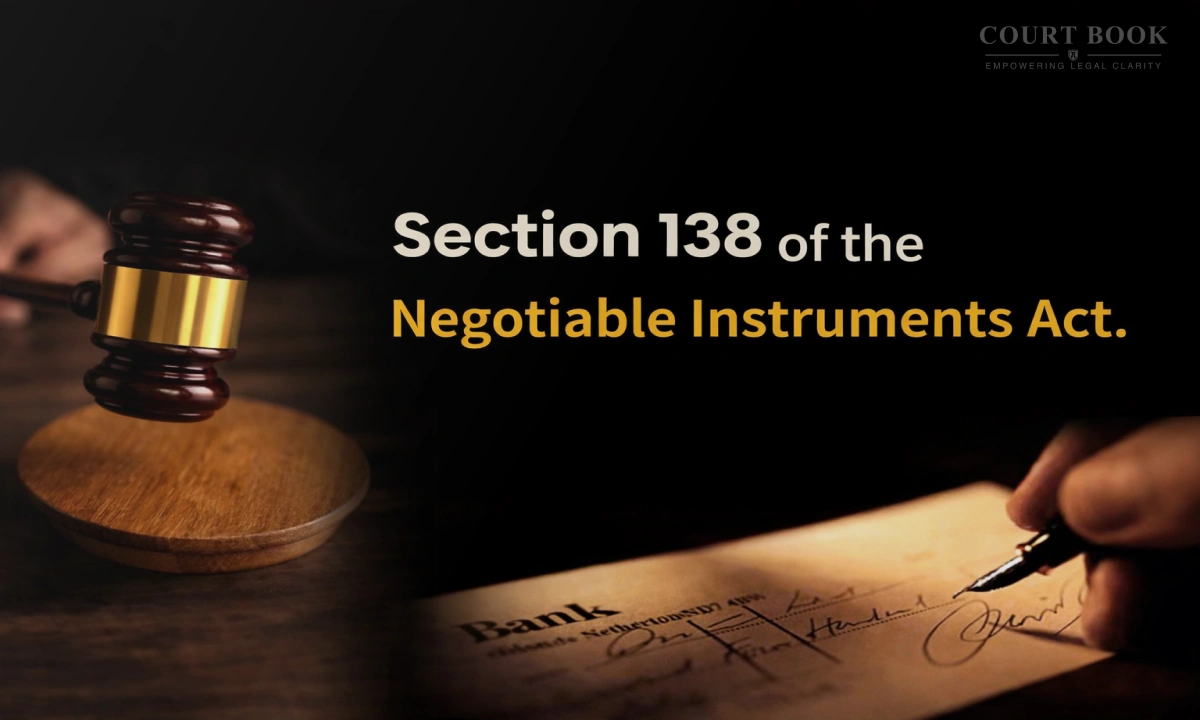
The Punjab and Haryana High Court has dismissed a revision petition filed by Narender Kumar, affirming his conviction in a cheque dishonour case involving ₹3.7 lakh under Section 138 of the Negotiable Instruments Act. The judgment was delivered by Justice Sumeet Goel on May 25, 2026.
Background of the Case
According to the complaint, the accused had allegedly borrowed ₹1.5 lakh in December 2015 and another ₹2.2 lakh in January 2016 from the complainant for family medical expenses. To discharge the alleged liability, a cheque of ₹3.7 lakh was issued.
When the cheque was presented for encashment, it was returned unpaid due to insufficient funds. A legal notice was subsequently sent, but the payment was not made, leading to criminal proceedings under Section 138 of the NI Act.
The trial court convicted the accused in July 2022, and the conviction was later upheld by the Additional Sessions Judge, Sirsa, in March 2025.
Counsel for the petitioner argued that the cheque was a blank security cheque and had been misused. It was also claimed that the complainant failed to prove the alleged loan transaction through independent evidence.
The petitioner further relied on testimony suggesting that the parties had earlier settled the dispute for a reduced amount and that part payment had already been made. The defence also questioned the validity of an agreement allegedly acknowledging liability.
On the other hand, the complainant maintained that the accused had admitted his signatures on both the cheque and the agreement. It was argued that statutory presumptions under the Negotiable Instruments Act operated in favour of the complainant and had not been rebutted by any reliable evidence.
Justice Goel observed that once the accused admitted his signatures on the cheque, the legal presumption under Section 139 of the Negotiable Instruments Act came into play.
The Court noted,
“The burden was upon the petitioner to prove that the cheque in question was without any legal liability.”
Rejecting the defence of a blank security cheque, the Court found that no convincing evidence had been produced to support that claim. The Court also held that the accused had failed to establish the alleged settlement or prove that the agreement acknowledging liability was invalid.
Referring to the Supreme Court's ruling in Sanjabij Tari v. Kishore S. Borcar, the High Court reiterated that revisional courts do not ordinarily interfere with concurrent findings of fact unless there is clear perversity or jurisdictional error.
Finding no material illegality, perversity, or miscarriage of justice in the judgments of the trial court and appellate court, the High Court dismissed the revision petition.
The Court affirmed the conviction and sentence imposed on the petitioner and disposed of all pending applications.
Case Details
Case Title: Narender Kumar v. State of Haryana & Another
Case Number: CRR-1095-2025 (O&M)
Judge: Justice Sumeet Goel
Decision Date: May 25, 2026






-300x169.webp)



-300x169.webp)