

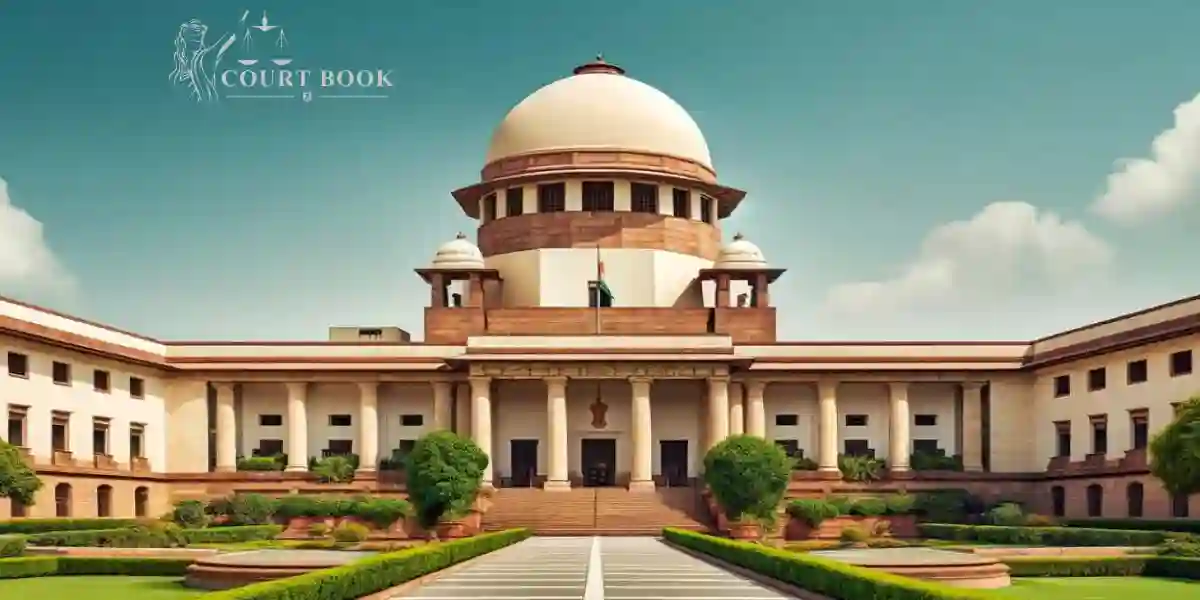
A long-running service dispute from Assam, rooted in a policy meant to rehabilitate families affected by terrorism, finally reached closure in the Supreme Court on Tuesday. Sitting in Court No. 3, a bench of Justice J.K. Maheshwari and Justice Vijay Bishnoi brought down the curtain on a case that has travelled through multiple rounds of litigation since the early 2000s, altering the relief granted by the Gauhati High Court and opting for monetary compensation instead of reinstatement.
Read in Hindi
Background
The matter arose from the appointment of several individuals as Lower Division Assistants (LDAs) under a special Assam government policy framed to support families who had suffered due to terrorism or had assisted the State in counter-insurgency efforts. These appointments, made in 2001, were later cancelled by the State on the ground that they had not received formal approval from the Chief Secretary, who was cited as the appointing authority.
Aggrieved by their termination, the employees approached the Gauhati High Court. A Single Judge, in 2012, ruled in their favour, holding that the appointments were backed by a Cabinet-approved policy and had been cleared by a State Level Empowered Committee chaired by the Chief Secretary himself. This decision was upheld by a Division Bench in 2013.
Unhappy with the High Court’s stance, the State of Assam moved the Supreme Court, arguing that public employment must strictly follow constitutional norms of equal opportunity and that deviations could not be justified merely on policy grounds.
Court’s Observations
During the hearing, the Supreme Court bench examined whether the State could disown its own policy years later on procedural objections. The judges noted that there was no dispute about the posts being vacant or the appointees lacking basic qualifications.
Rejecting the State’s reliance on general principles of public employment, the bench observed that exceptions do exist where the State frames a special policy to deal with extraordinary situations.
“Public employment ordinarily must follow Article 16, but that consideration may not apply where, under a policy of the State for victims of terrorism, exceptional appointments are made,” the bench observed, referring to earlier Supreme Court precedents.
The Court also took note of the High Court’s finding that the Cabinet policy had never been withdrawn and that an executive officer could not unilaterally undo a decision taken at the highest level of the State. Importantly, it was reiterated that the employees had already been denied back wages for the period they did not work.
A Turn During Hearing
An interesting shift occurred during the course of arguments. The Court was informed that, given the passage of time and the peculiar facts, the State government was willing to offer a one-time monetary settlement instead of reinstating the employees after more than two decades.
Initially, the State proposed ₹2.5 lakh per person. The bench was not impressed. “The amount appears to be less,” the Court remarked, asking the government to seek fresh instructions. Subsequently, an affidavit was filed by a senior Assam government official offering ₹5 lakh each to all 40 respondents as a full and final settlement, citing the long pendency of litigation.
Decision
Accepting this proposal, the Supreme Court modified the earlier orders of the Gauhati High Court. Instead of reinstatement, the bench directed the State of Assam to pay ₹5,00,000 to each of the 40 respondents within two months.
“With the modifications in the orders of the learned Single Judge and the Division Bench as directed hereinabove, the present appeal stands disposed of,” the bench ordered, bringing the case to a close.
Pending applications were also disposed of.
Case Title: State of Assam & Others vs Mukut Ranjan Sarma & Others
Case Number: Civil Appeal No. 15150 of 2017
Download Order

