The Supreme Court has ruled that the actual use of a property, rather than merely its classification under a master plan, is the key factor for determining whether land should receive an industrial valuation for stamp duty purposes in Rajasthan.
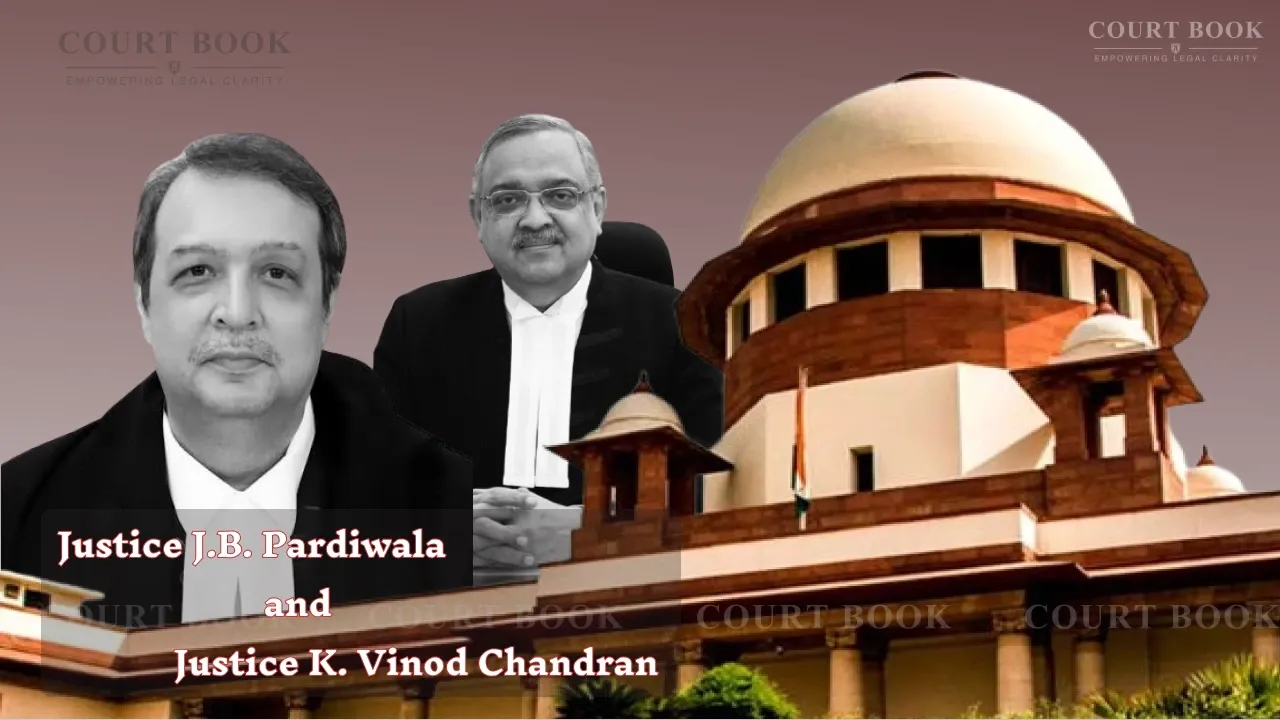
A Bench of Justice J.B. Pardiwala and Justice K. Vinod Chandran set aside the Rajasthan High Court’s decision and restored the findings of the statutory authorities in a dispute concerning stamp duty on a gift deed.
Background of the Case
The dispute arose from a gift deed involving a share in a multi-storey property where a family business was being carried on. The property had been registered as residential land, and the gift deed was initially stamped according to the valuation applicable to residential premises.
The Sub-Registrar later inspected the property and treated it as commercial, noting that a showroom was operating there and that the surrounding Golimar Garden area had several commercial establishments.
The Collector conducted a separate inspection and found manufacturing activity taking place on the premises. The Rajasthan Tax Board agreed with the Collector, particularly after considering the Rajasthan Government's Circular No. 2/2004 concerning valuation of different categories of land.
The appellant had also pointed out that the premises were registered as a factory under the Factories Act, 1948, and as an industry with the District Industries Centre, Jaipur.
Rajasthan High Court's View
The State challenged the statutory authorities' orders before the Rajasthan High Court. The High Court reversed their concurrent findings and treated the property as commercial.
According to the High Court's approach, the relevant test included whether the property was situated in an industrial area and whether the activity carried out there was exclusively manufacturing. Since manufactured goods were also sold from the premises, the High Court concluded that the building was commercial.
The matter then reached the Supreme Court.
Supreme Court's Observation
The Supreme Court disagreed with the test applied by the High Court.
The Bench examined the Rajasthan Government's Circular No. 2/2004 and noted that it focuses on the use of the property, rather than simply the classification of the area.
The Court observed:
“The circular, insofar as valuation of industrial land, specifies the user and not the classification of the area.”
The Court further explained that the fact that manufactured goods are sold from the same premises does not automatically convert an industrial property into a commercial one.
“The manufactured items definitely had to be sold and if the premises is used for such sale too, even retail sale, it cannot lead to a conclusion that the property is one used for commercial purposes, as distinguished from an industrial purpose.”
The Bench also attached significance to the property's registration as a factory and as an industry.
Supreme Court's Decision
The Supreme Court held that the High Court had adopted a test that was not supported by the State Government's valuation circular.
“The High Court clearly erred in stipulating a test which does not come out from the circular of the State Government providing for valuation of different properties, specifically of industrial, residential and commercial properties.”
The Court therefore reversed the High Court's order and restored the decisions of the statutory authorities.
It also clarified that although the gift deed had used the residential valuation, which was higher than the industrial valuation, no refund would be claimed because the executant had voluntarily adopted that valuation.
The appeal was accordingly allowed, and any pending applications were disposed of.
Case Details
Case Title: Harinder Singh Sodhi v. State of Rajasthan and Others
Case Number: Civil Appeal No. of 2026, arising out of SLP (C) No. 36745 of 2025
Judges: Justice J.B. Pardiwala and Justice K. Vinod Chandran
Decision Date: August 24, 2026



-300x169.webp)