

The Supreme Court has upheld the conviction of a Karnataka man accused of setting his wife on fire after a domestic dispute, observing that the dying declaration of the woman was reliable and supported by medical evidence as well as eyewitness testimony.
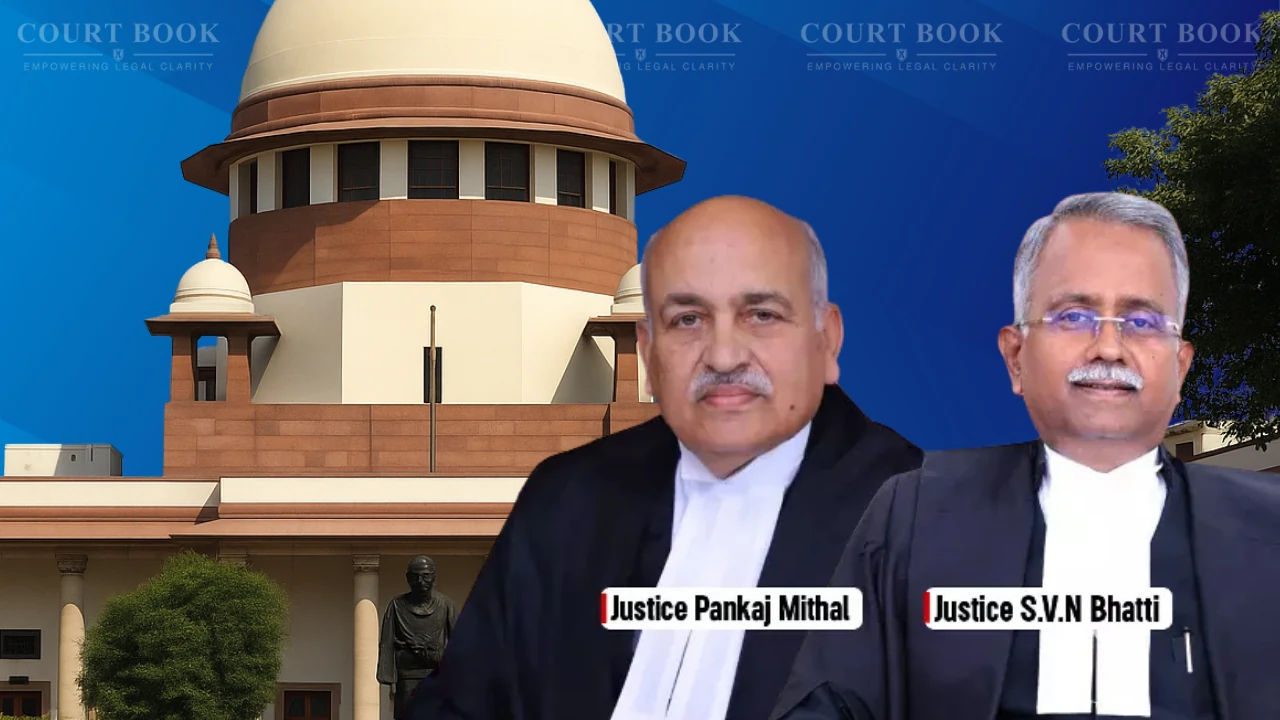
A Bench of Justice Pankaj Mithal and Justice S.V.N. Bhatti dismissed the appeal filed by Subramani against a Karnataka High Court judgment that had reversed his acquittal and convicted him under Sections 302 and 498A of the Indian Penal Code.
Background of the Case
According to the prosecution, Subramani and his wife Chennamma had been married for around 17 years and had four children. The relationship reportedly became strained over repeated demands for money.
The incident took place on the night of July 20, 2000. The prosecution alleged that after a quarrel, the husband brought kerosene, poured it on his wife inside the house, and set her ablaze. She suffered severe burn injuries and died four days later in a Bengaluru hospital.
The Trial Court had acquitted the accused, expressing doubts over the prosecution story and questioning whether the deceased was physically capable of making a reliable statement after sustaining extensive burns. However, the Karnataka High Court later reversed the acquittal and convicted him.
The Supreme Court examined the testimony of the couple’s eldest daughter, who was around 16 years old at the time of the incident. The Court noted that she clearly described the quarrel and stated that her father poured kerosene on her mother and set her on fire before fleeing the house.
The Bench said there was “no reason to disbelieve” the witness and found her statement consistent and credible.
The Court also relied heavily on medical evidence and the dying declaration recorded in the hospital. Doctors who treated the woman testified that although she had suffered around 80–90 percent burns, she remained conscious and fit enough to give a statement.
Referring to the dying declaration, the Bench observed that there was “no adverse material” to suggest it was improperly recorded or made when the woman was unfit to speak.
The judgment recorded that the deceased had stated that her husband frequently assaulted her over money demands and had threatened to kill her before setting her ablaze.
The Court further noted that the recovery of a kerosene tin, matchbox and burnt clothes from the scene supported the prosecution version.
Rejecting the defence argument that the High Court should not have interfered with the acquittal, the Supreme Court held that the evidence against the accused was strong and consistent.
“The High Court is perfectly justified,” the Bench observed while affirming the conviction and sentence under Sections 302 and 498A IPC.
The Court dismissed the appeal and directed the appellant, who was on bail, to surrender immediately to undergo the remaining sentence.
Case Details:
Case Title: Subramani vs State of Karnataka
Case Number: Criminal Appeal No. 2432 of 2010
Judges: Justice Pankaj Mithal and Justice S.V.N. Bhatti
Decision Date: March 17, 2026
Download Judgment

