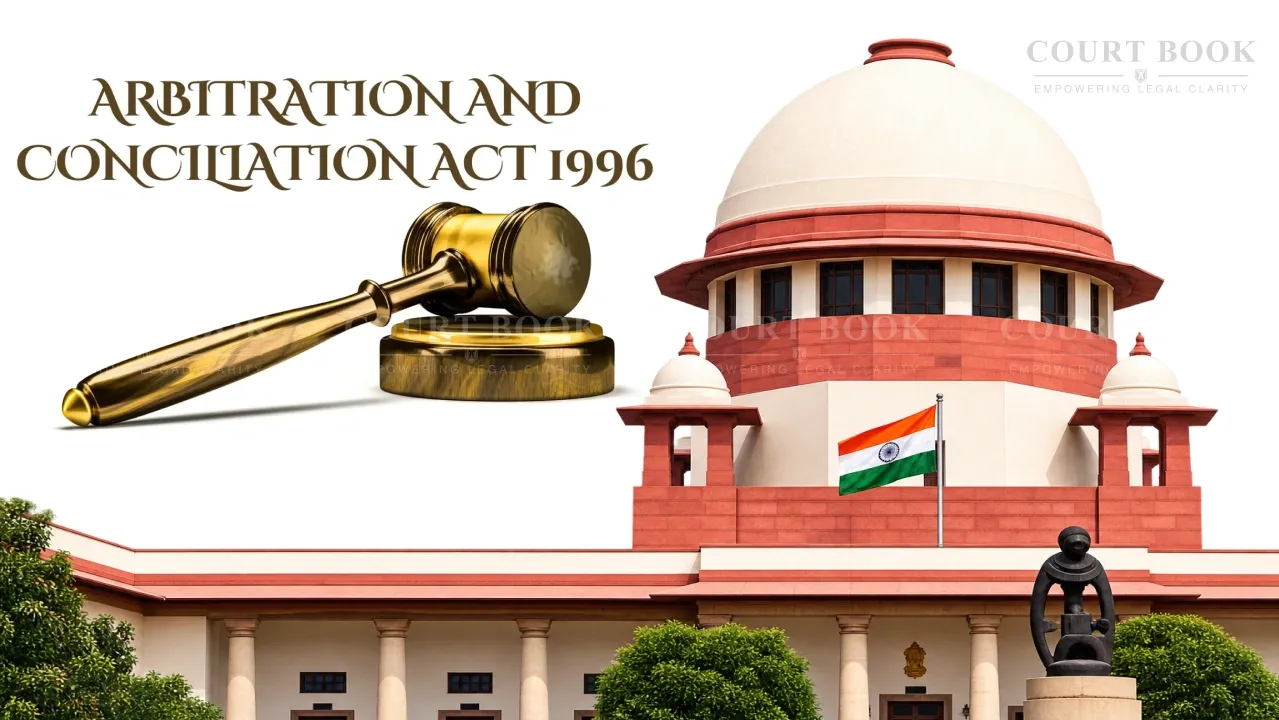
The Supreme Court has set aside the initiation of arbitration between Arth Micro Finance Private Ltd. and Shivalik Small Finance Bank Ltd., holding that the appointment of the Arbitral Tribunal could not be sustained when there was no material showing that the appellants had consented to the appointment. The Court also annulled interim orders affecting the appellants’ bank accounts and properties.
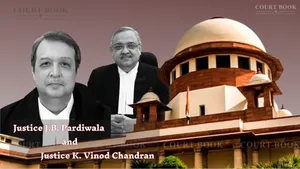
A Bench of Justice J. B. Pardiwala and Justice K. Vinod Chandran passed the order on September 17, 2026.
Background
The dispute arose from an agreement between the parties containing an arbitration clause. The respondent claimed that an Arbitral Tribunal had been appointed with the appellants’ consent. The appointment notice was issued on May 2, 2024.
The appellants, however, objected to the appointment and specifically raised concerns regarding the Tribunal’s alleged close links with the respondent. Despite the objection, the Tribunal proceeded to pass three interim orders under Section 17 of the Arbitration and Conciliation Act, 1996.
These orders included freezing bank accounts, permitting the respondent’s bank to take possession of movable and immovable properties, and directing the transfer of certain amounts from the appellants’ bank accounts to the respondent’s bank.
The High Court had dismissed the challenge to these orders on the ground of limitation, noting that no application had been filed seeking condonation of delay under Section 5 of the Limitation Act, 1963.
The Supreme Court noted that there was nothing on record demonstrating that the appellants had consented to the appointment of the Arbitral Tribunal.
The Court also took note of the fact that the interim orders were passed after the appellants had already objected to the Tribunal’s appointment and raised an allegation of bias.
"Arbitration, though rhymes with it, cannot result in an arbitrary measure, even in the appointment of an Arbitral Tribunal," the Court observed.
The Bench further held that the interim orders passed at the first instance were arbitrary in nature.
The Supreme Court set aside the High Court's order and held that the initiation of arbitration itself was non est in law, meaning it had no legal foundation. The three interim orders were also set aside.
The Court directed that any amount already transferred from the appellants’ accounts to the respondent must be returned within one week. It further directed that any attachment or takeover of the appellants’ movable or immovable properties be cancelled and possession restored to them.
For resolving the underlying dispute, the Supreme Court appointed Advocate Mayuri Raghuwanshi as the Arbitrator.
The Court clarified that it had expressed no opinion on the merits of the dispute, leaving those issues open before the newly appointed Arbitrator.




 chief. Eknath Shinde – Shiv Sena leader-300x169.webp)
-300x169.webp)

-300x169.webp)
-300x169.webp)