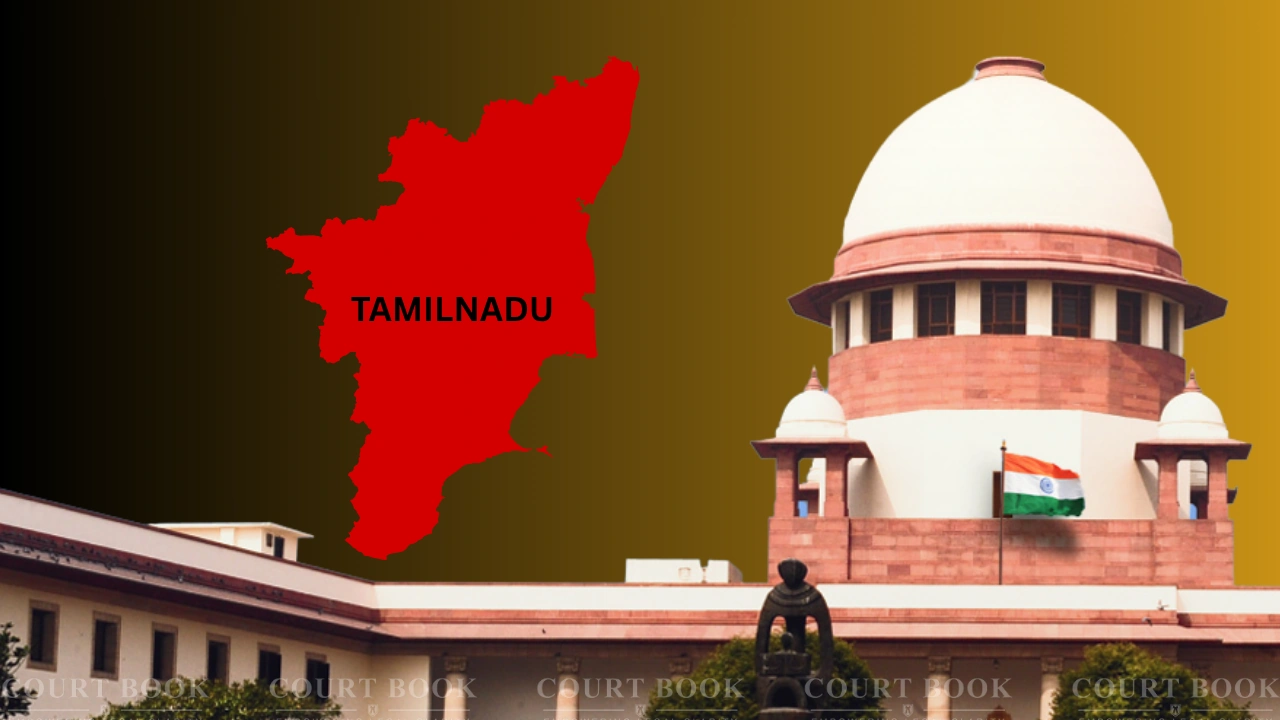
The Supreme Court on September 17, directed the Tamil Nadu government to comply with its earlier order requiring identification of land in every district for establishing Jawahar Navodaya Vidyalayas. The Bench also urged the State and Centre to continue discussions over differences concerning the schools' language policy and implementation.
A Bench of Justice B.V. Nagarathna and Justice Augustine George Masih was hearing Tamil Nadu's challenge arising from directions issued by the Madras High Court for establishing Navodaya schools across the State.
Background
Tamil Nadu has opposed the establishment of Navodaya Vidyalayas on policy grounds, including concerns over the three-language formula followed by the schools. The State has maintained a two-language policy and argued that the Central scheme raises questions concerning its educational policy and constitutional role.
The Supreme Court had earlier directed the State to identify the land required for establishing a Navodaya school in each district. Tamil Nadu subsequently sought recall of that direction, citing, among other things, a change in government and the lack of progress in discussions with the Centre.
During the hearing, Justice Nagarathna stressed that the issue should be approached through cooperative federalism, meaning that the Union and State governments should work together on matters falling within their respective areas.
The Bench observed that introducing Navodaya schools would provide an additional educational option and would not necessarily affect Tamil Nadu's existing educational system.
"People in Chennai should not alienate Delhi and vice versa. Ultimately everybody must work together. Having something in addition will not put down your standards. Education coming from Delhi will not lower the standards of Chennai."
The Bench also indicated that the language-related concerns could be discussed between officials of the State and Central governments.
Senior Advocate Jaideep Gupta, appearing for Tamil Nadu, submitted that the State's objection was connected with the policy governing the schools rather than a general objection to education or the Hindi language.
He also raised financial concerns and questioned whether the State could be compelled to participate in an optional Central scheme. According to the State, such a direction would have implications for its educational policy-making powers.
Additional Solicitor General K.M. Nataraj, appearing for the Centre, submitted that the State's principal requirement was to provide land, while the remaining expenditure for the schools would be borne by the Centre.
The Supreme Court ultimately declined to recall its earlier direction. However, instead of requiring immediate compliance within the previous timeframe, the Bench granted Tamil Nadu three months to identify the land necessary for establishing the schools in each district.
The Court also directed representatives of the State and Central governments to continue discussions on the policy issues during this period.
"Be that as it may, we direct the petitioner to comply with our order of 15.12.2025 in so far as identification of the land necessary to establish the school in each district."
The matter was directed to be listed again on December 14.
Case Details:
Case Title: The State of Tamil Nadu v. Kumari Maha Sabha & Ors.
Case Number: SLP(C) No. 33459/2017
Judges: Justice B.V. Nagarathna and Justice Augustine George Masih
Decision Date: September 17, 2026



-300x169.webp)
-300x169.webp)
 chief. Eknath Shinde – Shiv Sena leader-300x169.webp)