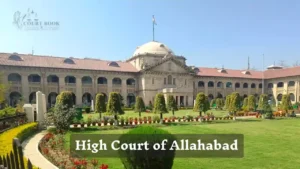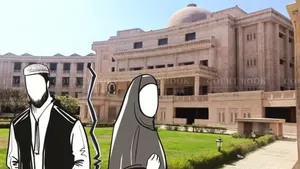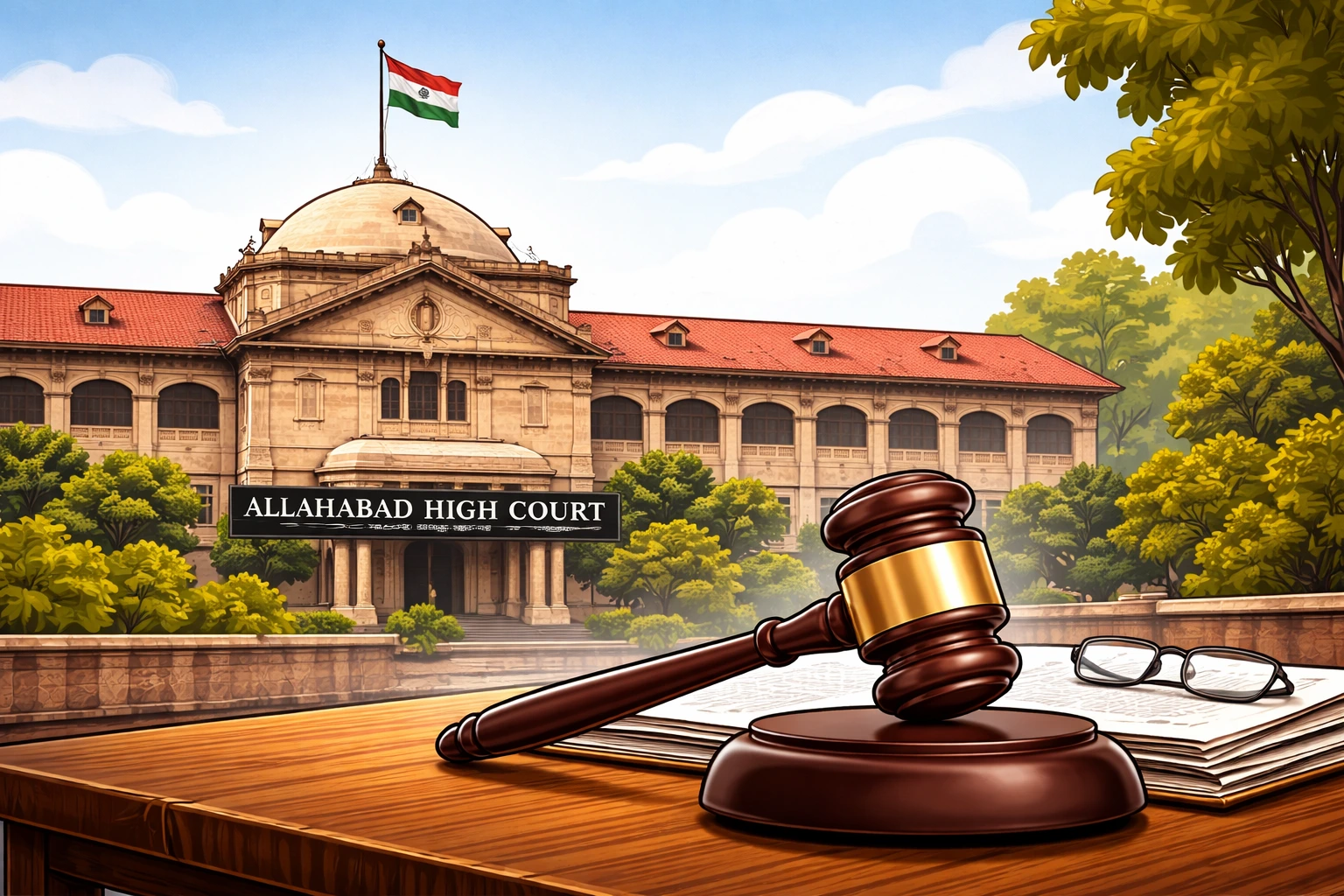
A packed courtroom in Allahabad saw the High Court step in to stop criminal proceedings that, in the judge’s words, began on a shaky legal footing. In a case rooted in a bitter marital dispute, the court set aside a magistrate’s summoning order after finding serious procedural lapses by the police and the trial court.
Background of the case
The dispute traces back to allegations made by a husband against his estranged wife, accusing her of online defamation and threats. An FIR was registered in Aligarh under Sections 504 and 507 of the IPC-offences that deal with intentional insult and criminal intimidation by anonymous communication.
After investigation, the police filed a closure report in June 2024, saying no offence was made out. The husband responded with a protest petition. Acting on that protest, the Chief Judicial Magistrate rejected the closure report and, in October 2024, took cognizance and summoned the wife to face trial.
Challenging this, the wife moved the High Court under Section 528 of the Bharatiya Nagarik Suraksha Sanhita (BNSS), which corresponds to the High Court’s inherent powers under the old Criminal Procedure Code.
What the High Court examined
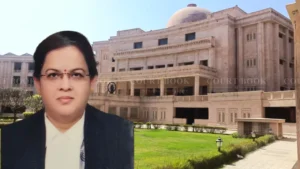
Justice Praveen Kumar Giri went beyond the surface of the dispute and looked closely at how the case moved through the system.
Read also:-Second Marriage During Subsisting First One Void, Chhattisgarh HC Rules in Property Case
The court noted that both Sections 504 and 507 IPC are non-cognizable offences. That means the police cannot register a full FIR and investigate them without a magistrate’s prior order. Instead, only a non-cognizable report should be recorded at the first instance.
“The process of law cannot be stretched to convert a non-cognizable dispute into a police case at will,” the bench observed, underlining that such shortcuts strike at the fairness guaranteed under Article 21 of the Constitution.
Court’s observations on police conduct
The judgment carries strong words for the way the police handled the complaint.
According to the court, the police wrongly registered an FIR as if the offences were cognizable and went ahead with an investigation without following the safeguards laid down in law. This, the judge said, amounted to a misuse of procedure.
Read also:- Woman Free to Choose Her Life: Orissa High Court’s Strong Stand Against Forced Marriage
The court also pointed out an often-ignored aspect: when an investigation concludes that a complaint was false, the law requires the police to consider action against the informant for giving false information. “A closure report cannot be the end of the road if the investigation reveals deliberate misuse of criminal law,” the bench remarked.
Error in the magistrate’s approach
Turning to the trial court’s order, the High Court found multiple legal flaws.
First, once the police filed a report in a non-cognizable case, the law treats that report as a complaint, not a police charge sheet. In such situations, cognizance must be taken as a complaint case-not as a state-prosecuted case.
Second, the magistrate took cognizance under the wrong provision and summoned the accused without following the procedure now mandated under the BNSS, including safeguards introduced from July 2024.
“The magistrate was required to examine the nature of the offence and the correct procedural route before issuing summons,” the court said, adding that failure to do so resulted in a serious miscarriage of process.
Read also:- MP High Court Restores Teaching Jobs of Married Women Denied Reservation for Out-of-State Caste
The decision
After hearing both sides, the High Court allowed the wife’s application. It quashed the summoning order dated 23 October 2024 and set aside the entire criminal proceedings arising from it.
In clear terms, the court held that the case reflected an abuse of criminal process and that continuing it would violate the basic requirement of fair procedure.
With that, the bench closed the matter-bringing an end to a prosecution that, in the court’s view, should never have crossed the threshold of a full criminal trial.
Case Title: Umme Farva vs State of U.P. & Another
Case No.: Application U/S 528 BNSS No. 12575 of 2025
Case Type: Criminal Application (Quashing of summoning order)
Decision Date: 14 January 2026
Download Judgment