

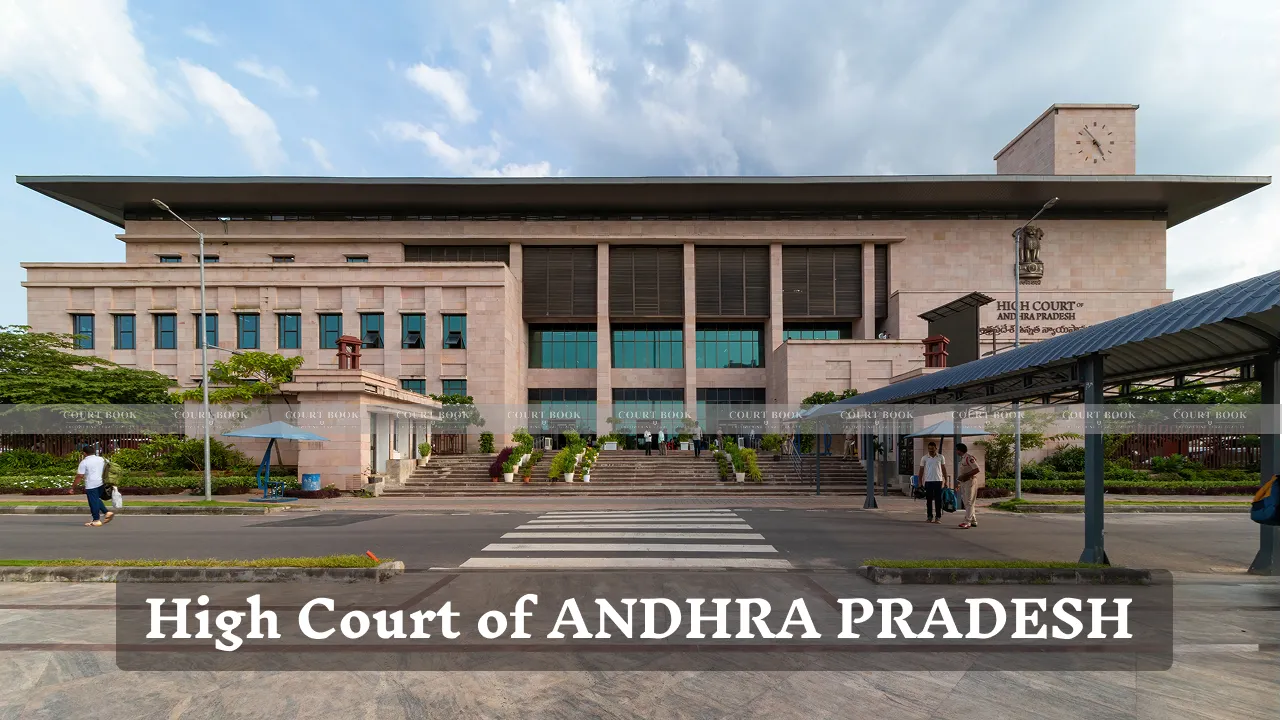
Sitting in Court Hall on a quiet December afternoon, the Andhra Pradesh High Court brought closure to a case that had dragged on for nearly sixteen years. Two men from Guntur, convicted earlier for allegedly eloping with a minor girl, walked free after the court found that a crucial legal requirement under the law had simply not been established. The judgment, delivered by Justice Subhendu Samanta, carefully pulled apart the prosecution story and the way the lower courts had applied Section 366-A of the IPC.
हिंदी में पढ़ें
Background
The case dates back to December 2006. According to the prosecution, the victim girl, then a minor, was taken away by the accused just days before her parents had fixed her marriage with another man. The trial court in Guntur convicted all four accused, sentencing them to seven years’ simple imprisonment under Section 366-A IPC, which deals with inducing a minor girl for illicit purposes.
Read also:-Himachal Pradesh High Court Upholds Bus Driver’s Acquittal, Says Mechanical Brake Failure Ruled Out Rash Driving Allegations in 2007
On appeal, two accused were acquitted, but the conviction of the remaining two was upheld. Left with no option, they approached the High Court through criminal revision petitions, arguing that the facts of the case did not fit the offence they were convicted for.
Court’s Observations
Justice Samanta’s order showed clear discomfort with how Section 366-A had been used. The court noted that the evidence itself suggested that the girl had willingly gone with the main accused, with whom she claimed to be in love.
Read also:-Jharkhand High Court Grants Final Surrender Window to Sourav Bardhan in ED Case, Modifies Earlier Bail Order Citing Supreme Court Law
Quoting Supreme Court precedents, the bench observed that for Section 366-A to apply, the prosecution must prove that the minor was induced with the intent that she would be forced or seduced into illicit intercourse with another person, not the accused himself. “That specific intention is the heart of the offence,” the judge remarked in substance, adding that without it, the charge cannot stand.
In this case, the court found no material to show that the accused intended the girl to be subjected to such exploitation by anyone else. The prosecution’s own version failed on this point, the bench noted, making the conviction legally unsustainable.
Read also:-Supreme Court steps in Punjab fraud case, issues notice and grants interim bail protection to Harjit Kaur against possible arrest
Decision
Allowing both criminal revision petitions, the High Court set aside the conviction and sentence imposed on the two accused under Section 366-A IPC. They were acquitted of all charges, and the court ordered that their sureties be released. With that, the long-running case finally came to an end, with no order as to costs.
Case Title: Chandole Thimothi @ Suresh & Another vs The State of Andhra Pradesh
Case No.: Criminal Revision Case Nos. 962 & 1119 of 2009
Case Type: Criminal Revision (Section 397/401 CrPC)
Decision Date: 20 December 2025


