

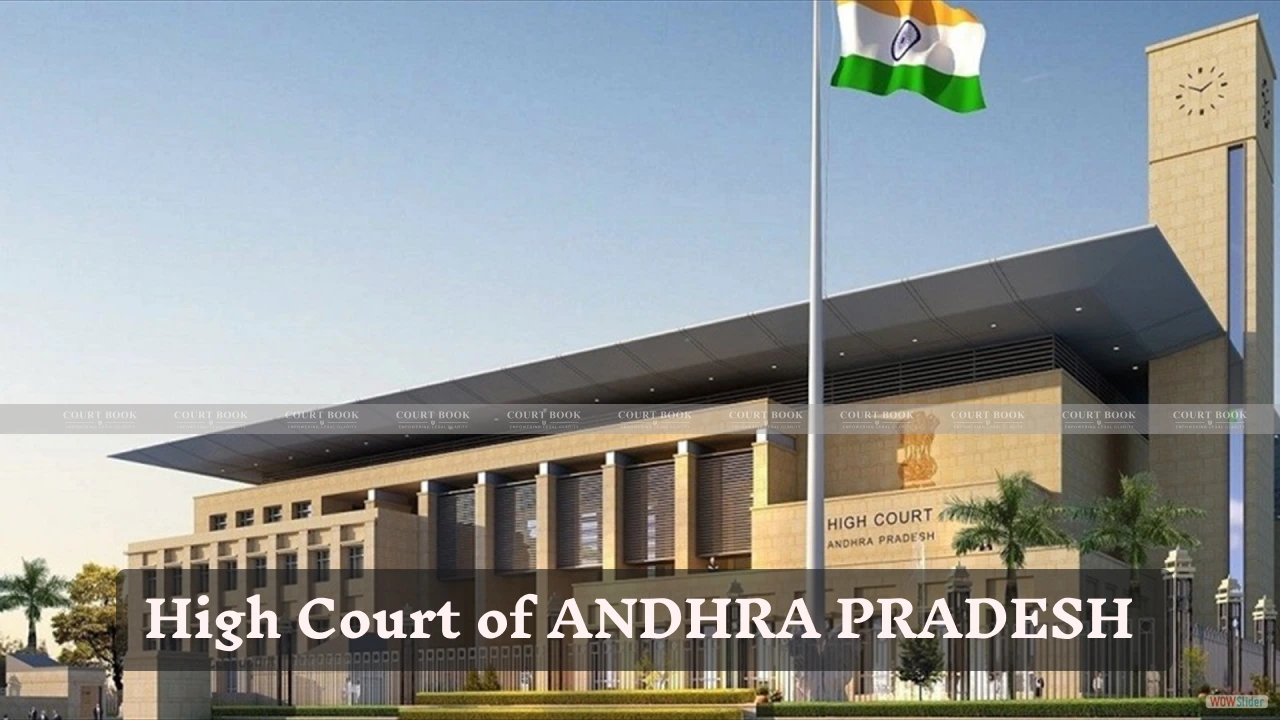
The Andhra Pradesh High Court has stepped in to protect the rights of a retired cooperative employee who waited years for his lawful dues. Hearing the matter, the court made it clear that gratuity and retirement benefits are not charity, but a legal right that cannot be delayed without valid reasons.
The ruling came in a writ petition filed by a 63-year-old retired employee who had been pursuing his unpaid salary arrears and terminal benefits since his retirement in 2011.
Background of the Case
The petitioner, Tella Bhaskara Rao, began his service in 1977 as a secretary in a primary agricultural cooperative society in Vizianagaram district. Over the years, he served in multiple cooperative societies and was later promoted as a Special Category Employee in the District Central Cooperative Bank.
He retired on 30 September 2011 without any disciplinary charges or adverse remarks. Despite this, large portions of his salary for specific past periods remained unpaid. Along with this, his retirement benefits-gratuity and earned leave encashment-were also not released.
Repeated representations and even resolutions passed by the cooperative society acknowledging his entitlement did not lead to payment. With no alternative remedy left, the retired employee approached the High Court.
Read also:-Supreme Court Rejects Goregaon Pearl Society's Curative Pleas, Ends Long-Running Housing Dispute
Before the court, the petitioner pointed out that he had rendered unblemished service and retired with dignity, yet was forced to run from office to office for his lawful dues.
He argued that withholding gratuity and leave encashment had caused serious financial and emotional hardship, especially considering his age. “Non-payment of retirement benefits affects the right to live with dignity,” his counsel submitted during the hearing.
The cooperative society admitted that the petitioner was entitled to the amounts but cited lack of funds as the reason for non-payment. It also claimed that it functioned largely as an agent of the district cooperative bank.
On the other hand, the bank argued that it had already paid its share of gratuity and leave encashment for the period during which the petitioner worked under it, and that the remaining liability rested solely with the cooperative society.
Court’s Observations
After examining the records, the court noted that there was no dispute about the petitioner’s service record or his entitlement.
The bench observed that gratuity is a statutory right under the Payment of Gratuity Act, 1972. “Once an employee retires without stigma, gratuity cannot be withheld except in circumstances expressly permitted by law,” the court observed.
Rejecting the plea of financial difficulty, the court held that lack of funds is not a valid excuse to deny statutory benefits. It also underlined that delayed payment of gratuity automatically attracts interest, as mandated by law.
The judge referred to earlier Supreme Court rulings to reiterate that retirement benefits are part of the right to livelihood and social security.
Final Decision
Allowing the writ petition, Justice Maheswara Rao Kuncheam directed the cooperative society authorities to release the pending terminal benefits to the petitioner.
The court ordered payment of the remaining amount of ₹1,17,063, along with 10% annual interest from the date it became payable until actual payment. The entire exercise must be completed within ten weeks from receipt of the order.
With these directions, the writ petition was disposed of, and the connected contempt proceedings were closed.
Case Title: Tella Bhaskara Rao vs State of Andhra Pradesh & Others
Case No.: Writ Petition No. 20248 of 2015
Case Type: Service / Retirement Benefits
Decision Date: 2 January 2026


