

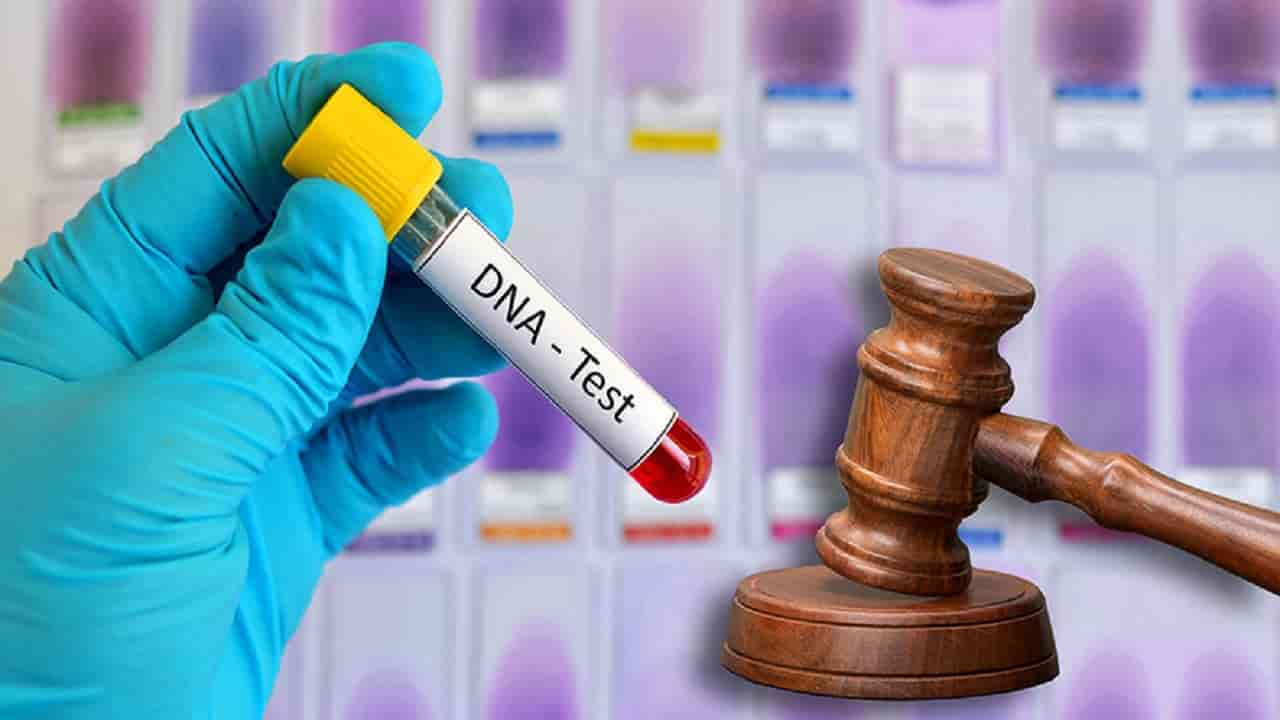
In a significant ruling touching upon privacy, family law, and children’s rights, the Andhra Pradesh High Court refused to allow a DNA test of two children in an ongoing divorce dispute. The Court made it clear that such scientific tests cannot be used as a shortcut to prove allegations of adultery.
Background of the Case
The case arose from a matrimonial dispute where the husband had filed a divorce petition under Section 13(1)(ib) of the Hindu Marriage Act, 1955, alleging desertion. During the pendency of the divorce proceedings before the Senior Civil Judge in Vizianagaram, the husband moved an application seeking a DNA test of the couple’s two children.
Read also:- Supreme Court Raises Accident Compensation to ₹97.7 Lakh, Slams High Court for Ignoring Medical Evidence
He argued that the test would help establish that he was not the biological father, thereby supporting his claims against his wife. However, the trial court rejected this plea in July 2024, prompting him to approach the High Court through a Civil Revision Petition.
The husband contended that a DNA test would only help uncover the truth and would not cause any serious harm. He emphasized that his right to a fair trial includes the right to present the best possible evidence.
According to him, denying the DNA test deprived him of a crucial opportunity to prove his case.
The wife opposed the plea, relying on Supreme Court judgments that caution courts against ordering DNA tests casually. Her counsel argued that such tests invade privacy and could have devastating consequences on children, including social stigma.
Read also:- Ex-Employees Must Vacate Quarters to Claim Gratuity; Adjustment of Dues Permissible: Supreme Court
Justice Tarlada Rajasekhar Rao carefully examined the legal position and existing precedents.
The Court noted that the law strongly presumes that a child born during a valid marriage is legitimate. This presumption, under Section 112 of the Indian Evidence Act, cannot be lightly disturbed.
Referring to earlier Supreme Court rulings, the bench observed that DNA testing is a “delicate and sensitive issue” and must not be ordered routinely.
Quoting the apex court’s reasoning, the judge highlighted:
“The question as to whether a DNA test should be permitted on the child is to be analyzed through the prism of the child and not through the prism of the parents.”
The Court further stressed that children cannot be treated as tools in disputes between spouses.
“The child cannot be used as a pawn to show that the mother was living in adultery,” the Court noted.
Addressing the petitioner’s argument about fair trial, the Court acknowledged that parties have a right to present evidence. However, it clarified that this right is not absolute.
The Court explained that in matrimonial disputes, the child is not a party to the litigation. Therefore, the rights and dignity of the child cannot be sacrificed merely to assist one party in proving allegations.
“To enable one of the parties to have a fair trial, the Court cannot sacrifice the rights and best interests of a third party - namely, the child,” the Court observed.
It also pointed out that if the husband wished to prove adultery, he could do so through other forms of evidence rather than subjecting the children to DNA testing.
Read also:- “Don’t Be Browbeaten by Police”: Allahabad HC Advises Magistrates to Act Freely
The High Court emphasized three important principles:
• DNA tests should not be ordered as a matter of routine
• The legitimacy of a child born in wedlock carries a strong legal presumption
• The welfare, dignity, and identity of the child must take priority over disputes between parents
Additionally, the Court noted that the original divorce petition was based on desertion, not paternity, making the DNA test even less relevant.
Finding no merit in the plea, the High Court dismissed the Civil Revision Petition.
The Court also imposed a cost of ₹3,000 on the petitioner, directing him to deposit the amount with the District Legal Services Authority within three weeks. Failure to comply could result in recovery proceedings, including civil imprisonment.
All pending applications related to the case were also ordered to be closed.
Case Title:- X and Y
Case Number: Civil Revision Petition No. 3393 of 2025
Decision Date: 12 March 2026
Counsels:
• Petitioner: M.M.M. Krishna Sanapala
• Respondent: Arrabolu Sai Naveen
Download Judgment

