

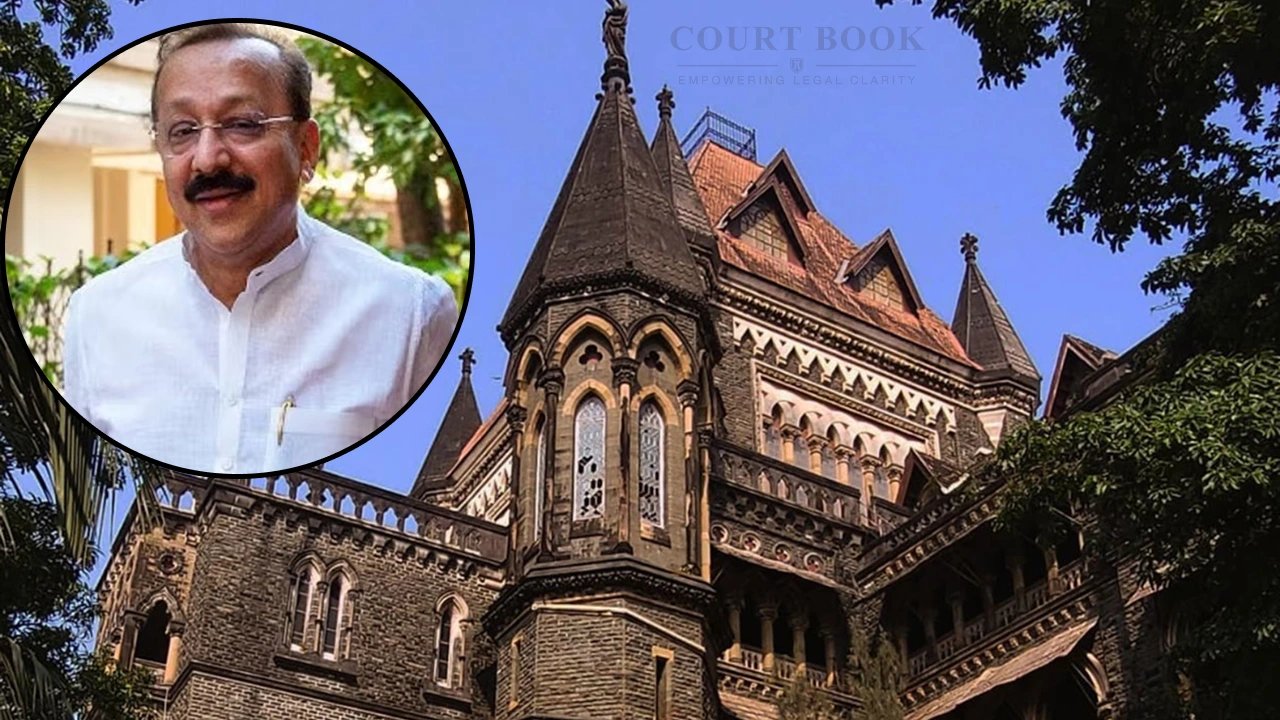
The Bombay High Court has refused bail to accused Chetan Dilip Paradhi in the murder case related to Minister Baba Siddiqui, observing that the prosecution had placed enough prima facie material on record to show his alleged involvement in the conspiracy.
Justice R. M. Joshi passed the order while hearing Paradhi’s bail application filed in connection with offences registered under the Bharatiya Nyaya Sanhita, the Arms Act, and the Maharashtra Control of Organised Crime Act (MCOCA).
Background of the Case
According to the prosecution, Baba Siddiqui was shot at around 9.30 pm on October 12, 2024, when he visited his son’s office in Mumbai’s Bandra East area. The attackers allegedly opened fire on him, causing fatal injuries. Two accused were caught at the spot while attempting to escape, and the investigation later expanded to include several others.
The police eventually arrested 27 accused persons and invoked provisions of MCOCA during the investigation. A chargesheet has since been filed.
Paradhi argued before the court that he had been falsely implicated and that there was no direct evidence linking him to the organised crime syndicate or the alleged conspiracy. His counsel submitted that the prosecution relied heavily on call detail records and confessional statements of co-accused persons, which, according to the defence, were insufficient to establish involvement.
The defence also claimed that calls between Paradhi and some co-accused could not automatically be treated as incriminating because they already knew each other before the incident. It was further argued that there was no evidence showing he received money or benefited from the alleged crime.
Court’s Observations
The prosecution opposed the bail plea, stating that the material collected during investigation, including confessional statements recorded under Section 18 of MCOCA and call detail records, pointed towards the applicant’s knowledge of the conspiracy.
The court noted that at the bail stage, it was required to examine whether prima facie evidence existed and not conduct a detailed trial-like analysis.
Justice Joshi observed,
“A perusal of the overall evidence collected during the course of investigation prima facie shows the conspiracy being hatched in order to eliminate the deceased.”
The court also held that confessional statements of co-accused recorded under MCOCA are admissible and can be considered against other accused persons at this stage. The judge said procedural objections raised by the defence regarding those statements would have to be examined during trial.
Referring to the call detail records, the court found that the applicant allegedly remained in contact with co-accused persons even after becoming aware of the alleged plan.
The order stated that the call records “could be considered as incriminating circumstance against the Applicant.”
The High Court finally held that the stringent conditions for bail under Section 21(4) of MCOCA were not satisfied in the present case.
Justice Joshi observed that unless the court is satisfied that the accused is not guilty and is unlikely to commit any offence while on bail, relief cannot be granted under MCOCA. Considering the material placed on record and the applicant’s antecedents, the court said it was unable to record such satisfaction.
The bail application was accordingly dismissed, with the court clarifying that its observations were only prima facie in nature and would not influence the trial proceedings.
Case Details
Case Title: Chetan Dilip Paradhi vs State of Maharashtra
Case Number: Bail Application No. 3774 of 2025
Judge: Justice R. M. Joshi
Decision Date: May 7, 2026
Download Judgment

